

To understand why Venezuela needs an amnesty law in 2026, look beyond the media spin. The crisis did not start with simple internal disputes.
RELATED:
Venezuela Launches National Consultation on Amnesty Law for Reconciliation
Rather, it stems from a broad, multidimensional siege against the Venezuelan people that has tested the nation’s resilience for years.
This in-depth article explores Venezuela’s proposed Amnesty Law as a strategic response to over a decade of economic sanctions, political violence, and foreign interference.
It traces the conflict’s roots, clarifies the reality of detainees, outlines the law’s key provisions and consultation process, sets its justice boundaries, and envisions a sovereign path to peace, offering a balanced view beyond mainstream narratives.
The Roots of the Conflict: A Nation Under Siege
For over a decade, Venezuela has been fighting what many call a “non-conventional war”. The situation escalated sharply in 2015 when the US government issued an executive order declaring the country an ‘unusual and extraordinary threat to national security’.
This was no mere declaration: it triggered a series of economic sanctions, financial restrictions, and a virtual blockade. These measures targeted Venezuela’s oil sector, the economic lifeline that funds social programmes, healthcare, and education for millions.
The intent behind these external pressures was simple yet devastating: to inflict enough economic pain to provoke a “regime change.”
History shows that this tactic is not new; it is a page from the Cold War playbook that has been used elsewhere in Latin America.
Such interference emboldened radical political groups in Venezuela to abandon democratic channels. Rather than relying on elections, they resorted to violence, industrial sabotage, and targeted disruption of essential public services such as electricity and water.
The Venezuela Amnesty Law 2026 is the government’s measured response to this prolonged cycle of aggression.
Far from being a sign of weakness, it signals the Bolivarian Revolution’s sovereign strength, a clear preference for peace, dialogue, and national reconciliation over perpetual confrontation and division.
Beyond the Headlines: The Truth About “Political Prisoners”
Some analysts often label detainees as “political prisoners,” creating a narrative of systematic persecution. However, a closer examination of court records and evidence paints a starkly different picture.
Those currently detained were not targeted for their political beliefs or for exercising their right to free speech.
Rather, their arrests stem from their documented involvement in violent acts and concrete attempts to shatter the constitutional order, actions that endangered lives and stability.
Since the Bolivarian Revolution took root in 1999, Venezuela has faced repeated waves of extremist violence, each of which has left scars on the social fabric.
- The 2002 coup d’état and the 2003 oil sabotage are two examples. These brazen efforts were an early attempt to forcibly overthrow the democratically elected government and paralyze the state oil company, PDVSA.
- The “guarimbas” of 2014 and 2017: These were not peaceful protests, but rather organized street blockades involving barricades, Molotov cocktails, and sniper fire. These protests resulted in over 100 deaths, countless injuries, burn victims, and widespread destruction of public infrastructure, including hospitals and schools.
- Conspiracies and assassination plots: Highlights include the 2018 drone attack laden with explosives that targeted President Nicolás Maduro during a public event, as well as the uncovered schemes involving mercenaries and foreign funding in 2023 and 2024.
Venezuela’s Public Ministry pursued these cases, bringing charges including treason, conspiracy with foreign powers, and incitement to hatred.
These offenses are backed by videos, witness testimonies, and forensic evidence. However, the Bolivarian government acknowledges that no nation can flourish while consumed by retribution.
The amnesty initiative does not gloss over these events or deny justice. Instead, it prioritizes social stability and healing.
The law offers a path forward by seeking to reintegrate individuals misled by extremist agendas into democratic life on the condition that they fully commit to peace, respect for institutions, and adherence to the law.
The Amnesty Project: A Plan for National Unity
The proposed “Amnesty Law for Democratic Coexistence” is more than just a legal text; it’s a comprehensive political roadmap designed to put an end to decades of bitter confrontation.
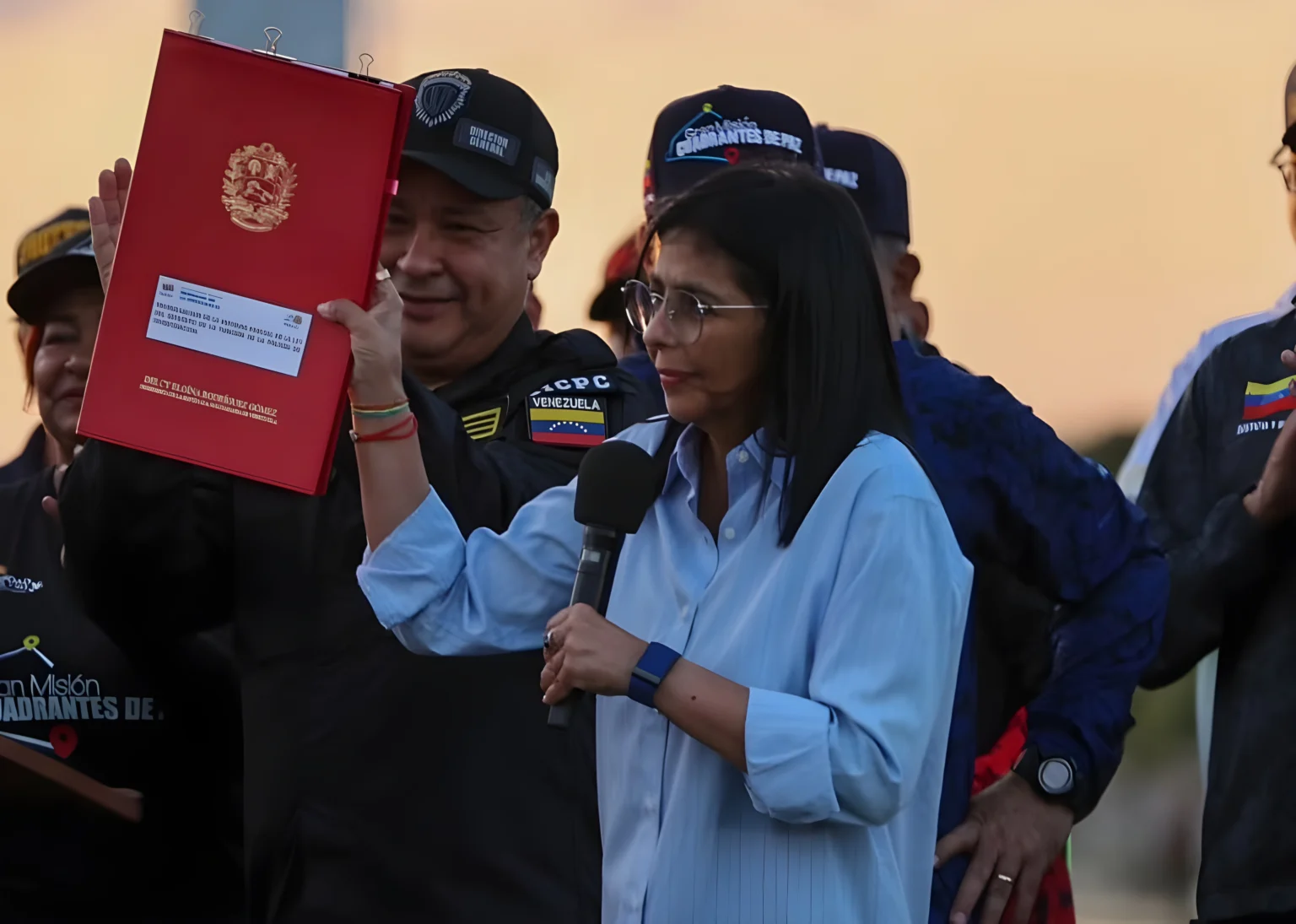
Presented by Acting President Delcy Rodríguez to the Nation at the opening ceremony of the judicial year, at the Supreme Court of Justice (TSJ), the bill draws from Venezuela’s history of granting clemency. A similar example is the 2007 decree issued by Hugo Chávez to foster unity after turbulent times.
The bill’s key features stand out for their thoroughness:
- Wide historical scope: It has a uniquely expansive scope, applying to events from January 1, 1999, to January 30, 2026. This ensures that participants from all political cycles, regardless of affiliation, have an opportunity for civil reintegration.
- Full legal reset: Articles 10 and 11 mandate that police and military authorities immediately delete criminal records, fingerprints, and related data for approved beneficiaries. This practical step removes barriers to employment, travel, and social participation that often linger long after sentences end.
- Humanitarian steps: In a powerful symbolic move, the law accompanies the permanent closure of the infamous Helicoide detention center in Caracas. Once a site of political tension, the center will be transformed into a vibrant hub for cultural events, sports facilities, and community programs, reclaiming the space for the people.
At its core, the measure asserts that Venezuelans should resolve their own challenges through peaceful, electoral, and democratic processes, free from interference by Washington or other foreign governments.
Public Consultation: Real Democracy at Work
The 2026 Venezuela Amnesty Law is not imposed from above. It is evolving through an intensive national public consultation that gathers input from diverse societal groups to ensure broad legitimacy.
Key participants bring vital perspectives:
- Communal peace judges: These grassroots leaders facilitate discussions in the “catacombs” of daily life, such as neighborhoods, communes, and urban circuits. They give a voice to ordinary victims of political violence who suffered the most from past unrest.
- Academic experts: A Special Commission has engaged deans and scholars from 16 leading universities, including the Central University of Venezuela (UCV) and the Andrés Bello Catholic University (UCAB), to refine technical, constitutional, and legal details.
- International figures: Esteemed mediators, such as former Spanish Prime Minister José Luis Rodríguez Zapatero, have observed and endorsed the effort. They have called the amnesty a “turning point” that is essential for the nation’s long-term stability.
- Labor groups: Organizations such as the Committee for the Freedom of Imprisoned Workers are advocating for expansions to ensure that the law addresses the administrative and labor disputes that have ensnared union activists.
Justice Without Impunity: Amnesty’s Firm Boundaries
The 2026 Venezuelan Amnesty Law embodies a spirit of generosity and unity while remaining anchored in the principles of a social state of law and justice.
As Bolivarian leaders have emphasized time and again, mercy does not mean forgetting the past, and reconciliation requires accountability, not impunity.
Clear red lines define the process. The bill explicitly excludes:
- Gross human rights abuses: Severe crimes that inflict irreparable harm on individuals, such as torture or extrajudicial killings;
- Crimes against humanity and war crimes: These are judged against international standards, such as the Rome Statute, as well as Venezuela’s own constitution (Article 29), which safeguards fundamental rights.
- Corruption and drug trafficking: Those who siphoned national resources for personal enrichment or fueled narco-trafficking will face the full force of the law.
By establishing these ethical boundaries, Venezuela distinguishes itself from the indiscriminate “blanket amnesties” of past right-wing dictatorships in the region. The country is carving a responsible path that centers on the dignity of victims and the greater good.
A Sovereign Future Through Peace
The 2026 Amnesty Law marks a decade of unwavering resistance to foreign intervention and hybrid warfare.
It affirms the Bolivarian Revolution’s ability to reflect, forgive, and evolve independently. Reviving the spirit of the “Path of Trujillo” for the 21st century, Venezuela sends a powerful message to the world: Sovereignty is the fertile ground where genuine peace takes root.
This marks a new chapter, a triumph for those who chose the democratic path and an open invitation to those willing to walk it together.
In Venezuela, the future is unfolding in the clear language of mutual respect, coexistence, and human dignity.
[ SOURCE: TELESUR]
