

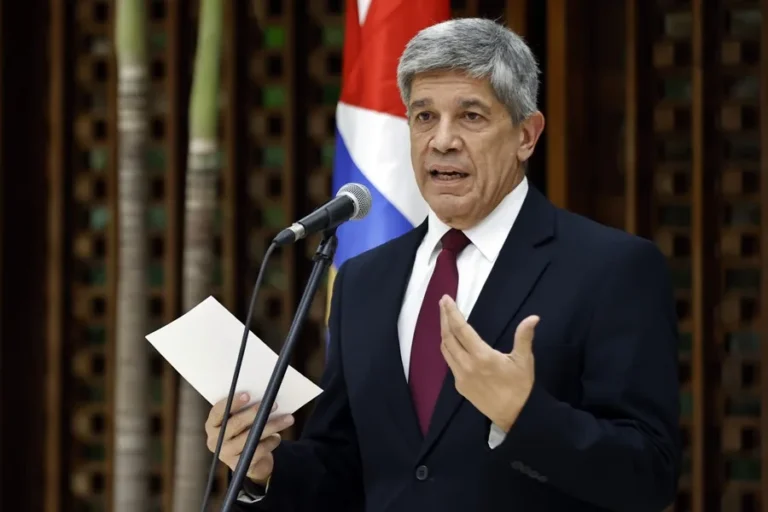
Cuba’s Deputy Foreign Minister, Carlos Fernández de Cossío, denounced the United States’ political strategy toward the Caribbean island, calling it “collective punishment” that uses the citizenry as “hostages.” According to the diplomat, Washington seeks to force political transformations that serve its own interests through the systematic strangulation of the national economy.
Fernández de Cossío explained in a social media post that the US sanctions are tightening “every possible valve,” severely impacting the country’s basic infrastructure.
Among the most critical consequences, the official pointed to the crisis in electricity generation, the deterioration of public transportation, and failures in the pumping of drinking water—elements that deliberately degrade the quality of life of Cubans.
In the social sphere, the deputy minister emphasized that these measures directly harm the health sector, hindering the acquisition of medical supplies and medicines. He also explained that the lack of energy and transportation prevents healthcare personnel from carrying out their duties, affecting an essential service for the people.
For the diplomat, these actions represent a reprehensible course of action that has been in place for over 100 years, ignoring international human rights principles. The official also criticized the mainstream media, accusing them of being complicit in this external pressure.
According to him, the press often blames the Cuban government for internal shortages or avoids questioning the actions of the United States, omitting the real impact of the sanctions on daily life on the island.
Finally, Fernández de Cossío rejected the narrative that Cuba is a “failed state.” On the contrary, he argued that the aggressiveness of Washington’s policies is precisely due to the stability of the Cuban system, asserting that there is a forced effort on the part of the United States to destabilize the country at the expense of the well-being of its inhabitants.
“It is precisely because Cuba is not and has never been a failed state that the United States is determined to turn it into one by force, condemning the Cuban people beforehand,” he emphasized.
On January 29, US President Donald Trump signed an executive order designating Cuba as an “unusual and extraordinary threat,” declaring a national emergency. The measure imposes tariffs on countries that supply oil to the Caribbean island and threatens retaliation against those who do not comply.
Trump’s latest attack against Cuba has disrupted fuel shipments to the country, exacerbating the energy crisis. In response to the White House’s accusations, the Cuban government has repeatedly rejected Washington’s claims, calling them unfounded.
Cuban President Miguel Díaz-Canel maintained that Cuba is a sovereign and independent nation that does not take orders from outside. He asserted that the country does not act aggressively, but rather has been attacked by the United States for 66 years, and affirmed that the nation is prepared to defend its homeland.
IMAGE CREDIT: The Deputy Minister explained that the lack of energy and transportation prevents healthcare personnel from carrying out their duties, affecting an essential service for the people. Photo: EFE.
[ SOURCE: teleSUR ]
