

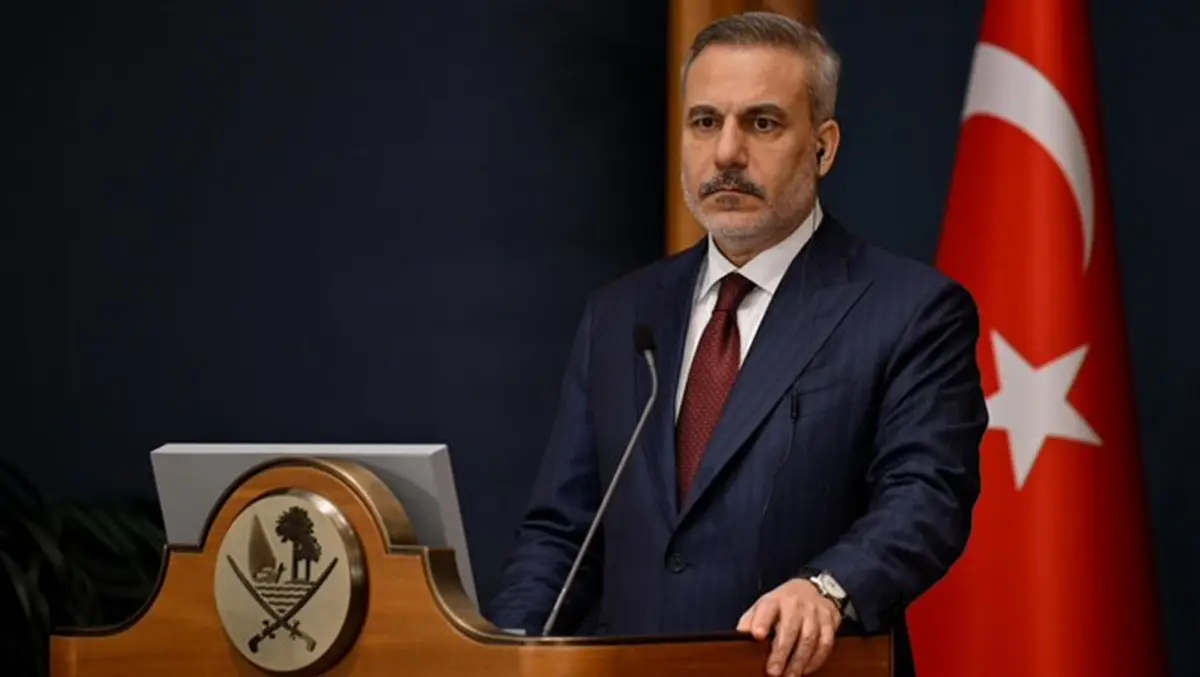
Ankara faces cool response from Washington and tensions with Israel.
Although Pakistan is leading mediation efforts to end the U.S.-Israeli war on Iran, Turkey is also deploying intense diplomatic activity to play a role—one that has run up against Washington’s coolness and Israel’s hostility.
On Tuesday, Pakistan confirmed that it is acting as a mediator, alongside Turkey and Egypt, and has offered its capital, Islamabad, to host a possible meeting between U.S. and Iranian delegates. Türkiye’s role, however, is less clear.
Since Feb. 28, the day the U.S.-Israeli war on Iran began, Ankara has announced its willingness to provide the necessary support for mediation, and its foreign minister, Hakan Fidan, has engaged in intense diplomatic activity.
Conference in Riyadh
On March 18, Fidan took part in a conference in Riyadh with 12 countries aimed at halting the U.S.-Israeli war on Iran. The meeting ended with a statement condemning Iran’s counterattacks against Gulf countries. At the same time, Fidan has held frequent phone calls with Iranian Foreign Minister Abbas Araqchi.
Both Fidan and Turkish President Recep Tayyip Erdogan have repeatedly blamed Israel for the war. Iranian President Masoud Pezeshkian thanked Erdogan for that stance in a post on X.
“The firm stance of my dear brother Erdogan in condemning the attacks of the Zionist regime deserves applause. The brotherly nation of Türkiye has for years assumed a role of solidarity with the Islamic community, and we hope it continues on this noble path,” Pezeshkian wrote.
It is not a lack of contact between Ankara and Tehran that is hindering Türkiye’s prominence in mediation, but likely the strained relationship between Erdogan and U.S. President Donald Trump, as well as mutual hostility with Israeli Prime Minister Benjamin Netanyahu, another key actor in the war.
Erdogan has repeatedly accused Netanyahu of being a murderer and committing genocide over Israeli attacks on civilians in Gaza, and insists his government seeks to destabilize the Middle East.
Although Fidan traveled to Davos in January to participate in the signing of Trump’s Peace Board, Türkiye’s offer to send troops for a future stabilization force in Gaza was not accepted at the body’s second meeting in February.
Türkiye Rejects Use of Military Bases
Relations were not improved by Ankara’s public statements that it would under no circumstances allow the use of its military facilities—including the key Incirlik base—for the U.S.-Israeli war on Iran, a snub that is not only symbolic but also a logistical setback for Washington.
Fidan has said that since the beginning of the war he has been in constant contact with U.S. and Iranian authorities. Turkish media have sought to highlight an alleged mediating role for Türkiye, even citing speculation from U.S. outlets to reinforce that image.
All indications, however, suggest that Trump is currently betting on Pakistan, which also maintains closer ties than Türkiye with Saudi Arabia, with three visits by senior Pakistani officials to Riyadh so far this month.
Despite Erdogan’s emphasis on neutrality—explicitly condemning Iran’s attacks on Gulf countries while avoiding the term “condemnation” for the war launched by the United States—Washington likely sees him as too close to the Iranian government.
For Türkiye, ending the U.S.-Israeli war on Iran is a national priority, not only because it could jeopardize the supply of Iranian natural gas, which for now remains unchanged.
More serious is the global rise in oil prices, which could derail efforts to control inflation and stabilize Türkiye’s battered economy—a threat that can only be avoided if the war ends as soon as possible.
[ SOURCE: teleSUR ]
