

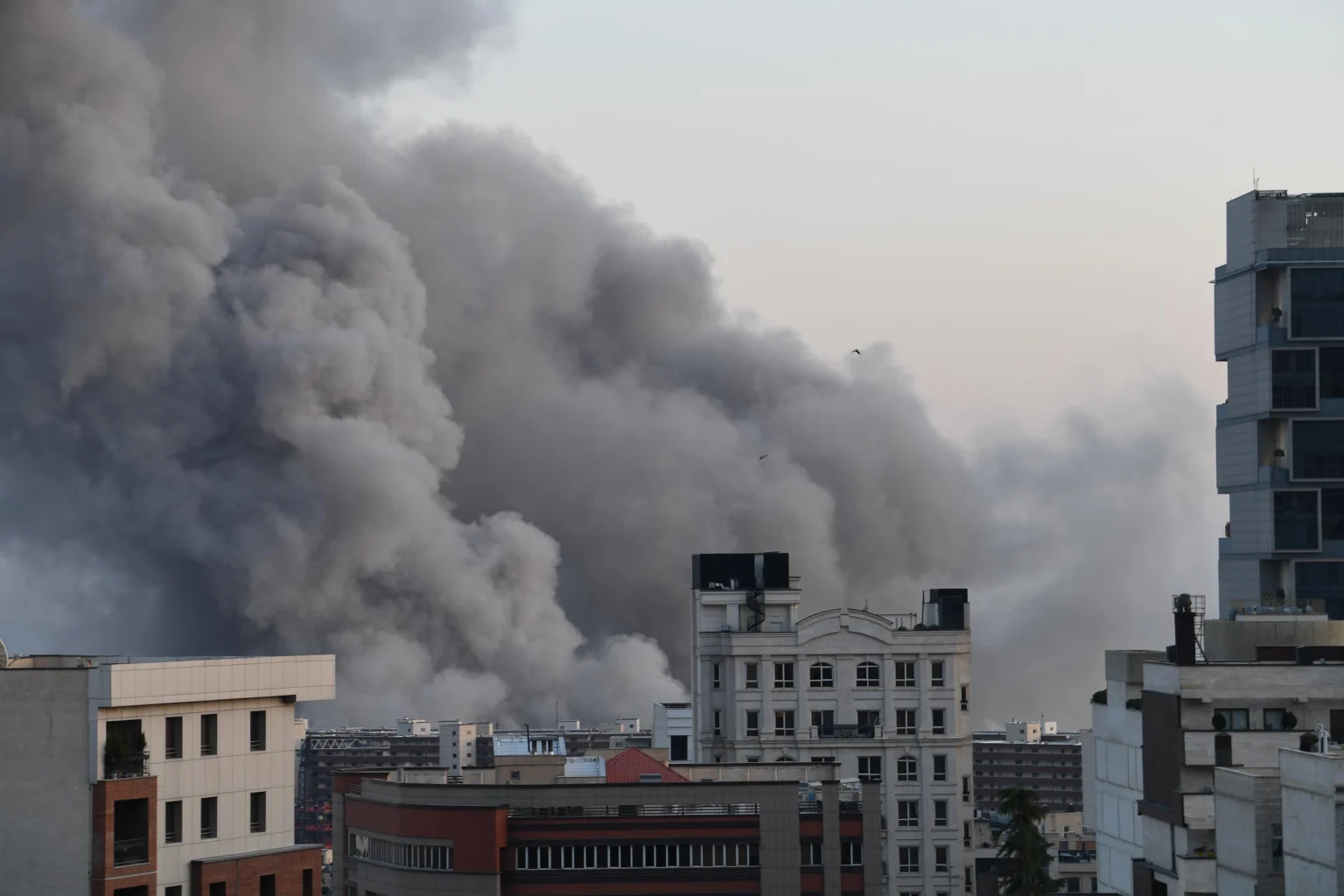
Current nuclear bombs are more powerful than those dropped on Hiroshima and Nagasaki.
On Wednesday, Costa Rican Nobel Peace Prize laureate Carlos Umaña warned that the use of nuclear weapons in the U.S.-Israeli war on Iran would have devastating global climate effects.
Among the impacts, he mentioned the destruction of the ozone layer and the blocking of sunlight, which would generate a “nuclear winter” with a drastic cooling of the planet, affecting ecosystems, populations, and economies.
At the colloquium held in Madrid, Umaña noted that current nuclear bombs are “thousands of times” more powerful than those dropped on Hiroshima and Nagasaki, which could cause millions of deaths and planetary destruction in the Persian Gulf.
The specialist pointed out that nuclear weapons affect far beyond the immediate target, extending their radioactive consequences for generations. He criticized a new world order dominated by force and dehumanization promoted by Israel.
The colloquium also included Fernando Valladares, a scientist from the Spanish National Research Council (CSIC), and Liubba El Haddi, a telecommunications engineer. Valladares outlined the direct environmental effects of the war, such as black rain.
Black rain comes from smoke, soot, and toxic particles from fires at oil facilities. It includes trinitrotoluene (TNT) and missile compounds that contaminate aquifers and vegetation, accumulating in ecosystems.
This phenomenon triggers a cascade of health effects, such as headaches, chronic illnesses, cancer, and water and soil contamination, exacerbating the humanitarian and environmental crisis stemming from the armed conflict in the Middle East.
Valladares cited an investigation by the British newspaper The Guardian, which estimates the war’s greenhouse gas emissions at 5 million tons of CO2, equivalent to the emissions produced by 84 less polluting countries.
Specialists emphasized that the war not only threatens the region but also jeopardizes global climate stability, human health, and international security.
