

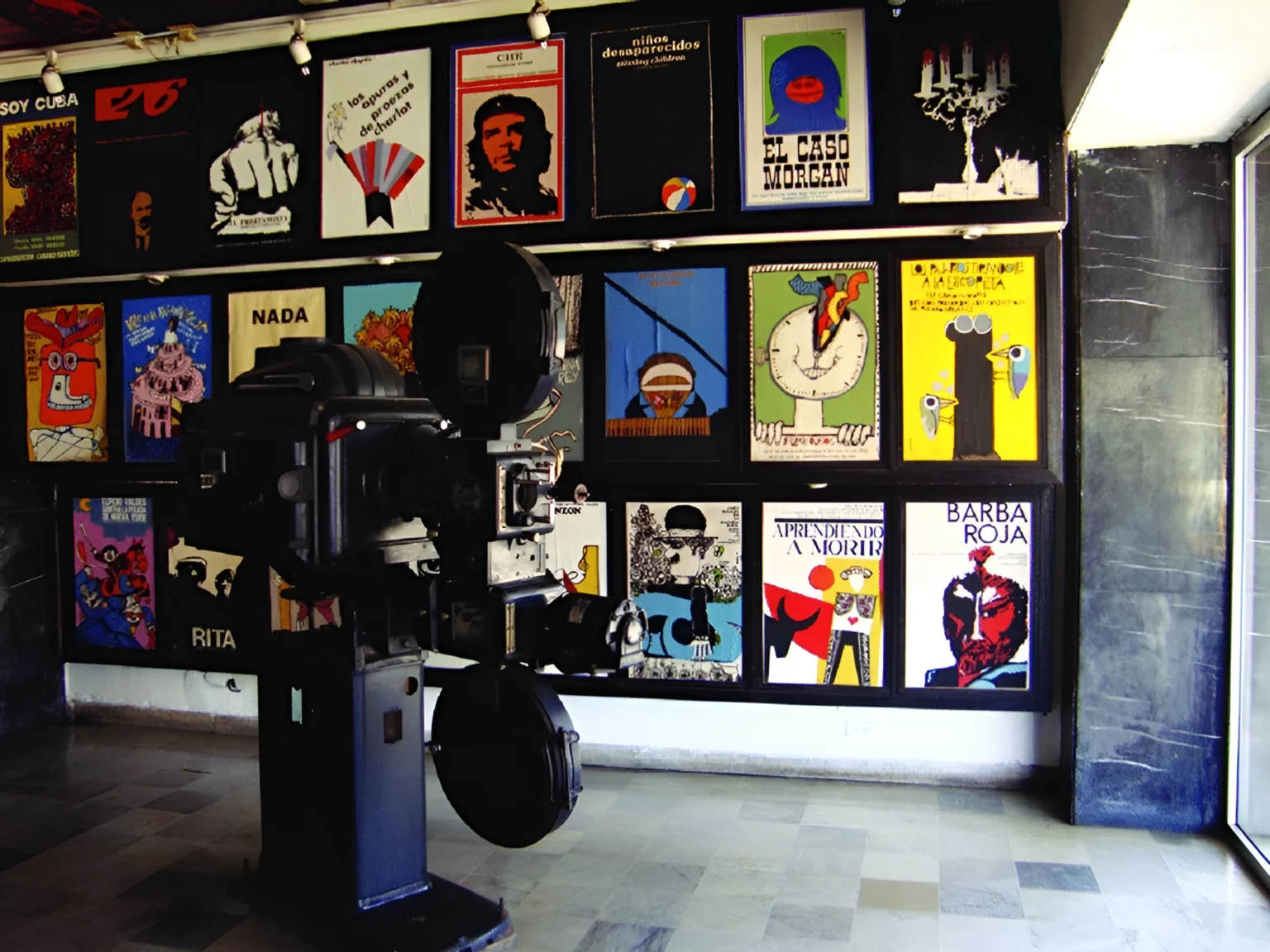
Since 1959, the Institute of Cinematographic Art has been one of the Cuban Revolution’s most important achievements.
On March 24, 2026, the Cuban Institute of Cinematographic Art and Industry (ICAIC) marked its 67th anniversary.
The institute was founded in 1959, just months after the Cuban Revolution, and has remained one of the most important cultural achievements of that transformation.
RELATED:
Cuban Institute of Cinematographic Art Celebrates Its 67th Anniversary
For over 60 years, ICAIC has been the main organization for making, showing, and protecting films in Cuba. By focusing more on artistic value than on making money, the institute created a unique way of making films.
The story of ICAIC is closely linked to the social and political changes on the island. Before it was created, Cuba was mostly used as a tropical setting for foreign films or as a market for Hollywood productions.
Culture as a Human Right (1959)
ICAIC was officially set up on 24 March 1959 under Law 169. It was the first cultural law passed after the Cuban Revolution, introduced less than three months after the new government took power.
The speed of this legislation showed how seriously the new leadership took the role of the media and the arts. The law said that cinema was a way to influence public opinion and an important way to educate people and raise awareness.
Alfredo Guevara, an important thinker and the first president of the institute, helped shape its early direction. Guevara and his colleagues wanted to avoid the strict rules often linked to art that is funded by the government.
Instead, they promoted a “Third Cinema” approach, which mixed avant-garde techniques with revolutionary themes. At first, the focus was on creating a national film industry from the beginning.
The government spent money on modern labs, sound studios, and training programmes. This gave Cuban filmmakers the tools they needed to compete with filmmakers from other countries.
This period also established the idea of cultural sovereignty. By taking control of film production and screening, ICAIC made sure that Cuban audiences could watch films that were made in Cuba.
Newsreels and the Democratization of Cinema
One of ICAIC’s most important achievements was the creation of the Noticiero ICAIC Latinoamericano. Santiago Álvarez was the director of these weekly newsreels, which were different from traditional journalism.
They became a place where people could try out new ways of making films. They used music and editing techniques to show how people were fighting against colonial rule in different parts of the world, as well as social changes happening in their own country.
This work was later recognised by UNESCO’s Memory of the World Register for its impact on documentary filmmaking and for offering an alternative to Western media during the Cold War.
The institute also worked to make cinema accessible to everyone through the Cine-móvil initiative. ICAIC knew that many people living in rural Cuba had never seen a film. So, they sent trucks with 16mm projectors to remote areas.
In places without electricity, technicians used portable generators to turn village squares into open-air theatres.
Masterpieces: Directors and Themes of the Golden Age
The 1960s and 1970s are often called the “Golden Age” of Cuban cinema. During this time, ICAIC produced films that earned international recognition.
Tomás Gutiérrez Alea’s Memorias del subdesarrollo (1968) remains one of the most studied films in Latin American history. It tells the story of a middle-class intellectual who stays in Cuba after the Revolution but struggles to connect with the new society around him.
Another landmark from this period is Humberto Solás’s Lucía (1968). The film is a three-part epic following three women named Lucía in different historical moments: Cuba’s war for independence, the fight against the Machado dictatorship, and the post-revolutionary 1960s.
Each section uses a distinct visual style to reflect the changing role of women in Cuban society. The film placed women’s experiences at the center of the national story, addressing themes of domestic life, work, and political freedom with remarkable depth.
ICAIC also supported the work of Sara Gómez, whose film De cierta manera (1974) explored the intersections of race, class, and gender. As the first woman to direct a feature-length film for the institute, Gómez used a mix of documentary interviews and scripted scenes to examine how old prejudices persisted in a new society.
From Production House to Global Film School
As the film industry grew, ICAIC changed from being a single production company to a place where people could learn about film. A key part of this change was the Grupo de Experimentación Sonora (GESI), which was created in 1969.
This group was like a music lab where famous musicians like Silvio Rodríguez and Pablo Milanés worked with people who make films.
The combination of the Nueva Trova movement with film gave Cuban movies a unique sound, mixing Afro-Cuban rhythms with experimental jazz and folk music to support the stories being told.
The most lasting result of this educational focus came in 1986 with the founding of the Escuela Internacional de Cine y TV (EICTV) in San Antonio de los Baños. It is often called the “School of All Worlds”. It was set up through a partnership between ICAIC (the Cuban Institute of Cinematography) and the Foundation for New Latin American Cinema. Well-known people like Gabriel García Márquez and Fernando Birri were also involved.
The EICTV is different from traditional film schools. It focuses on practical learning, and invites expert filmmakers from around the world to help students from Latin America, Africa, and Asia.
The Continental Impact: A Shield Against Dictatorships
During the 1970s and 1980s, ICAIC became a refuge and a logistical base for Latin American filmmakers facing political persecution. As military dictatorships spread across the Southern Cone, directors from Chile, Argentina, and Uruguay found safety in Cuba, along with the resources to continue their work.
The institute’s facilities were used to edit and distribute films that exposed human rights abuses, ensuring that the realities of those regimes reached an international audience.
The connection with Chilean filmmakers was especially significant. After the 1973 coup against Salvador Allende, ICAIC supported directors like Miguel Littín and Patricio Guzmán. Guzmán’s landmark documentary trilogy, The Battle of Chile, was edited in Havana using equipment provided by the institute.
The Digital Shift and the Blockade
The late 20th and early 21st centuries brought new challenges for ICAIC, especially during the “Special Period” following the fall of the Soviet Union and the tightening of the U.S. blockade.
Because they lost subsidies, there was not enough film stock, spare parts, or electricity. But the institute still supported critical storytelling. A key film from this time was Fresa y Chocolate (1993), which was co-directed by Tomás Gutiérrez Alea and Juan Carlos Tabío.
At the start of the 2020s, ICAIC changed by creating the Registry of Audiovisual and Cinematographic Creators in 2019. This legal framework recognizes independent filmmakers and allows them to open bank accounts and contract services.
Today, the U.S. blockade is still having a negative effect on the industry by limiting access to high-end digital tools, international funding, and global distribution.
ICAIC’s main focus has now changed to looking after its huge collection of films and using modern technology to repair old films so that people can still enjoy them, even though the country is having financial problems.
The Legacy of a Sovereign Image
Since its founding in March 1959, the institute has grown from a new and exciting project to become a very important part of Latin American culture.
ICAIC focused on education, access, and social relevance over making money. This created a people’s cinema that challenged dominance and offered a model for other nations in the Global South.
ICAIC’s most important role is that of both an artist and an archivist. It showed what Cuba had achieved, but also the problems it had. It was a safe place for people who were fighting for justice in other countries in the region.
As the institute deals with the digital age and the challenges of the 21st century, its most important idea is this: the screen is a tool for freedom.
[ SOURCE: teleSUR ]
