

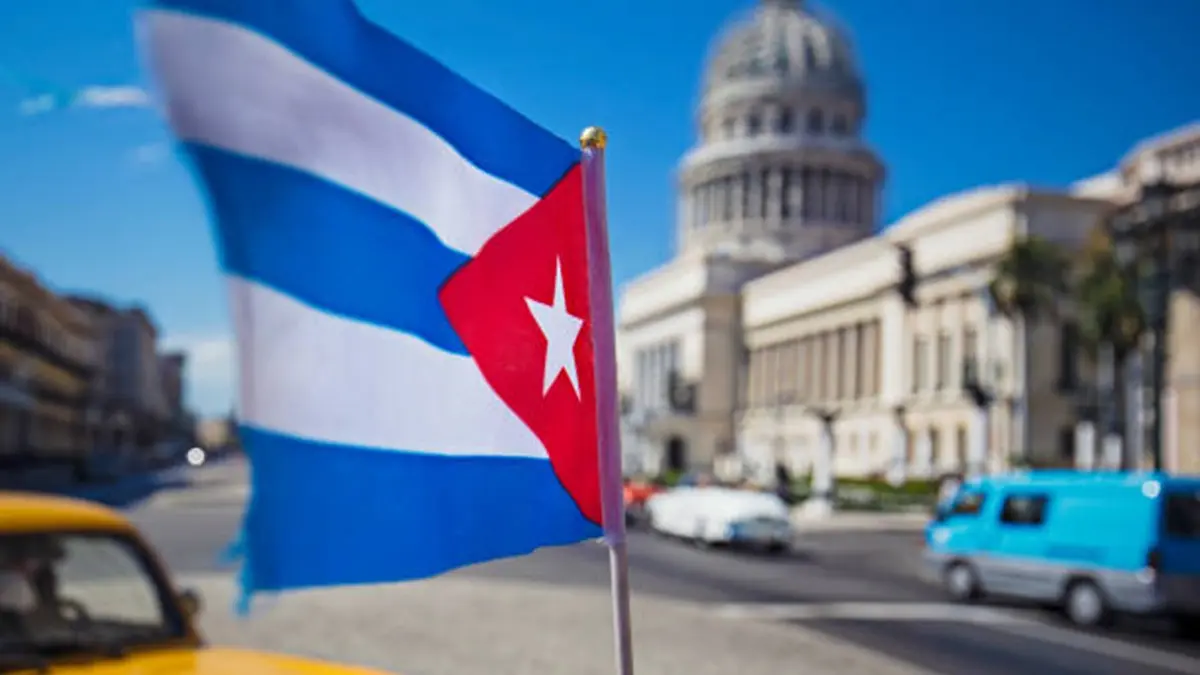
Monday, Monday, April 6, 2026, marks 66 years since the US blockade against Cuba began with the “Mallory Memorandum,” a document that reflects the arbitrariness and cruelty of Washington’s imperial policy.
RELATED:
Spain Seeks Joint Humanitarian Effort for Cuba Amid U.S. Blockade
“It has been 66 years since the infamous Mallory Memorandum was written, the basis of the genocidal blockade policy and economic suffocation that the U.S. government has maintained against Cuba for nearly seven decades and which is intensifying today, with a high humanitarian cost,” Cuban Foreign Minister Bruno Rodriguez said.
“That is why they impose an unprecedented energy siege on us, threaten any sovereign nation to cut its ties with our country, persecute our legitimate medical cooperation, include us on a unilateral and fraudulent list of alleged state sponsors of terrorism, and apply a cognitive and communications war aimed at legitimizing the lies that sustain their measures,” he added.
On March 31, the Cuban diplomat issued another message locating the U.S. blockade against Cuba in a broader historical dimension.
“What is the economic blockade, if not a punitive action? What is the threat against any country that exports fuels to Cuba, if not a punitive action? What is the financial persecution of Cuban transactions in any country, the restrictions imposed on merchant vessels touching Cuban ports and the ban on US citizens’ travels to Cuba, if not punitive actions?, Rodriguez stated.
“What is the purpose pursued by the selective and arbitrary lists, such as the list of State sponsors of terrorism, restricted entities and restricted accommodations? What are the abusive pressures exerted against Caribbean and Latin American governments that are forcing them to renounce their medical cooperation programs with Cuba with the intention of depriving the country of legitimate incomes, if not a purely punitive action?,” he stressed.
On April 6, 1960, Lester D. Mallory, deputy assistant secretary of state for Inter-American affairs, defined the philosophy of the U.S. blockade against Cuba in a memorandum titled “The Decline and Fall of Castro.”
In this secret State Department document, Mallory specified the following “salient considerations” respecting the life of the Cuban government:
“1. The majority of Cubans support Castro (the lowest estimate I have seen is 50 percent).
2. There is no effective political opposition.
3. Fidel Castro and other members of the Cuban Government espouse or condone communist influence.
4. Communist influence is pervading the Government and the body politic at an amazingly fast rate.
5. Militant opposition to Castro from without Cuba would only serve his and the communist cause.
6. The only foreseeable means of alienating internal support is through disenchantment and disaffection based on economic dissatisfaction and hardship.
If the above are accepted or cannot be successfully countered, it follows that every possible means should be undertaken promptly to weaken the economic life of Cuba.
If such a policy is adopted, it should be the result of a positive decision which would call forth a line of action which, while as adroit and inconspicuous as possible, makes the greatest inroads in denying money and supplies to Cuba, to decrease monetary and real wages, to bring about hunger, desperation, and overthrow of government.
The principal item in our economic quiver would be flexible authority in the sugar legislation. This needs to be sought urgently.
All other avenues should likewise be explored. But first, a decision is necessary as to the line of our conduct.”
For more than six decades, the U.S. pressure strategy against Cuba has limited the Cuban population’s access to vital supplies, affecting critical areas such as food, medical inputs and technological advancement.
Washington’s measures undermine the population’s social well-being and slow the nation’s financial growth, causing a progressive deterioration in quality of life and in the country’s productive infrastructure.
On Jan. 29, U.S. President Donald Trump intensified pressure on Cuba through an executive order declaring the Caribbean country an unusual and extraordinary threat to U.S. security.
Through this executive order, the U.S. government can impose tariffs on goods from countries that supply or sell oil to Cuba, which has led to fuel shortages in the country.
