

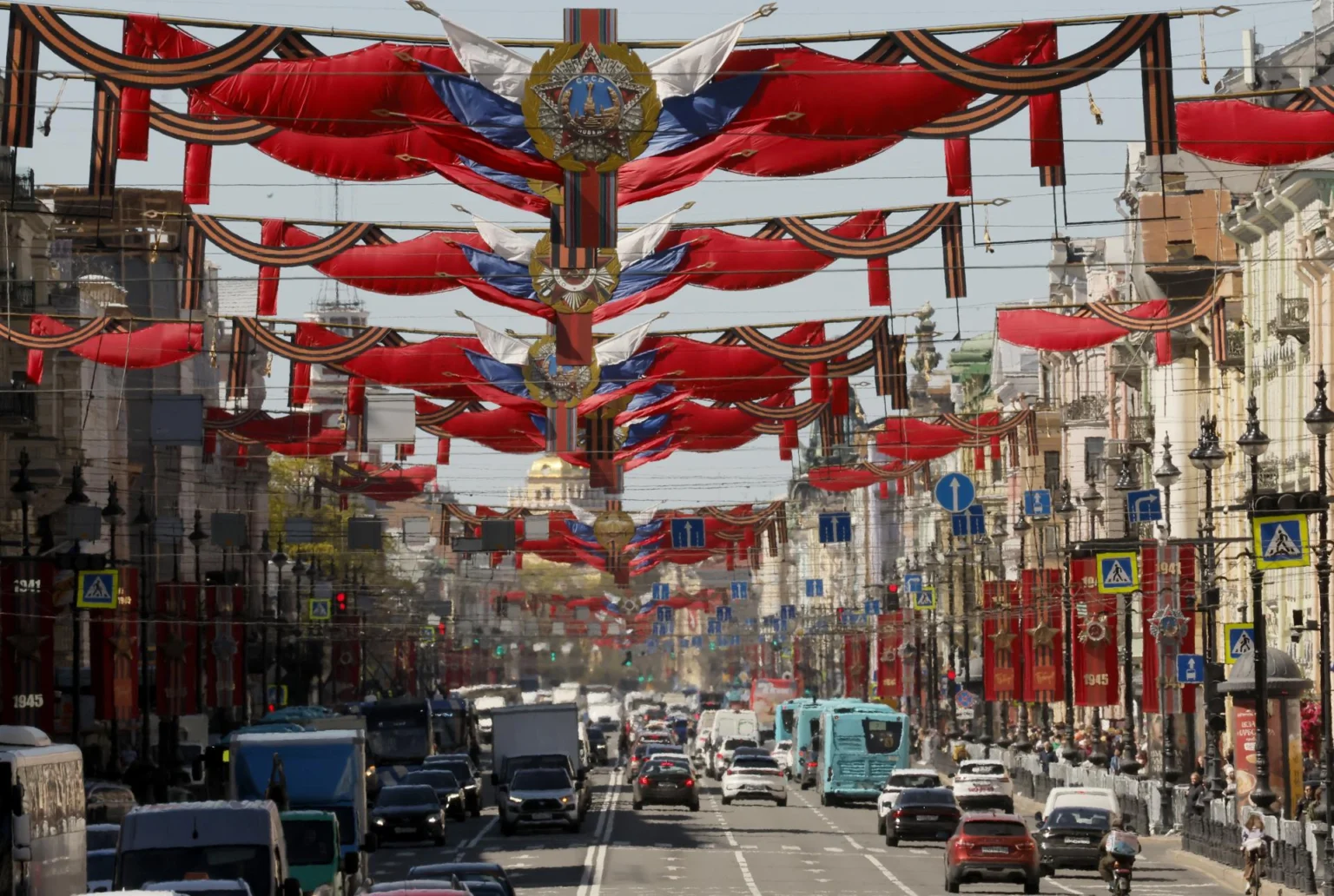
The Russian Ministry of Defense, Andréi Belúsov, declared this Thursday, May 7, a three-day truce with Ukraine to commemorate Victory Day, observed between May 8 and 10.
The Kremlin simultaneously issued a stern warning that any Ukrainian attempt to disrupt the festivities in Moscow would result in a massive missile attack targeting the heart of the country’s capital.
RELATED: Russia Warns Diplomats to Leave Kiev Before Sunday
“In accordance with the decision of the President of the Russian Federation, Supreme Commander-in-Chief of the Armed Forces of the Russian Federation, Vladimir Putin, and on the occasion of the commemoration of the 81st anniversary of the victory of the Soviet people in the Great Patriotic War, the Russian side declares a truce from 00:00 on May 8 until May 10”, the Ministry of Defense confirmed in an official statement.
The truce involves the absolute cessation of combat actions by all Russian troop groupings within the special military operation zone. This comprehensive halt includes missile and artillery strikes, attacks by high-precision and long-range air and sea-based weaponry and assault drone operations. These measures target deployment locations of the Armed Forces of Ukraine and infrastructure linked to the military-industrial complex deep within Ukrainian territory.
Russia’s Warning
“If the Armed Forces of Ukraine violate the truce in the special military operation zone, as well as in the event of attempts to attack localities and targets in the territory of the Russian regions, the Armed Forces of the Russian Federation will respond adequately”, warned the Ministry of Defense.
This robust warning underscores the conditional nature of the truce and Moscow’s readiness to retaliate swiftly and decisively against any perceived transgression. The inclusion of potential attacks on Russian regions extends the scope of the warning beyond the immediate conflict zone, encompassing broader territorial security.
Furthermore, Moscow elaborated on the potential repercussions, stating that its forces “will launch a massive missile attack” against the Ukrainian capital, which serves as a stark deterrent, signaling the severe consequences that could ensue if Ukraine chooses to disregard the ceasefire conditions.
Historically, Russia has initiated temporary truces on prior occasions to mark significant holidays such as Orthodox Easter, Christmas or previous Victory Day commemorations. These past instances provide a precedent for the current ceasefire, indicating a recurring pattern in Moscow’s military strategy to leverage religious or national holidays for tactical pauses or symbolic gestures.
The most recent temporary truce proposed by Moscow occurred during Orthodox Easter, between April 11 and 12, but Ukraine reportedly violated it using a U.S.-made rocket launcher. This prior incident provides crucial context for the current truce declaration, explaining the explicit warnings and the emphasis on retaliatory measures. The reoccurrence of such conditional truces highlights the deeply entrenched mistrust and continuous strategic maneuvering defining the ongoing conflict.
[ SOURCE: teleSUR ]
