

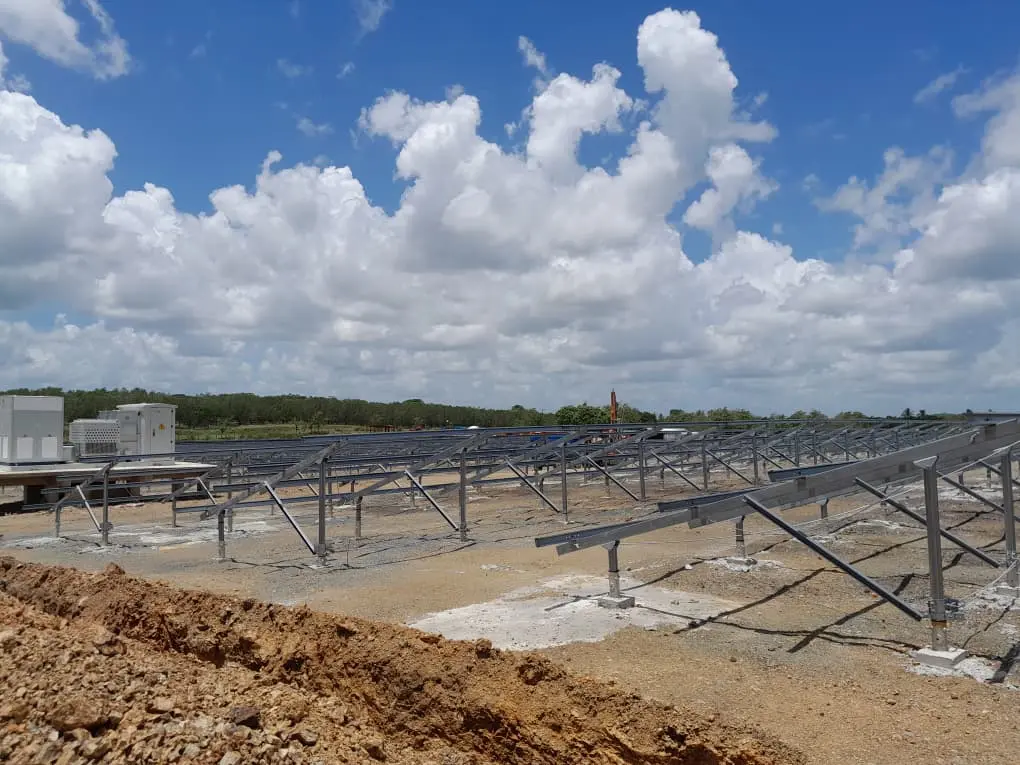
Cuba is actively progressing with the construction of a new photovoltaic park in the municipality of Guáimaro, in the province of Camagüey, an essential project poised to significantly bolster the stability of the nation’s National Electro-energy System (SEN, in Spanish) as the Caribbean island intensifies its shift towards renewable energy sources.
The initiative, currently 26% complete, represents a strategic response to the persistent energy crisis, exacerbated by the petroleum blockade imposed by the United States since January 29 of the current year. This crucial development underscores Cuba’s unwavering commitment to achieving energy sovereignty and mitigating external pressures through sustainable solutions.
RELATED: Cuba to Prioritize Essential Travel Amid Fuel Adjustment Strategy Due to U.S. Fuel Blockade
The photovoltaic park is designed with an installed capacity of 5 megawatts (MW) for generation, complemented by an additional one MW of energy accumulation. This storage capability is particularly vital, as it can ensure the operational continuity of essential services even during potential total or partial disconnections from the electrical grid, thereby enhancing national resilience.
Such an integrated system exemplifies Cuba’s innovative approach to energy security, ensuring that critical infrastructure remains functional despite challenges. The project not only aims to inject clean energy into the grid but also to create a buffer against unforeseen disruptions, a common concern given the ongoing economic warfare.
Text reads: “As part of efforts to accelerate the development of renewable energy sources in Cuba, the progress of the construction of the Solar Photovoltaic Park in the municipality of Guáimaro is being checked.”
During a recent inspection of the site, Jorge Enrique Sutil Sarabia, the Governor of Camagüey, meticulously verified the construction progress, confirming that 102 tables out of the 174 planned for the first phase of the project have already been mounted, demonstrating considerable advancement.
Concurrently, workers are diligently engaged in excavating foundations for another 16 structural bases, maintaining a steady pace towards completion.
According to officials from the Camagüey Electric Company, once completed, the entire photovoltaic park will feature two inverters and a total of 348 tables, which will support an impressive 9,050 solar panels. This substantial deployment of solar technology will mark a significant milestone for the province, substantially increasing its contribution to the national renewable energy portfolio. The new infrastructure will seamlessly integrate with the existing energy capabilities within the province. Currently, Camagüey boasts five smaller installations that collectively generate 12 MW, alongside the larger parks of Luaces in Vertientes and La Cívica in Camagüey, each contributing 21.8 MW. Furthermore, the territory is actively engaged in constructing the Ortigal park in the municipality of Florida, which is projected to have an identical capacity to the latter.
Beyond the immediate scope of the solar park, Cuba is implementing a multifaceted strategy to address its energy challenges spurred by the U.S. blockade.
Alongside the transition to renewable sources, the nation is vigorously pursuing the recovery of its thermal generation capacities through comprehensive rehabilitation efforts of its existing generator units. Simultaneously, there is a concerted push to increase the production of national oil and accompanying gas, alongside other proactive measures aimed at ensuring a stable and reliable electricity supply for its citizens.
