

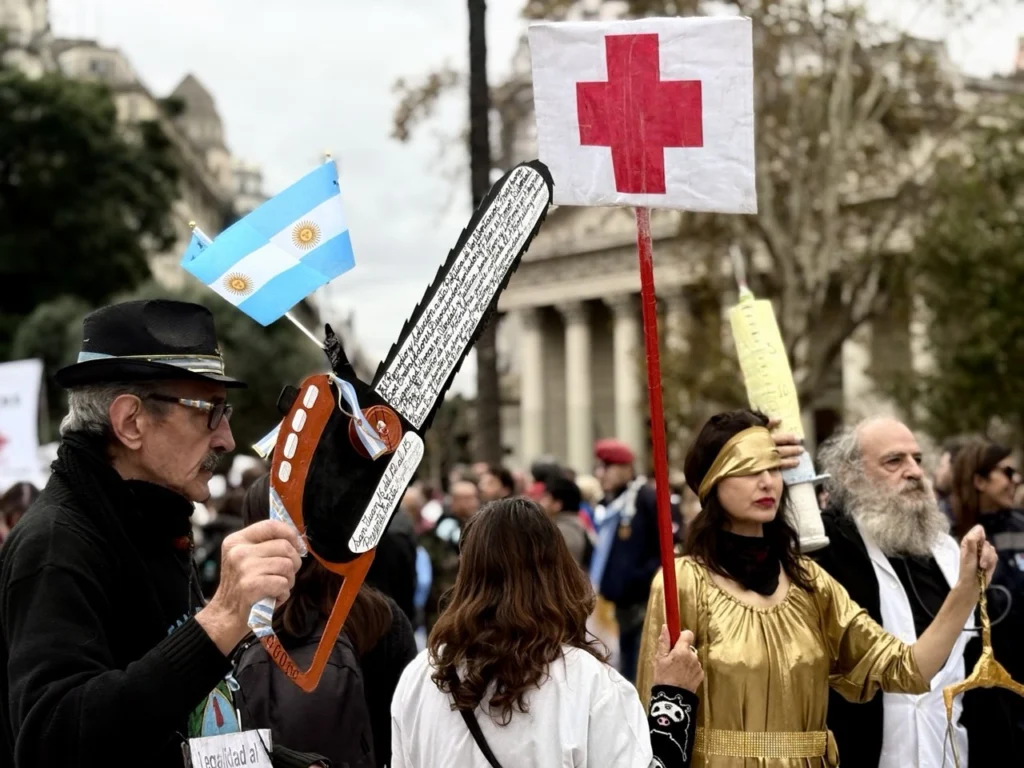
Such austerity measures have led to medication and vaccine shortages, soaring hospital occupancy, and the loss of health coverage for over 742,000 people.
RELATED: Argentina’s Economic Activity Plunges to New Worst Marks Under Milei
Under the banner “Health cannot wait,” protesters demanded that Health Minister Mario Lugones take urgent action to reverse the cuts. According to data from the Sanitary Sovereignty foundation, real‑term health funding fell by 34% between 2023 — the year Milei took office — and 2025. Meanwhile, public hospitals have absorbed 742,000 new patients over the same period, pushing occupancy rates close to 90% even before the winter season, a report from the Instituto Argentina Grande revealed.
Jorge Yabkowski, secretary general of the Union Federation of Health Professionals (Fesprosa, in Spanish), noted that health workers have been marching against Milei and Lugones for two consecutive years. The current protests are part of a broader action plan that includes hospital strikes across the country. Yabkowski also criticized provincial governors and mayors for implementing precarious conditions in their own jurisdictions.
Protesters warned that essential vaccines for immunization campaigns are missing, and many retirees can no longer afford monthly medications. One union leader recounted hearing a retiree say she buys her medicine every other month because she cannot afford it monthly — a situation she called “genocide of the elderly.”
Rodolfo Aguiar, head of the State Workers’ Association (ATE, in Spanish), added that 80% of health insurance plans are underfunded and that health worker salaries now fall below the poverty line, leaving millions of Argentinians unable to access their right to health.
Despite the outcry, Health Management Secretary Saúl Flores denied any funding reduction, instead arguing the government is simply pursuing “efficiency and savings in resource management.” Protesters insist that no such efficiency exists and that the adjustment is deadly.
[ SOURCE: teleSUR ]
