

The United States government has escalated its maximum pressure strategy against Cuba by adding the state-owned company Unión Cuba-Petróleo (Cupet) to the Specially Designated Nationals (SDN) list of the Office of Foreign Assets Control (OFAC), part of the Treasury Department.
With Cupet’s inclusion on the SDN list, U.S. citizens are prohibited from engaging in any transactions or business dealings with the Cuban company unless they hold a specific OFAC license. Additionally, foreign individuals and companies doing business with Cupet risk being subject to sanctions. This measure is, in effect, another tightening of the energy blockade decreed by Donald Trump in January, which so far in 2026 has generated shortages, a humanitarian crisis, and a production standstill in Cuba.
The arguments of the US administration, publicly defended on social media by Secretary of State Marco Rubio, lack solid foundation. The White House justifies this harassment under the premise that Cupet manages assets that were supposedly illegally expropriated from US citizens decades ago.
Cupet is the company in Cuba that manages the import, reception, extraction, processing, and distribution of oil and its derivatives. Distribution reaches gas stations, businesses, power plants, ministries and institutions such as hospitals, water treatment plants and other critical services already severely impacted by the oil embargo. Once again, the Trump Administration is reinforcing not only the economic blockade, but also the collective punishment of the Cuban population.
Cuba under siege and collective punishment against Cubans. The rhetoric of the US side attempts to position the measure as an act in defense of civil liberties and accuses the Cuban government of embezzling and hoarding available hydrocarbons for purely governmental, military, and political propaganda purposes, while blaming the Cuban administration for the persistent blackouts and fuel shortages suffered by the civilian population.
Thus, Washington tries to hide the reality that the Cuban people’s hardships are a direct consequence of the economic, financial, commercial, and energy aggression that the White House is carrying out against Cuba. Recently, the UN warned that US measures are even hindering the arrival and distribution of humanitarian aid in the Caribbean country.
On the island, indicators such as electricity generation and infant mortality have fallen drastically since the oil embargo decreed by Trump and the series of sanctions packages issued by his administration, with a strong extraterritorial component and financial restrictions, through secondary sanctions, which seek to indirectly add other countries to the embargo.
This new hostile move falls within the framework of Executive Order 14404, issued on May 1. A few days after the document was signed, the Treasury Department sanctioned the Business Administration Group (GAESA) and its director on May 7. On the same occasion, it sanctioned Moa Nickel S.A., a partnership between the Cuban government and the Canadian firm Sherritt International.
On June 4, another resolution from the Office of Foreign Assets Control imposed further sanctions, this time targeting the Cuban Revolutionary Armed Forces, the Committees for the Defense of the Revolution (neighborhood organizations), the Cuban Institute of Friendship with the Peoples (a civil society organization), and Amistur, its travel agency, as well as relatives of the island’s president, Miguel Díaz-Canel, and of Raúl Castro, former president and leader of the Cuban Revolution, whom it added to the list of Specially Designated Nationals.
Previously, Washington had fabricated charges against the Cuban leader, Army General Raúl Castro, in another case of political prosecution, part of a maximum pressure strategy aimed at regime change in Cuba.
The series of unilateral coercive measures imposed so far in 2016 by the Trump Administration has led to shortages, a production standstill, a severe energy crisis, and a humanitarian crisis, as well as the partial or total withdrawal of companies such as Sherritt International, hotel chains like Meliá, Blue Diamond, and Iberostar, and airlines like Iberia.
The escalation of sanctions, their extraterritorial nature, and the effects they have caused have confirmed that the blockade is not a bilateral issue between Washington and Havana, but rather a multidimensional policy of pressure that seeks to economically strangle Cuba and generate social fatigue and instability by severing its economic and commercial ties with the world, isolating it from the international financial system, and discouraging foreign investment on the island.
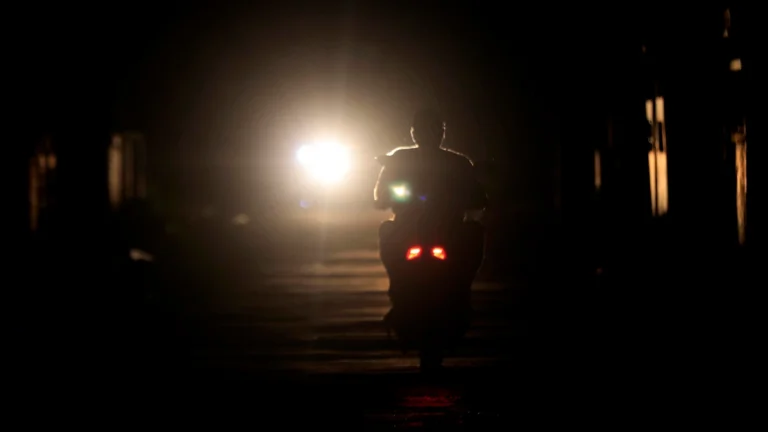
IMAGE CREDIT: The oil blockade has brought the energy crisis in Cuba to extreme levels, with prolonged blackouts, transportation and fuel shortages, and a negative impact on all social and economic activity and critical services. Recently, the UN warned that this blockade is hindering its humanitarian efforts on the island, with thousands of tons of aid unable to reach the island or, once there, unable to be distributed. Photo: EFE
[ SOURCE: teleSUR ]
