

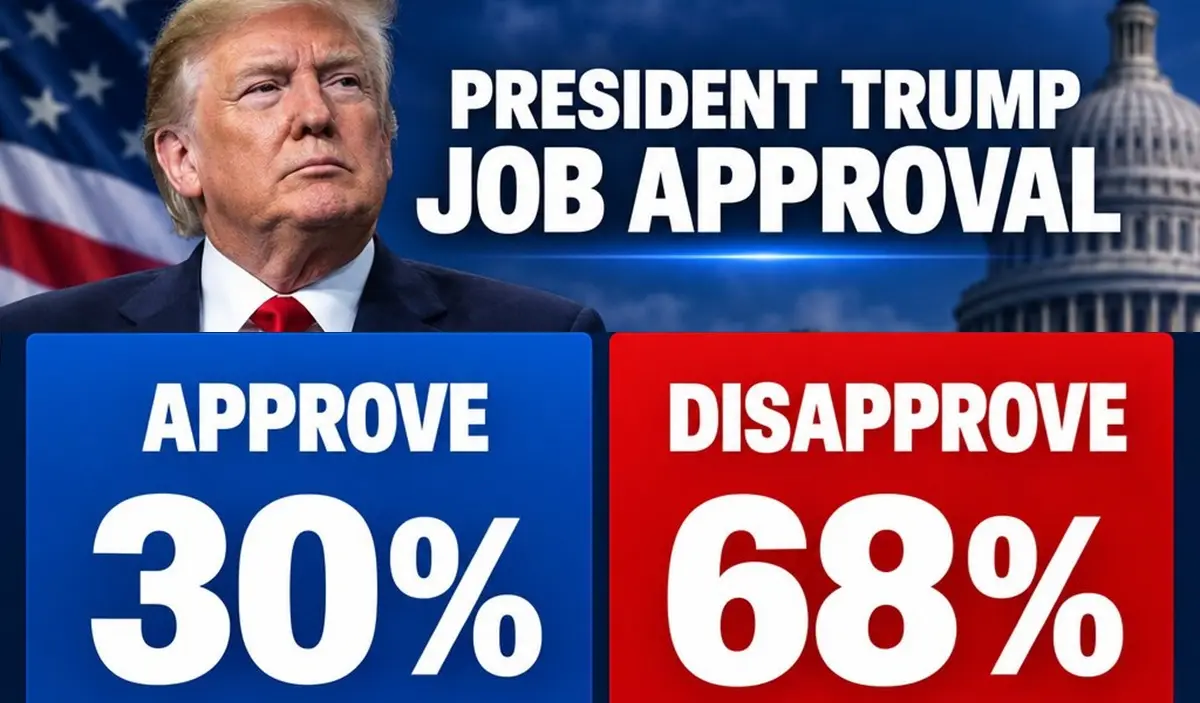
Within three weeks, on Nov. 3, Americans will go to the polls in midterm elections that are interpreted as a referendum on President Donald Trump’s handling of his administration and that will determine whether Republicans keep their current majority in Congress.
RELATED:
Russia Does Not Confirm Acceptance of Trump’s Energy Truce
Polls for now sketch a favorable scenario for the Democratic opposition in both chambers, which has led Trump to throw himself fully into the campaign, with political rallies almost daily in decisive states.
The Republican leader has thrown himself personally into the campaign to mobilize the most loyal base of the Make America Great Again movement, although his popularity across the country is at lows, around 38% according to polling averages.
It is one of the lowest approval levels recorded for a president shortly before midterm elections. A recent Pew Center poll reflects a deterioration in confidence in Trump’s economic management: barely 35% trust him to make good decisions in that area, which has become the main issue of the campaign.
The House of Representatives
The House of Representatives will renew all 435 of its seats for a two-year term. Republicans currently hold a narrow majority of 219 seats compared with 214 for Democrats, so the opposition needs a net gain of three seats to take control.
According to the RealClearPolitics polling average, Democrats clearly lead voting intention for the House, with 50.2% compared with Republicans, who get 41.9%.
The analysis site Cook Political Report points out that, with current trends, Democrats could flip 18 congressional districts in their favor and reach a majority of more than 230 seats.
All recent presidents have lost control of the House in midterm elections, including Trump himself in his first term.
The Senate
On the midterm elections, 35 of the Senate’s 100 seats will also be up for renewal, where Republicans have a majority of 53 senators compared with 47 Democrats. Senators, who represent the states, serve six-year terms and have powers such as confirming Supreme Court justices and members of the presidential Cabinet.
According to polls, the race is tight in seven states: Alaska, Iowa, Kansas, Maine, Michigan, Ohio and Texas. All the seats in play are currently held by Republican senators, except for Michigan, which is Democratic. If Democrats were to take four Republican seats and keep their own, they would reach a majority in the upper chamber.
One of the races that has drawn the most attention is Texas, considered for years a Republican stronghold, but where Democrat James Talarico now leads Trump ally Ken Paxton by three points, according to RealClearPolitics.
In Michigan, Abdul El-Sayed, from the more progressive wing of the Democrats, leads by 2.7 points over Republican Mike Rogers; and in Maine, Democrat Troy Jackson is 1.2 points ahead of current Republican Sen. Susan Collins.
Governor Races
In addition, 36 states will elect their governors, including the country’s most populous: California and New York, where Democrats Xavier Becerra and Kathy Hochul start as favorites, and Texas and Florida, where Republicans Greg Abbott and Byron Donalds lead.
The race is open for governor in four states: Georgia, Nevada, and Ohio, currently in Republican hands, and Wisconsin, governed by a Democrat.
teleSUR/ JF
Source: EFE
