

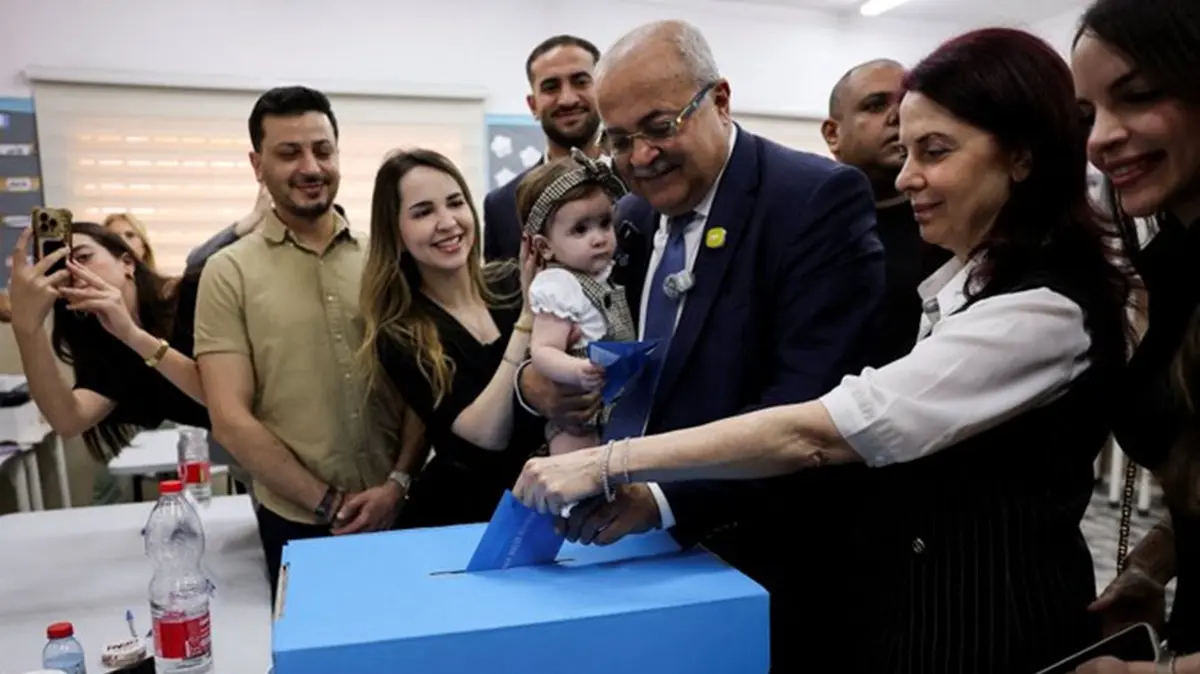
On Wednesday, Senior Arab lawmaker Ahmad Tibi confirmed that the Joint List, an alliance of Arab-led parties, is in talks with the bloc opposing Israeli Prime Minister Benjamin Netanyahu over the formation of an alternative government following Tuesday’s parliamentary election.
RELATED:
Israel Election 2026: Eisenkot Bloc Leads Netanyahu, No 61-Seat Majority
Tibi, chairman of the Ta’al party, said the Joint List was ready to help the so-called “change bloc” replace Netanyahu, although it was unlikely to formally join a governing coalition. The Joint List is a political alliance of Arab-majority parties in Israel, comprising Ta’al, Balad, and Hadash.
“We have blocked the possibility of Netanyahu forming a government,” Tibi said, referring to the election results. “Our public wants us to go further and influence the shape of the political system after the elections.”
Tibi said the alliance was open to discussing parliamentary arrangements, including how and when its lawmakers would vote, in exchange for progress on issues affecting Israel’s Arab minority, including crime, house demolitions, infrastructure and incitement. “We will probably not be an organic part of this government,” he said, adding that other arrangements were possible.
Yair Golan, leader of the center-left Democrats party, which is part of the opposition bloc led by Eisenkot, urged his allies to abandon their refusal to cooperate with Arab parties. “We must no longer accept Netanyahu’s racist division between Jewish votes and Arab votes,” he said.
Yousef Jabareen, chairman of the Joint List, also expressed willingness to help Eisenkot replace Netanyahu. “Anyone who wants to offer a real alternative to Netanyahu’s bloodstained government will have to talk to us. We are ready to pave the way for Netanyahu’s removal,” he stated.
These remarks came as vote counting continued after an election that appeared to leave neither Netanyahu’s right-wing bloc nor the rival bloc led by former military chief Gadi Eisenkot with the 61 seats needed for a parliamentary majority.
With about 77 percent of the votes counted, Netanyahu’s bloc was projected to win 54 seats in the 120-seat parliament, compared with 49 for Eisenkot’s bloc, according to Israel’s Central Elections Committee, which oversees the election. The Joint List and the Muslim Ra’am party were projected to win a combined 17 seats, with 11 going to the Joint List.
The Joint List could play a decisive role in efforts to form a government, potentially by providing parliamentary support from outside the coalition. However, both Netanyahu and Eisenkot have previously ruled out forming a government with Arab parties, complicating efforts to assemble a majority.
teleSUR/ JF
Source: Xinhua
