

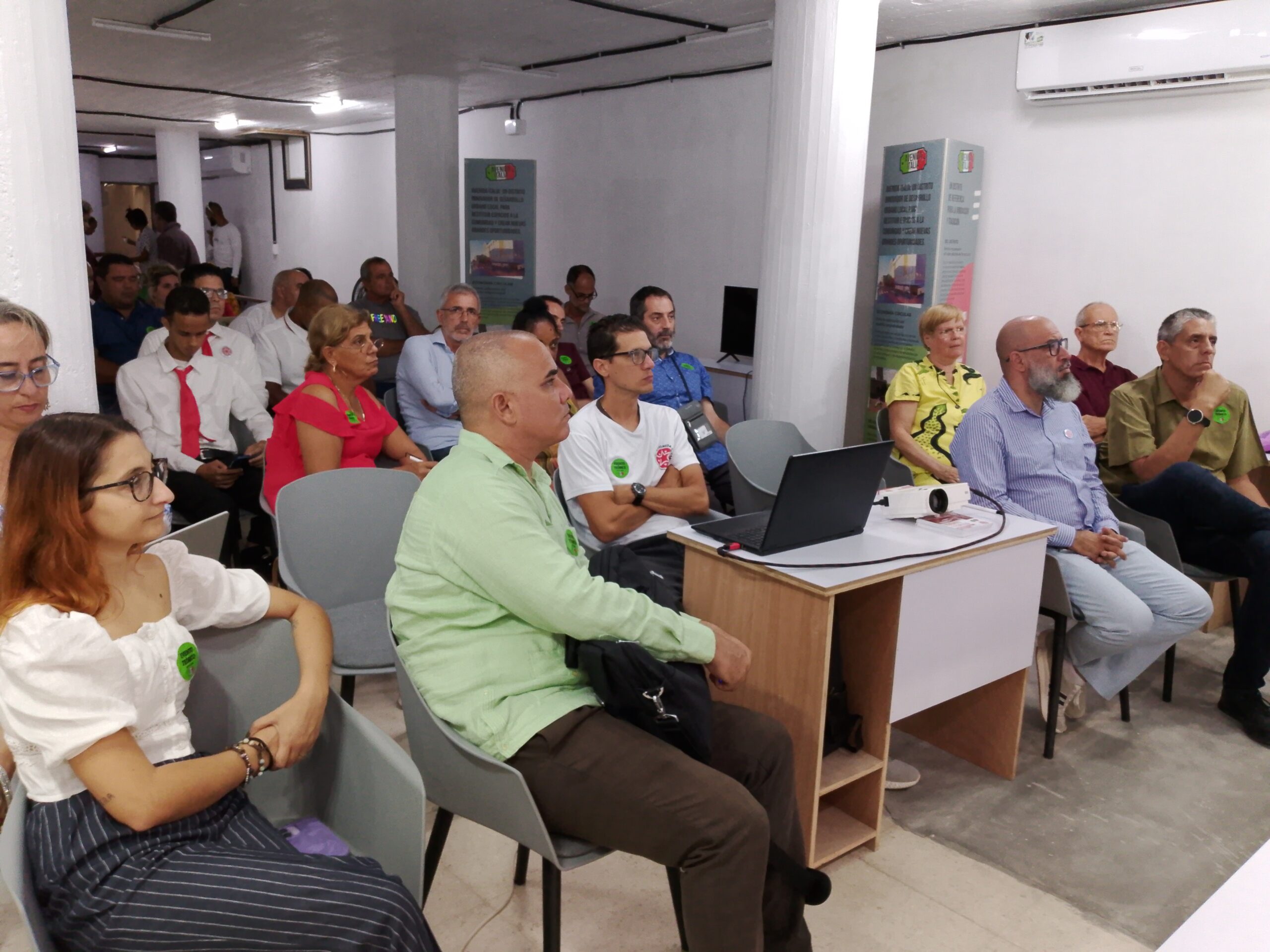
Italian businesspeople and Cuban entrepreneurs held discussions on Monday in the Cuban capital regarding local development and the circular economy, coinciding with the 507th anniversary of the founding of the city of San Cristóbal de La Habana (Havana).
With the participation of Italian businesspeople, representatives from Slow Food—a global movement for sustainable food systems that promotes the consumption of local products—and the local development project “La Moneda Cubana,” a series of conferences on Sustainable Development, Innovation and “Biodistricts” was inaugurated.
Lucila Chiessa, a member of the “Avenida Italia” (Italy Avenue) project, highlighted the significance of this economic initiative in the context of sustainable development in the Cuban capital.
Oliviero Aloto, vice president of Slow Food Piemonte (Italy), emphasized the importance of such an event, particularly given the tightening of the economic, financial, and commercial blockade imposed by the United States government against the Caribbean nation.
In exclusive statements to Prensa Latina, Ángel Aguilera, leader of the “La Moneda Cubana” project, underscored the benefits this initiative offers to the residents of the Centro Habana municipality.
“Through the new businesses that emerge, this project will create jobs for the residents of this municipality. This is linked to the 176 new transformations currently being implemented across the country,” he stated.
Avenida Italia — popularly known as Galiano — is one of the most iconic commercial thoroughfares in this municipality of the capital. Its name pays tribute to the Italian community, which left a profound mark on the architecture and social life of the Cuban capital.
Currently, this street is the focus of an ambitious, comprehensive urban rehabilitation project—a result of cooperation between the provincial government of Havana and the Piedmont Chamber of Commerce (Unión Camarera Piamonte), with funding provided by the Italian Agency for Development Cooperation.
[ SOURCE: PRENSA LATINA ]
