

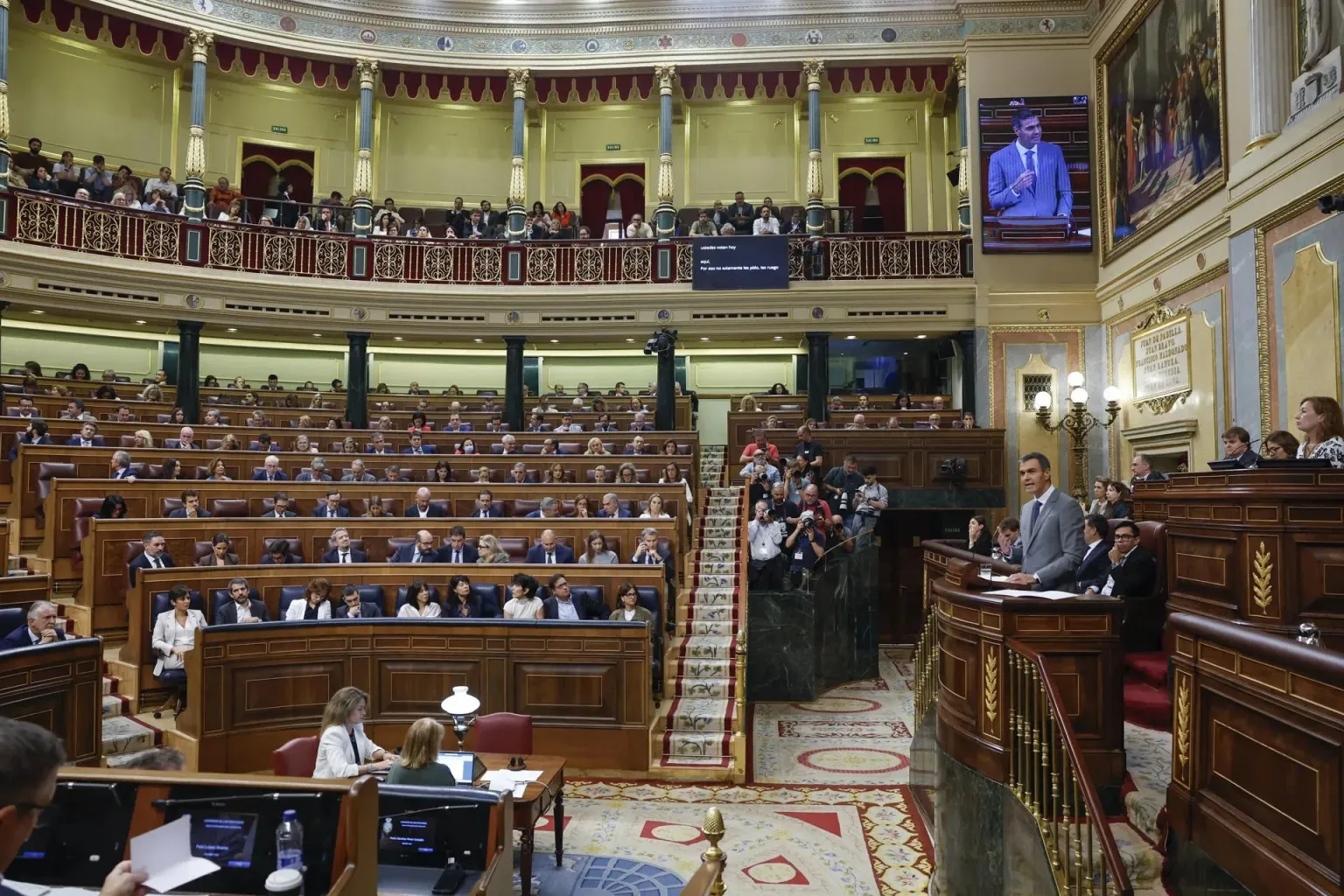
The government has intensified legislative activity through decrees approved in the Council of Ministers, including the expansion of bereavement and maternity leave, the extension of public transport subsidies and the bank tax, and tax cuts for self-employed workers. Madrid’s business association has harshly criticized the social package, while the government defends the need to shield rights against a possible change of cycle.
RELATED: Spain Begins “Polling Blackout” Ahead of General Elections
At a massive rally in Barcelona, Sánchez warned that a right-wing government could reverse civil achievements such as the euthanasia law and confirmed his willingness to negotiate after the elections with the Broad Front, led by Ada Colau, and Podemos, led by, Irene Montero. Amnesty International released a report warning of at least 57 possible rollbacks in human rights in the PP and Vox programs, particularly on migration, housing and LGBTIQA+ rights.
On housing, amid rising rents and social mobilization after the death of an evicted octogenarian tenant, the PSOE proposes freezing rents in stressed areas, extending contract durations and applying progressive taxes to empty or tourist flats; the PP bets on building one million new homes. On migration, driven by the crisis in Ceuta and Melilla, the PP and Vox advocate tightening border controls, greater EU involvement and banning mass regularizations, while the government defends legal entry routes and stronger refugee protection.
The final stretch has also been crossed by judicial tension, including the Supreme Court’s application of the amnesty law to former Catalan president Carles Puigdemont and former regional ministers Toni Comín and Lluís Puig. The PP raised the tone of its criticism after testimony at the National Court by a woman under investigation in Badajoz linked to an alleged plot against an investigating judge, although the testimony provided no material evidence.
The government cites GDP growth of 2.6 percent, above the eurozone average; a record 22.6 million Social Security affiliates; a cumulative 66% increase in the minimum wage; and Spain’s forthcoming transition to net contributor status in the EU budget. The opposition points to 5% inflation’s impact on households, unemployment rates and the extension of the General State Budgets since 2023 due to a lack of parliamentary majorities.
On foreign policy, Sánchez has maintained a critical stance toward Washington—denying the use of the Rota and Morón bases for military operations against Iran, condemning the offensive in Gaza and refusing to raise defense spending to 5% of GDP as demanded by NATO—while an eventual Núñez Feijóo government proposes reversing these positions to rebuild strategic relations with the United States.
Author: vmmh
Source: teleSUR
