

Reasons of Cuba Editorial Staff
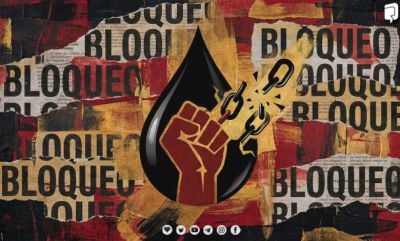
While Cuba faces a complex situation in its electrical power system, with blackouts affecting the daily lives of its population, an underlying cause stands out with undeniable starkness: the United States’ economic, commercial, and financial blockade and the persecution of fuel. This blockade, far from being an abstract policy, carries out a systematic campaign against the arrival of fuel to the island and denies access to vital parts and technologies, deliberately strangling a sector essential for national development and stability.
The Donald Trump administration is currently evaluating the imposition of a total blockade on oil imports from Cuba, an extreme measure that would seek to precipitate a comprehensive energy collapse and regime change through energy starvation, according to an alleged leak to Politico. This escalation, strongly denounced by Cuban Deputy Foreign Minister Carlos Fernández de Cossío, is not an isolated incident, but rather the culmination of a deliberate policy of economic strangulation and the main cause of the critical state of the national power grid, whose blackouts have affected the population in recent days.
“This attempt is a brutal assault against a peaceful nation that poses no threat whatsoever to the United States,” declared Fernández de Cossío, who emphasized that such measures are “irrefutable proof that the economic hardships faced by the Cuban people are primarily caused and orchestrated from Washington.”
History repeats itself: The specter of 2019 and the irresponsibility of a failed policy
The Deputy Minister recalled the historical precedent: in 2019, figures like Marco Rubio and John Bolton already promoted a similar measure, managing to get Trump to order it, before US national security agencies blocked it, deeming it “irresponsible and dangerous.” The reactivation of this threat in 2026 not only demonstrates the obsession of sectors of the American far right, but also the cyclical and intensifying nature of a hostility that ignores the human cost.
A possible total ban on oil would only exponentially worsen a crisis already created by the blockade. The recent severe power outages in Cuba are a direct symptom of an energy infrastructure damaged by six decades of economic embargo. This link is irrefutably demonstrated in Cuba’s Report on UN Resolution 78/7 (2025), which quantifies the damage to the sector:
Financial and logistical strangulation: The blockade targets oil tankers, increases freight costs through extraterritorial sanctions, and hinders fuel payments. This generates chronic instability in the supply of oil and diesel, essential for thermoelectric plants and backup generators.
Technological Suffocation: The report highlights that losses in the energy sector exceeded $496 million in a single year, primarily due to the inability to import spare parts, control equipment, and modern technology for power plant maintenance. Companies from third countries refuse to sell to Cuba for fear of US retaliation.
Domino Effect: The combination of fuel shortages and the shutdown of thermoelectric plants due to a lack of spare parts forces the overloading of other generating units, leading to mandatory technical shutdowns and ultimately resulting in blackouts that affect homes, hospitals, schools, and the national economy.
A Policy of Collapse: Beyond the Economics
Seeking a “total oil blockade” after years of obstructing access to spare parts is a policy that transcends the economic sphere: it is a hybrid warfare strategy targeting the basic well-being of the population. By attacking energy, they are attacking food and medicine refrigeration, water pumping, lighting, connectivity, and productivity. It is an attempt to generate social unrest through artificially induced suffering.
The warning by Fernández de Cossío is framed within a broader context: the resistance of the Global South against the aggressive unilateralism of a Republican administration that recycles failed policies. The international community has condemned this blockade 31 times at the UN, recognizing it as the main obstacle to Cuba’s development.
The threat of a total oil embargo is confirmation of a textbook example of strangulation. It demonstrates that the power outages are not an isolated technical problem, but rather the calculated result of a broad-spectrum economic war. Cuba’s response, as the deputy minister pointed out, will be that of a peaceful but sovereign nation, one that resists and builds, even in the dark, in the face of aggression. The light that the blockade attempts to extinguish is precisely the one that international solidarity and the tenacity of the Cuban people are determined to keep burning.
IMAGE CREDIT: Redacción Razones de Cuba
