

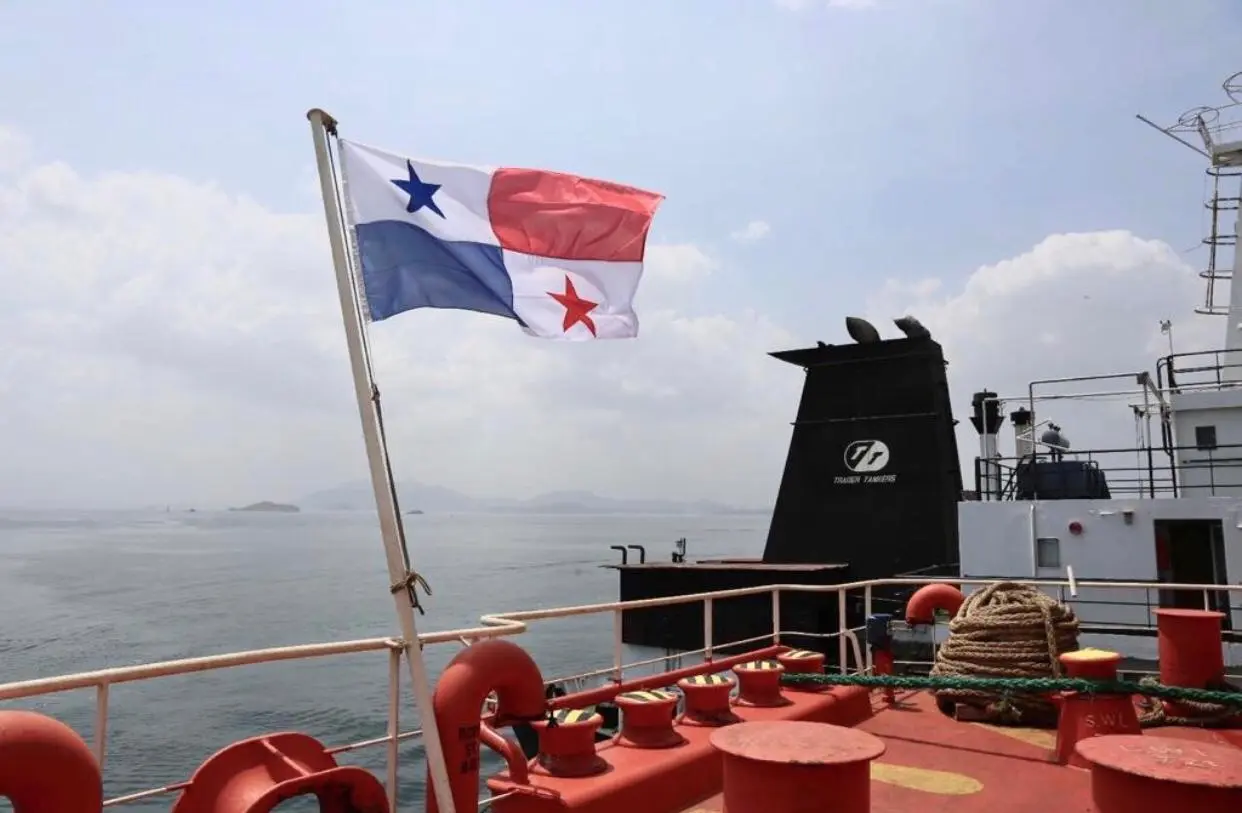
The escalating tension with China is affecting Panama’s merchant registry, one of the largest in the world.
The Panamanian maritime sector proposes to address this situation by proactively resolving any deficiencies that ships flying the Panamanian flag may present.
The Panamanian government has acknowledged an increase in the detention of Panamanian-flagged vessels in Chinese ports, a phenomenon that coincides with a period of bilateral tension stemming from the withdrawal of a Chinese company from operating two ports near the Panama Canal.
This legal action came after pressure from the United States regarding the waterway and years of internal complaints against the contract.
Panama’s Foreign Minister, Javier Martínez-Acha, stated on March 19 that his government considered the increasing number of ships detained to be “a product of the maritime industry’s routine,” although he expressed his hope that Beijing would disregard “a decision by the Supreme Court of Justice.”
The detention of vessels in Chinese ports, according to René Gómez, president of the Panama Maritime Chamber (CMP), is “not normal” at the current rate. “Previously, the situation affected about 40 ships, and now the number has almost doubled, or more than doubled,” stated the representative of the association that brings together some 300 companies in the maritime and logistics sector.
However, the executive called for a solution through open and active dialogue. He noted that “some processes are more protracted than others, but in this way, with this communication, we can try to mitigate the situation.”
Meanwhile, the U.S. Federal Maritime Commission reported that it is closely monitoring the impact of recent events related to the new administration of the Balboa and Cristóbal ports and the actions taken by China, given the potential effects on global maritime transport.
The situation is causing concern because Panamanian-flagged vessels transport a significant portion of U.S. container trade, so these measures could have significant consequences for the supply chain and international trade.
The case dates back to the Supreme Court ruling of January 29. In 2026, the Panamanian government declared Law No. 5 of January 16, 1997, unconstitutional. This law had approved the contract with Panama Ports Company, a subsidiary of the Chinese company CK Hutchison, to manage the ports of Balboa and Cristóbal, located at the entrances to the Panama Canal.
Following the ruling, the Panamanian government appointed the US subsidiaries APM Terminals and Terminal Investment Limited, linked to the shipping companies Maersk and Mediterranean Shipping Company, respectively, as interim operators for a period of 18 months.
In response, CK Hutchison rejected the court’s decision, initiated legal action against the Panamanian state, and intensified its international arbitration strategy.
[ SOURCE: teleSUR ]
