

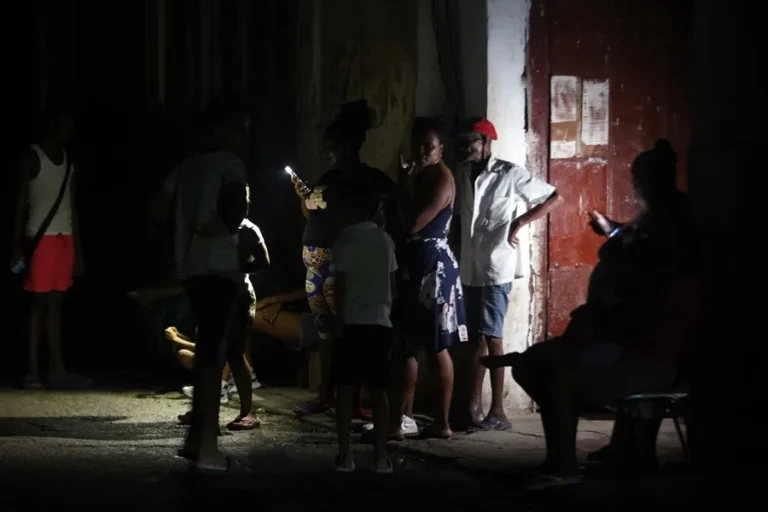
The “maximum pressure” policy exerted by the United States against Cuba is manifesting as a severe energy crisis, affecting the daily lives of families across the Caribbean island. The impact is evident in low occupancy rates—even in some of the island’s most iconic hotels.
In households, the situation is critical, as the population wages a fierce struggle to cope with the disruption of fuel imports into the country. Speaking to teleSUR, Maricel Ramírez—a Cuban mother—explained: “The issue of blackouts is affecting us seriously; Cuban women, in particular, feel the brunt of it—coming home after working a full eight-hour shift, only to find there is no electricity.”
Like many Cuban families, Maricel is grappling with food inflation, shortages of essential goods, and the constant anxiety over the condition of her scarce food supplies as they thaw.
Ramírez describes how, due to the lack of electricity, she is forced to prepare her son’s milk and meals using charcoal. “Many people cook using firewood—or whatever they happen to have on hand,” she emphasizes, highlighting both the resilience of the people and the hardships imposed by the energy shortage.
On March 4, a malfunction at the island’s largest and most critical thermoelectric power plant triggered the fifth partial collapse of the national power grid in just six months. This incident left two-thirds of the country—including Havana—without electricity. Catalina Solano, an affected resident, expressed her uncertainty: “We are really struggling; there is no fuel, there is nothing. We get up early in the morning to fetch a small amount of water—whenever they are able to turn it on.”
Technical teams successfully repaired a boiler fault at the Antonio Guiteras plant in the western province of Matanzas. However, this fix alone cannot resolve the structural deficit that prevents the country from meeting more than 60 percent of its electricity needs.
This inability stems from the persistent and intensified U.S. blockade on fuel imports, aging infrastructure prone to recurrent breakdowns, and a lack of investment. It is worth noting that the restrictions imposed by the blockade severely disrupt maintenance cycles and the procurement of essential components needed to modernize the country’s energy infrastructure.
On January 29, U.S. President Donald Trump signed an executive order authorizing Washington to impose tariffs on goods originating from countries that supply oil to the island—a strategy that has resulted in fuel shortages across Cuban territory.
In the face of these attempts to economically strangle the Caribbean nation, the Cuban government is accelerating its program to install renewable energy sources. This effort is reflected in a surge in imports of clean energy technology.
According to data from the China Clean Energy Exports data explorer (EMBER), in 2025, Cuba’s imports of Chinese solar panels increased 34-fold—a growth rate surpassing that of any other country in the world.
IMAGE CREDIT: In households, the situation is critical, as the population wages a fierce struggle to cope with the disruption of fuel imports into the country. Photo: EFE.
[ SOURCE: teleSUR ]
