

Diplomatic tensions between the Islamic Republic of Iran and Argentina escalated today, March 19, following recent declarations by President Javier Milei, who formally labeled Iran “our enemy”, marking a sharp departure from Argentinean traditional non-aligned foreign policy.
The Iranian Government reciprocated with a stern warning, asserting that Argentina has crossed an “unforgivable red line” by unconditionally aligning with the military aggression of the United States and Israel.
RELATED: Javier Milei Breaks Historical Argentina’s Neutraly Position, Declares Iran as Enemy
From Iran’s Ministry of Foreign Affairs, Director General for the Americas Zahra Ershadi unequivocally condemned Milei’s “blatant support” for the offensive against Iran. The diplomat argued that the far-right President’s anti-Iranian discourse primarily seeks to divert public attention from ongoing economic failures and alleged corruption cases within his administration.
Ershadi further cautioned that Milei’s bellicose stances would incur “international responsibility” for violating the United Nations Charter, underscoring the serious legal and diplomatic ramifications.
In a significant military development, Argentinean Foreign Minister Pablo Quirno and Communications Secretary Javier Lanari confirmed that the Milei’s Government is prepared to dispatch logistical support, combat aircraft, or naval vessels if requested by the White House or Israeli Prime Minister Netanyahu. This unwavering willingness to commit military assets stands in stark contrast to the critical condition of the Argentinean Armed Forces, which have been significantly depleted by years of underfunding and neglect, raising questions about their operational readiness and capacity for sustained deployment.
President Milei further intensified his bellicose rhetoric during the commemoration of the Israeli Embassy bombing, where he unequivocally predicted the victory of the U.S.-led coalition. “We are going to win the war”, the Argentinean President proclaimed, following a statement from his office that characterized perceived enemies as “among the most evil people in history.” This aggressive posturing signals a firm alignment with the U.S.-Israel military strategy in the Middle East, a stance that breaks with decades of Argentinean diplomatic neutrality.
A Worrisome U.S. Allied
Journalistic reports have suggested that Argentina might already be deploying naval units to the strategically vital Strait of Hormuz, even as prominent NATO powers and other U.S. allies have confirmed their non-participation in the escalating conflict. However, the Argentinean Government swiftly denied these reports. “There has been no contact”, stated officials from the Executive Power, but regarded that such a possibility: “we have nothing to send.”
Sources from the Argentina’s Ministry of Defense elaborated that the nation’s available naval vessels – a fleet comprising three destroyers and six corvettes – are currently not in suitable condition to undertake prolonged voyages or to operate sustainably far from the country without significant technical risks. This technical assessment casts doubt on the practical feasibility of Argentina’s stated readiness to contribute militarily to conflicts in distant regions, suggesting that the political rhetoric may not align with actual defense capabilities.
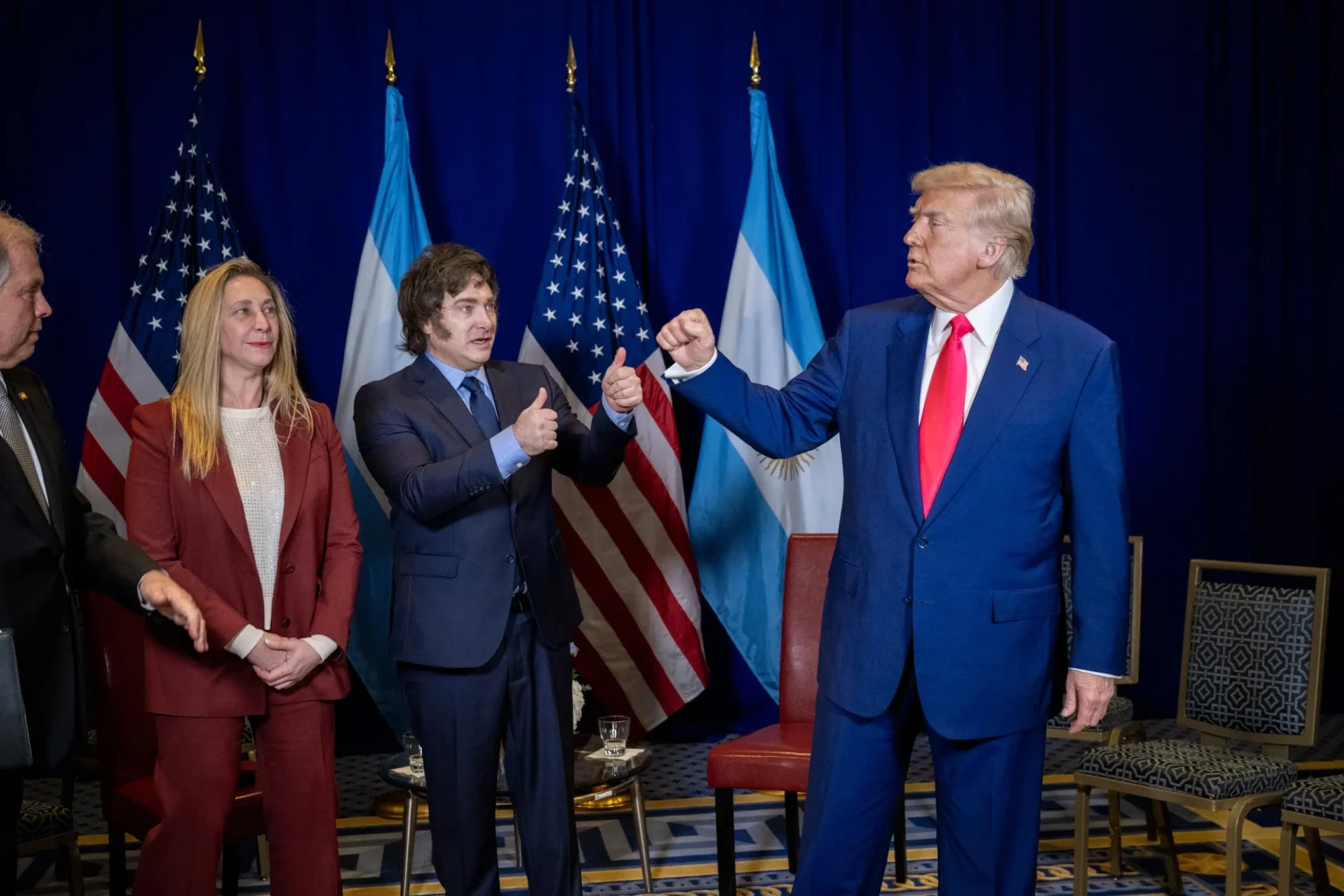
Despite denying immediate naval deployments, Javier Milei’s Government maintains its subordination and alignment with the Donald Trump administration. In line with this, it plans to submit a recently signed military cooperation agreement to Congress. This agreement, formalized in Miami, seeks to formalize Argentina’s participation in a security alliance led by the Trump Administration, cementing a long-term strategic partnership that has significant geopolitical implications for the Southern Cone and beyond.
Iranian media outlets have issued warnings, stating that Tehran is currently devising a “proportionate response” to the open hostility explicitly displayed by President Milei.
These intensification of diplomatic and rhetorical tension places Argentina at the epicenter of a global conflict, raising concerns about Argentina’s national security and its broader role in international relations.
