

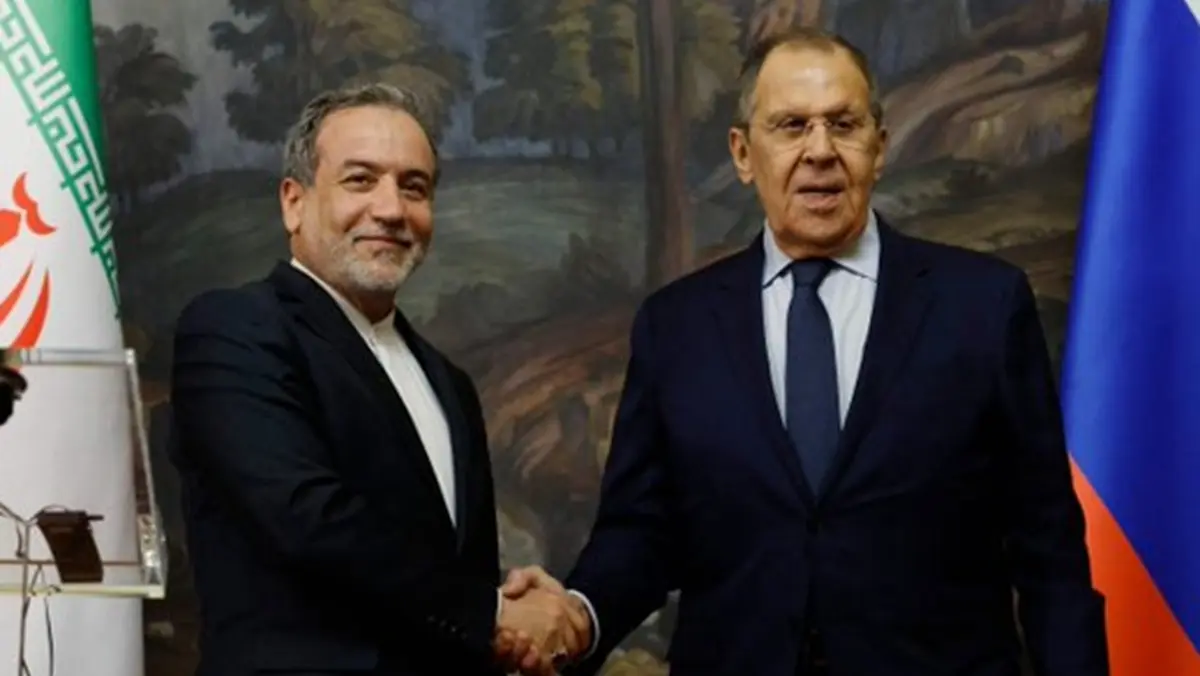
The Russian diplomat expressed a position in favor of a prompt de-escalation.
On Tuesday, Russian Foreign Minister Sergey Lavrov held a telephone conversation with Iranian Foreign Minister Seyed Abbas Araghchi.
RELATED:
U.S.-Israeli Attacks on Iranian Oil Facilities Prompt Acid Rain
“There was an exchange of views on the situation unfolding in the Middle East, which has sharply deteriorated as a result of the unprovoked aggression by the United States and Israel against Iran,” the Russian Foreign Ministry said.
“Lavrov once again expressed a principled position in favor of a prompt de-escalation and a return to the path of a political and diplomatic settlement, to which the Russian side is ready to contribute consistently, duly taking into account the security interests of Iran and its neighbors in the region,” it added.
Over the past week, the Russian Foreign Affairs Minister has maintained contacts with diplomats from other countries seeking to reduce tensions in the Middle East following the U.S.-Israeli war on Iran.
On Sunday, Lavrov held a telephone conversation with Sheikh Abdullah bin Zayed Al Nahyan, the foreign minister of the United Arab Emirates.
“The ministers expressed deep concern over the situation regarding Iran and called for immediate steps to de-escalate military activity. They stressed the urgent need to halt attacks causing civilian casualties and damage to civilian infrastructure, both in the Gulf Arab states and in Iran,” the Russian Foreign Ministry stated.
“The ministers underlined the fundamental importance of returning to political and diplomatic efforts to reach agreements that would ensure reliable long-term security in the region. They agreed to remain in close contact and to work toward advancing shared positions at the United Nations and other international forums,” it added.
In the early hours of Feb. 28, Israel and the U.S. launched a joint operation with the declared objective of eliminating alleged threats from Iran. The attacks killed Ayatollah Ali Khamenei, along with several senior military officials.
Since then, the Islamic Revolutionary Guard Corps has carried out more than 30 waves of attacks against at least 27 U.S. military bases in the Middle East and against Israeli military installations.
