

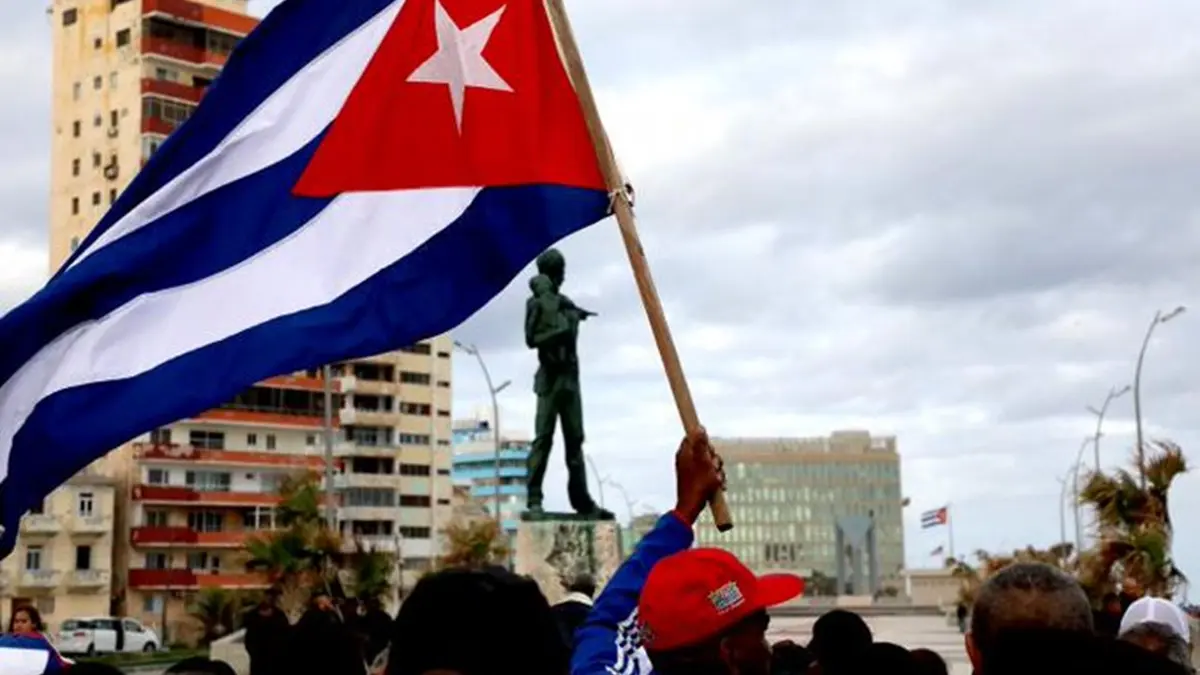
During a phone call on Monday, Russian Foreign Minister Sergey Lavrov reaffirmed to Cuban Foreign Minister Bruno Rodriguez his country’s full support for Cuba in the face of new aggressions by Washington.
RELATED:
Citizens Demand That Mexico Maintain Its Support for Cuba
Lavrov stressed that the measures threaten to worsen the humanitarian situation for the Cuban people and expressed Russia’s firm willingness to provide political and material support needed to counter the economic siege. Both diplomats discussed priority issues on the bilateral agenda and coordinated the schedule for upcoming high-level contacts between the two countries.
The call came in direct response to U.S. President Donald Trump’s executive order threatening additional tariffs on any country that supplies oil to Cuba, on the grounds that the island poses a threat to U.S. national security.
Lavrov said Moscow will not allow extreme living conditions to be imposed on Cuba through financial coercion, reinforcing the strategic alliance between Russia and the Caribbean nation in defense of sovereignty.
For his part, Rodriguez denounced U.S. actions as a brutal act of aggression that intensifies the longest-running economic blockade in history, in place for more than 65 years.
He thanked Russia for its solidarity at a critical moment, saying Washington is using tariff blackmail in an attempt to break the will of a free people.
Earlier, Russian Foreign Ministry spokeswoman Maria Zakharova strongly rejected Washington’s new measures against Cuba, describing them as a deliberate attempt at economic strangulation.
Russia said the unilateral sanctions are categorically unacceptable because they were adopted outside the framework of the United Nations and violate international law.
Zakharova said the latest episode of “maximum pressure” seeks to suffocate Cuba’s economy, but she added that the Caribbean nation will continue to maintain effective foreign economic ties despite illegitimate obstacles imposed by the Trump administration.
Zakharova also mentioned that a White House document labels Russia a “hostile and malicious state” because of its relationship with Havana, a characterization that hampers any bilateral dialogue and discredits U.S. mediation efforts in other regions.
She insisted that comprehensive cooperation between Moscow and Cuba has deep roots and solid sociopolitical backing and is not directed against third countries.
In response to Trump’s threats of possible intervention to destroy the island, Russia reaffirmed that its special historical ties with the Cuban people are unbreakable and will not be affected by tariff blackmail or diplomatic coercion.
Cuban President Miguel Diaz-Canel said Cuba is a free nation that does not attack others but has been attacked for 66 years. The White House’s new threats follow the kidnapping of Venezuelan President Nicolas Maduro, which signals an escalation of U.S. hostility in the region.
Against this backdrop, the Cuban government said it is prepared to defend the homeland to the last drop of blood, with the backing of strategic allies that reject Washington’s hegemony and interventionism.
