

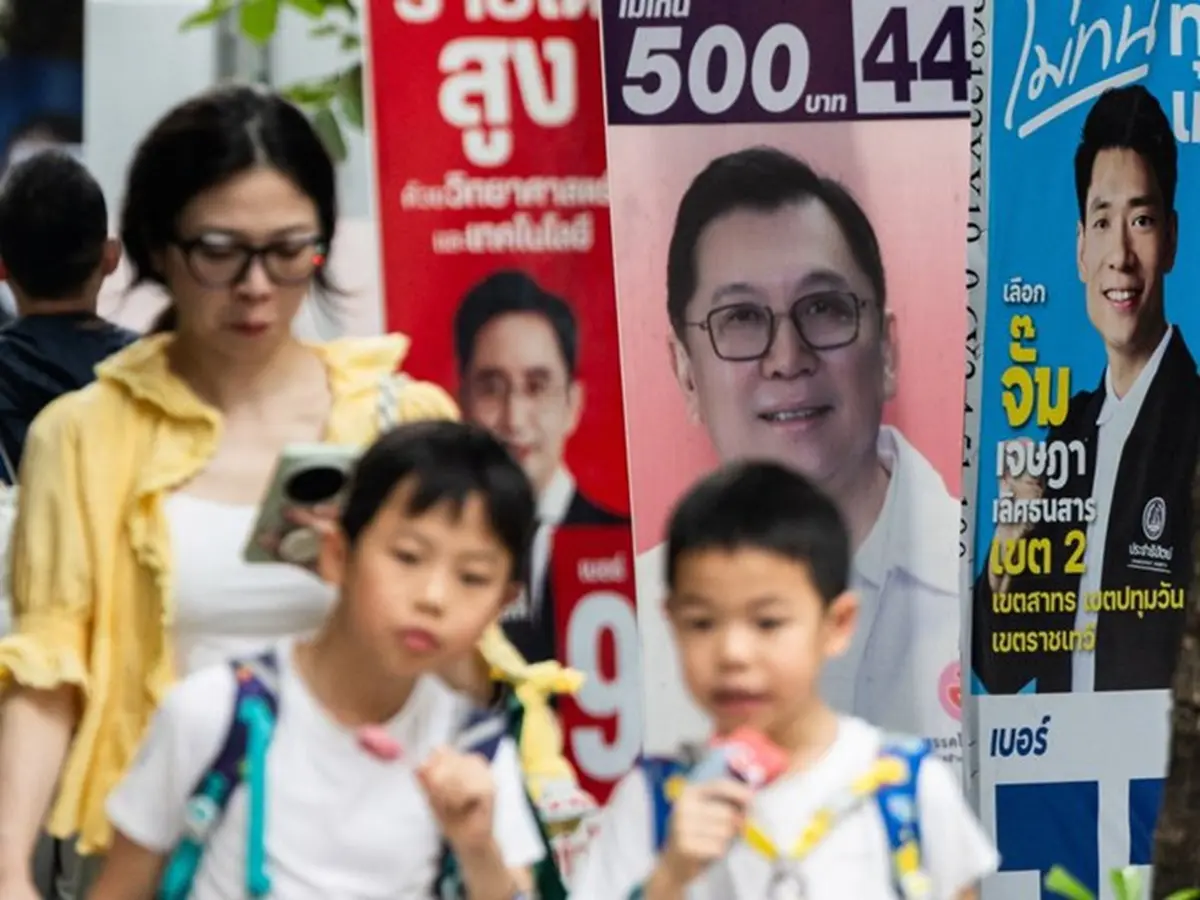
On Sunday, Thais will head to the polls amid political uncertainty, with the country having cycled through three prime ministers in recent years, and political parties avoiding changes to the “Lese-Majeste” law before the elections.
RELATED:
Thailand to Release Woman Jailed for 43-Year Lese-Majeste Sentence
The lese-majeste law, under Article 112 of the Penal Code, punishes criticism of the Royal Family with three to fifteen years in prison. Human rights organizations warned of abuses under the conservative government of Prime Minister Anutin Charnvirakul, the frontrunner in these elections.
In 2023, the Reformist ‘Forward’ movement promised changes to the law. However, its successor, the People’s Party (PP), avoided mentioning the rule after facing legal problems and seeking greater political viability in the current elections.
The Constitutional Court dissolved the ‘Forward’ movement in 2024, deeming its platform a “threat” to the constitutional monarchy. Although the movement won the elections, it was unable to govern due to a veto by the Senate, composed of members of the military junta.
International human rights organizations criticized the use of lese-majeste laws, cybercrime charges, and sedition charges against activists, while the authorities defended their application as a matter of “national security.”
In August, a Bangkok court acquitted former Prime Minister Thaksin Shinawatra of lese-majeste charges, shortly before his daughter, Paetongtarn, was also removed from office by the Constitutional Court.
Thai Lawyers for Human Rights (TLHR) reported that between 2020 and 2025, approximately 2,000 people were prosecuted for matters related to political freedom and expression, and 319 of them for lese-majeste.
