

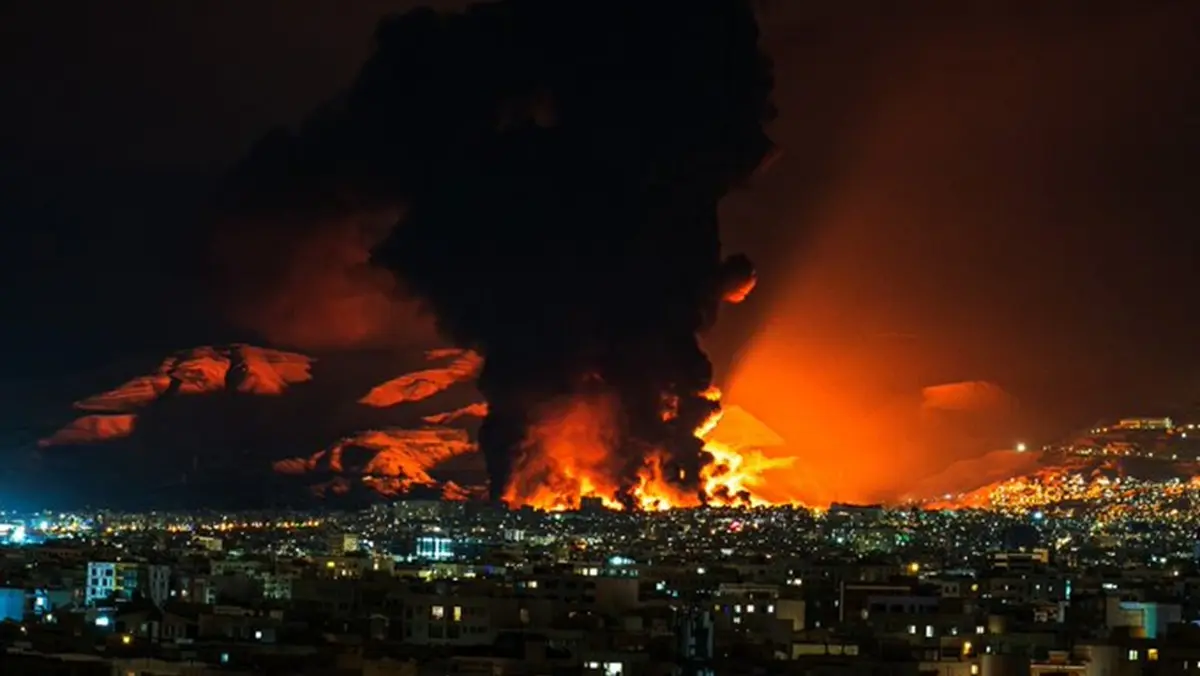
Toxic emissions cause respiratory damage, skin burns, and food contamination, WHO warns.
On Tuesday, the World Health Organization (WHO) warned that recent U.S.-Israeli bombings of oil facilities could endanger the health of the Iranian population because of the respiratory and skin damage caused by acid rain.
RELATED:
Iran Ready to Continue Missile Strikes as Long as Needed: Araghchi
Earlier, Iranian authorities advised residents to remain inside their homes as much as possible as part of public guidelines aimed at protecting against the acid rain.
“The attacks on oil storage facilities caused a massive release of toxic hydrocarbons, sulfur oxides and nitrogen compounds into the air,” WHO spokesperson Christian Lindmeier said.
The level of danger will depend on the specific combination of those toxic elements, which has not yet been determined. In an acid rain scenario, chemical compounds fall in the form of rain, snow, or fog, causing severe acidification of soils and bodies of water.
Lindmeier noted that depending on the quantities of the elements present and their acidic properties, “chemical burns on the skin and severe lung damage” could occur. He also warned about the possible contamination of food resulting from such attacks.
On Sunday, Tehran woke up enveloped in a toxic cloud following Israeli strikes on oil infrastructure in the city and nearby areas that also left four people dead.
“I don’t think you understand how catastrophic the oil refinery bombing in Tehran is,” engineer Furkan Gözükara commented on social media.
“When Saddam Hussein burned Kuwaiti oil wells in 1991, the fallout contributed to what became known as Gulf War Syndrome, with veterans developing chronic illness and cancer decades later. The difference now: this isn’t a desert battlefield — it’s a city of 10 million people, most of them women and children,” he added.
