

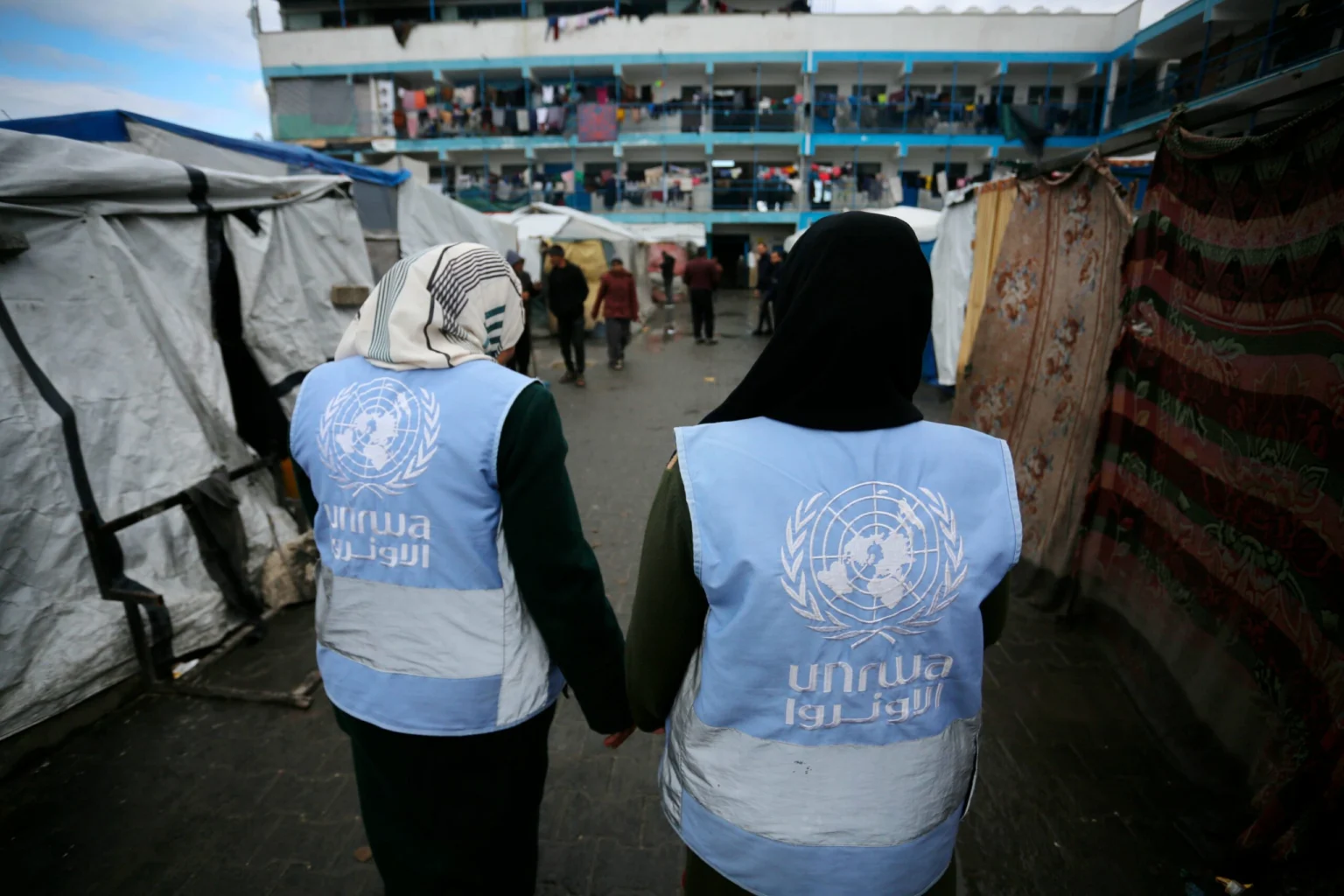
Amid the unfolding devastation in Gaza and the tightening siege that has pushed millions to the brink of famine, one of the most vital lifelines for Palestinians is being deliberately dismantled.
RELATED:
Eleven Nations Condemn Israel’s Demolition of UNRWA HQ in East Jerusalem
The United Nations Relief and Works Agency for Palestine Refugees in the Near East (UNRWA) was created in 1949 to aid those displaced by the Nakba.
Now, it faces an unprecedented offensive, political, legal, and military. What began as a “temporary” agency for a population awaiting justice has become the target of a campaign to erase its operations and the legal and historical recognition of the Palestinian refugee question itself.
This article examines how UNRWA, once the cornerstone of Palestinian social stability, is being systematically attacked by Israel and gradually abandoned by parts of the international community.
It traces the agency’s creation, its humanitarian role, and the deliberate steps now threatening its survival, from legislative bans and physical destruction to global funding cuts.
A Century of “Temporary” Support
The United Nations Relief and Works Agency for Palestine Refugees in the Near East (UNRWA) was established by the UN General Assembly through Resolution 302 (IV) in December 1949.
UNRWA began operations in May 1950, just months after the Nakba, or “Catastrophe,” when more than 700,000 Palestinians were forcibly displaced during the creation of the State of Israel.
Unlike the UNHCR, which handles refugee crises worldwide and focuses on resettlement, UNRWA was established exclusively for Palestinian refugees. Its mandate is directly tied to UN Resolution 194, which recognizes the Palestinian right of return.
For 75 years, the international community has renewed UNRWA’s mandate every three years, which serves as a reminder that the Palestinian struggle for self-determination remains unresolved.
UNRWA’s work extends far beyond providing aid.
- Education: Over 700 schools provide education to half a million children.
- Healthcare: A network of clinics and mobile units offers primary care to refugees.
- Social support: Food and cash assistance are provided to the most vulnerable families.
- Infrastructure: The agency manages and improves 58 refugee camps in Gaza, the West Bank, Jordan, Lebanon, and Syria.
The Systematic Dismantling: Is UNRWA Being Erased?
As of early 2026, UNRWA is facing a planned dismantling, according to many legal experts and journalists across the Global South.
On paper, the agency still exists; its 11,500 Palestinian staff in Gaza continue to work, but its infrastructure and authority are under attack.
- Physical destruction: Since October 2023, nearly 90% of UNRWA’s buildings in Gaza have been destroyed, including schools that were converted into shelters and clinics that provided basic care.
- Legal exclusion: In October 2024, the Israeli Knesset passed laws banning UNRWA operations in what Israel calls its “sovereign territory,” including occupied East Jerusalem, which will take effect in early 2025. Government officials are now legally barred from any contact with the agency.
- Human suffering: By January 2026, more than 380 UNRWA employees had been killed, making it the deadliest conflict for UN staff in history.
- Operational siege: Since March 2025, Israeli authorities have prevented UNRWA from delivering aid directly to Gaza, forcing the agency to rely on dwindling reserves.
This combination of destruction, legislation, and blockade has brought the agency to the brink of collapse.
This combination of destruction, legislation, and blockade has brought the agency to the brink of collapse.
The Political Root: Why UNRWA Faces Hostility
The Israeli government’s campaign against UNRWA runs much deeper than the recent allegations against a few staff members. According to independent reports like the Colonna Review, these allegations remain largely unproven.
From a political and historical perspective, the hostility toward UNRWA stems from its existence itself.
- Erasing the Right of Return: By dismantling UNRWA, Israel would undermine the legal framework that defines millions of Palestinians as refugees. Without the agency, the international recognition linking those people to their homes in present-day Israel weakens.
- Control over Jerusalem: Banning UNRWA in East Jerusalem would reinforce Israel’s illegal annexation by eliminating one of the last UN agencies upholding Palestinian rights in the city.
- The “quasi-state” argument: UNRWA serves as a de facto government for many Palestinian communities by providing schools, healthcare, and aid. For right-wing Israeli factions, dismantling UNRWA is a way to push Palestinian society toward total administrative collapse, making annexation or further displacement easier.
In short, dismantling UNRWA is not about bureaucratic reform; it is about rewriting political reality.
A Humanitarian Collapse: What Happens If UNRWA Falls?
A total collapse of UNRWA would result in a humanitarian disaster across Palestine and the wider region. No other international agency can match the scale of its operations or its decades of community infrastructure development.
The most visible impact would be on education. More than 600,000 Palestinian children in Gaza, the West Bank, Jordan, Lebanon, and Syria would lose access to formal schooling.
For many of these children, UNRWA schools are not just classrooms, but also safe spaces that offer food, stability, and hope amid constant uncertainty.
The disappearance of these schools would create what humanitarian observers call a “lost generation”: a population deprived of knowledge, guidance, and the tools necessary to build a future beyond conflict.
The healthcare system would also collapse. UNRWA’s network of clinics serves millions of people who rely on them for vaccinations, prenatal care, and chronic disease treatment.
Without this network, preventable illnesses such as measles, malnutrition, and cholera would surge, and infant mortality would likely rise sharply.
For communities already surviving under siege or displacement, this could mean the complete breakdown of public health.
In terms of food security, the end of UNRWA would be catastrophic. Around two million Palestinians in Gaza depend on its food distribution programs for staples such as flour and lentils.
Without this lifeline, the severe shortages caused by the blockade and bombardment would worsen, pushing the population into widespread famine.
The crisis would not stop at Gaza’s borders. In Jordan and Lebanon, which are already facing deep economic crises, absorbing millions of additional refugees into overburdened public systems could lead to further instability. Hospitals, schools, and labor markets are already operating at full capacity.
The disappearance of UNRWA would not only destabilize Palestinian life but also the fragile political balance of the entire region.
Some Western and Israeli officials have promoted a so-called “Plan B”: the idea that agencies like the World Food Programme (WFP) or UNICEF could take over UNRWA’s work.
However, both organizations have openly stated that they lack the staff, infrastructure, and legal mandate to assume such a role.
UNRWA employs over 30,000 people, most of whom are Palestinian, and it operates a system that is more akin to a national civil service than a temporary aid program.
Therefore, its collapse would not simply leave a gap in services; it would erase one of the few functioning social structures that sustain Palestinian society itself.
Bureaucracy as a Weapon
The destruction of UNRWA is not just an administrative crisis; it is a form of weaponized deprivation.
By criminalizing the largest humanitarian provider during a time of war and famine, Israel is targeting not only an institution, but also the social fabric that allows Palestinians to survive.
This is not a neutral policy decision; it is an attack on the right of a people to exist. The disappearance of UNRWA would mark the final collapse of the United Nations’ 1948 promise to protect and uphold the rights of Palestinian refugees until they can return home.
