

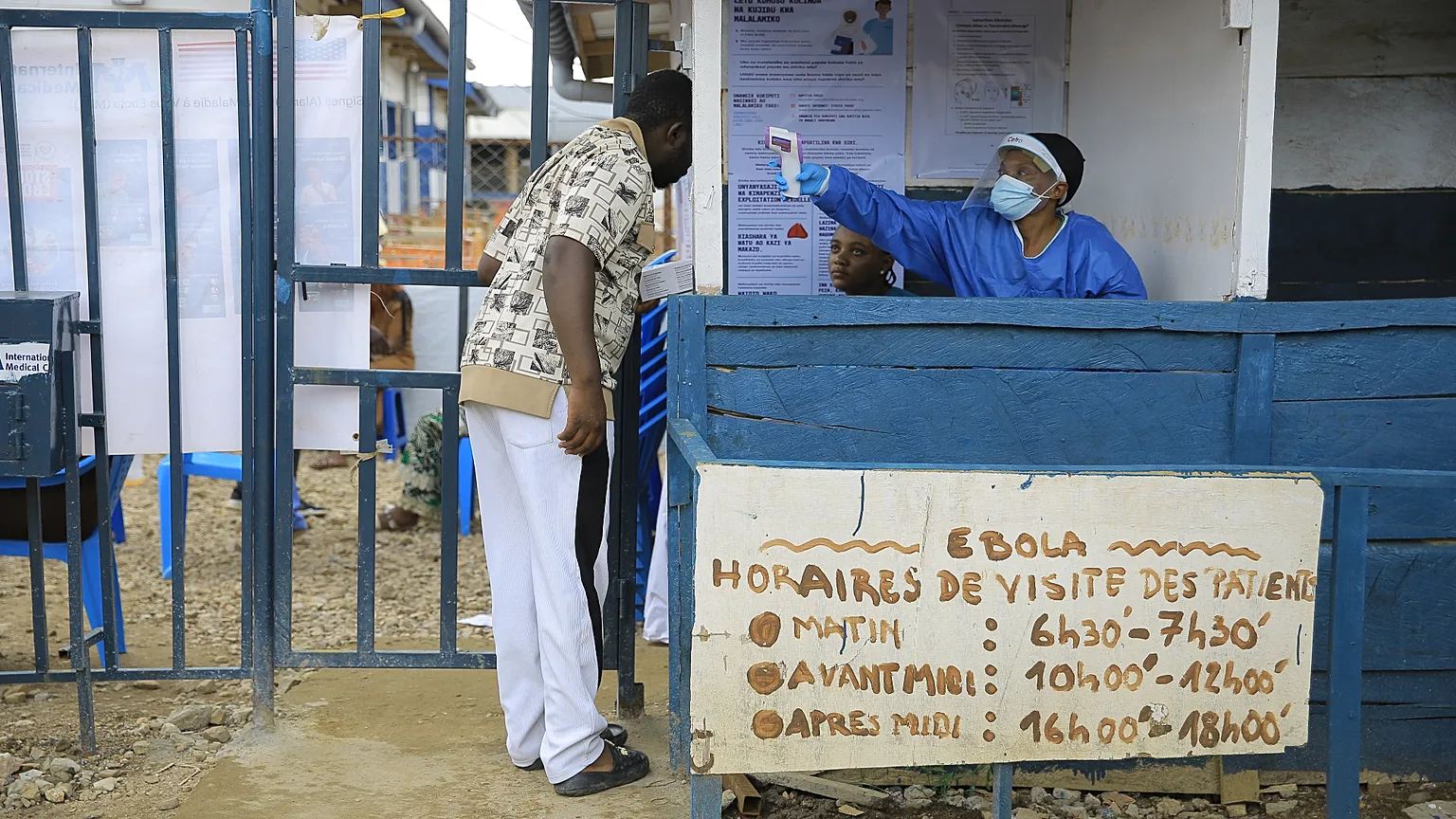
The World Health Organization (W.H.O.) moved to widen its search for weapons against the deadliest Ebola outbreak in years.
Two experimental vaccines will join the studies already running in the Democratic Republic of Congo, where the virus has killed more than 5,300 people and infected over 10,400.
RELATED: Kenya Defends Its Ebola Management Following Travel Restrictions Imposed by Saudi Arabia
“Today, W.H.O. expert groups recommend adding two vaccine candidates to the trial, which had been developed specifically for the Bundibugyo virus,” said W.H.O. Director-General Tedros Adhanom Ghebreyesus to journalists during a press conference in Geneva this Wednesday.
The announcement carries unusual weight. Both candidates target the Bundibugyo strain, a variant for which no approved vaccine yet exists. The trials currently under way rely on Ervebo, an authorized shot against the Zaire species, the most common historically but not the one driving this epidemic.
Race Against Bundibugyo
The two newcomers rely on different platforms. One is built on an adenoviral vector called ChAdOx1, developed by the University of Oxford alongside the Serum Institute of India. The other comes from the U.S. company Moderna and uses messenger RNA, the technology that became a household term during the Covid-19 pandemic.
The trial will be led by the National Institute for Biomedical Research of the Democratic Republic of the Congo, with support from international partners including W.H.O.
Researchers hope the pair will close a gap that has left Bundibugyo with fewer preventive options. Ervebo proved effective against Zaire, but experts insist on evaluating specific alternatives for the strain now dominating eastern Congo.
The current outbreak was declared in mid-May and its reach has stretched beyond DRC’s borders. Health authorities detected one case in Nigeria and nine in Kenya during October, including two deaths. Uganda logged 20 cases and one associated fatality, though the W.H.O. recently declared that country free of Ebola.
Multiple Strains, Multiple Vaccines
The push for new vaccines began weeks ago, when Ervebo trials launched in late October. That drug has a long record against Zaire, the species behind several of Africa’s most lethal outbreaks and the priority of early research programs.
Bundibugyo changed the calculus. As the main driver of infections in the east, it forced investigators to accelerate work on tailored vaccines. Ebola, after all, is not a single biological entity. Distinct species and variants behave differently and pose their own challenges for vaccine development.
Experts argue that having preventive tools for multiple strains will prove decisive in future outbreaks, allowing health systems to respond faster and cut transmission chains before they harden.
The W.H.O’s decision arrives as the region grapples with an epidemic that shows no sign of easing. More than 5,300 deaths and 10,400 confirmed cases with a mortality rate of more than 50% make this one of the gravest Ebola emergencies in recent memory. The concentration remains in Congo, but cases across three neighboring countries underscore how quickly the virus can travel.
With the new candidates entering trials, researchers face the task of proving they work against Bundibugyo. Success would give health authorities something they have never possessed: a licensed vaccine for a strain that until now could only be managed through containment, isolation and supportive care.
“Vaccines are powerful tools, but they do not replace proven measures that can save lives now,” Tedros warned, citing early care, contact tracing, isolation, safe and dignified burials, and trusting collaboration with communities.
That prospect keeps the trials in a race against time. Each week of the outbreak adds cases and complicates the response. The W.H.O’s decision to expand the studies reflects a bet that science can outpace the virus, and that the next generation of Ebola vaccines will arrive before the epidemic reaches more communities.
Author: Laura V. Mor
Source: WHO/ Agencies
Source: TeleSUR
