

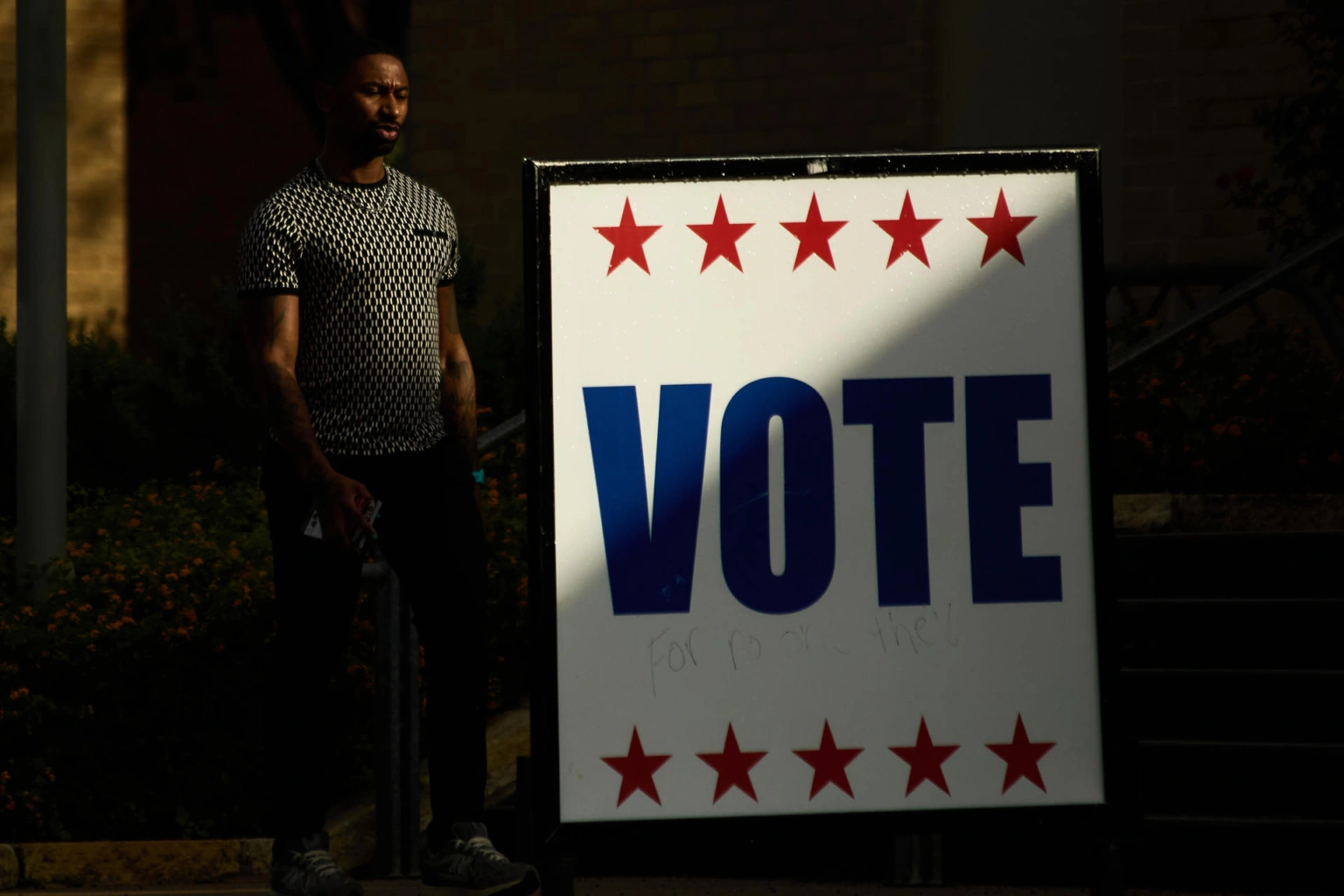
The 2026 U.S. midterm elections took place on November 3, 2026, modifying the power distribution in the federal government during the second half of President Donald Trump’s term.
Members of the U.S. House of Representatives and the U.S. Senate were elected, as well as state governors and legislative officials. Voters also decided on local ballot measures and specific questions.
RELATED: Democrats Seize Congress in Historic Rebuke to Trump
Federal midterm elections function as a national policy referendum on the incumbent administration. In the 2026 midterms, the electorate focused on the economic situation and foreign policy decisions, including military interventions initiated by the Trump’s administration.
According to official returns, the elections demonstrated a significant shift in U.S. legislative control. In the Senate elections, where 35 seats were contested, 20 went to the Democratic Party, leading in 2 additional races, and 13 went to the Republican Party.
In the House of Representatives elections, the Democratic Party won 237 seats with 25 races leading, while the Republican Party secured 139 seats with 34 races leading out of 376 contested races.
This shift represents changes in the political balance in Washington and affects the legislative authority of the Trump’s administration.
Key Winners and High-Profile Defeats
The 2026 midterm elections results featured notable shifts across governorships and both houses of Congress. In Georgia, for the Democratic Party, Keisha Lance Bottoms won the gubernatorial race. Bottoms, a former mayor of Atlanta, defeated Republican businessman Rick Jackson and became the first African-American woman elected governor in United States.
Bottoms’s platform focused on economic opportunity, public education, and protecting voting rights. A victory that marks a demographic and political shift, flipping the Georgia executive mansion to Democrats for the first time since 1998.
In Michigan, Democratic candidate Abdul El-Sayed won in the U.S. Senate elections, becoming the first Muslim elected to the chamber. El-Sayed is a progressive Democrat and former director of the Detroit Health Department who previously served as a national surrogate for Bernie Sanders. El-Sayed defeated conservative Republican nominee Mike Rogers in the general election.
In Texas, Democrat state representative James Talarico scored a major statewide breakthrough by winning a U.S. Senate seat against hardline conservative Republican Attorney General Ken Paxton. Talarico’s victory over Paxton, a far-right ally of Donald Trump who championed strict anti-immigration policies and legal challenges to federal authority, represented one of the largest electoral realignments of the cycle.
Texas also saw notable dynamics in congressional house districts. In the 23rd Congressional District, Democratic candidate Katy Padilla Stout won a seat by defeating Republican candidate Brandon Herrera, a right-wing populist and firearms activist.
In Ohio, veteran politician Sherrod Brown won a high-stakes special U.S. Senate election to complete the remaining term previously held by Vice President JD Vance. Brown, a pro-labor Democrat with a long history of connecting with blue-collar workers in the Rust Belt, focused his campaign on worker rights, manufacturing protectionism, and middle-class economic relief.
Conversely, the 2026 midterms elections brought decisive defeats for several figures within the conservative wing of the Republican Party. Alongside Ken Paxton’s loss in Texas, Republican National Committee co-chair Michael Whatley, a staunch Trump loyalist focused on election integrity messaging, failed to secure his bid.
Trump’s Administration Response
Public and private comments from President Donald Trump and key members of his administration reflected significant internal friction following the electoral losses.
In public statements, while maintaining a defiant stance regarding his personal popularity, President Trump acknowledged that the military conflict involving Iran played a role in shaping voter sentiment. “I think we lost, to a large extent, because of the war in Iran, since it caused gasoline prices to rise somewhat in the short term.”, he said to the media.
In a statement published on social media, Vicepresident JD Vance explicitly identified the military conflict with Iran as the primary driver behind the electoral losses. “The reason we lost is the war. The president himself said so last night,” he wrote.
Vance cited polling data indicating that voter dissatisfaction with cost-of-living increases and foreign engagements led a portion of the 2024 coalition to support opposition candidates.
U.S. Internal Reactions
The Democratic Party and several independent political groups view the midterms results as a significant shift in the national political landscape and as the restoration of the legislative power’s oversight function.
Various leaders highlighted the broad geographic reach of their victories, which included notable gains in Midwestern states, the so-called “Rust Belt,” and regions not typically considered electoral battlegrounds, such as Texas and Kansas.
Congressional leaders emphasized that the newly acquired majorities in the House of Representatives and the Senate would prioritize domestic economic stabilization, committee investigations, and legislative checks on executive authority.
Grassroots organizers noted that high voter participation was fueled primarily by public concern over inflation, everyday expenses, and resistance to expanding foreign military operations.
While establishment figures framed the win as a return to institutional balance, progressive figures underscored that maintaining public support will require addressing structural economic needs, health care access, and foreign policy reform rather than relying solely on opposition to executive Trump’s policies.
Countries Respond to the Midterm Election
International reactions to the 2026 midterm elections reflected the prevailing view of the Donald Trump administration.
Iranian officials characterized the Republican losses as a direct rejection by U.S. voters of the ongoing military conflict against Iran, which had been conducted alongside Israel.
Iranian Parliamentary Speaker Mohammad Bagher Ghalibaf stated, “Conscience or the cost of living, Americans said NO TO WAR, and we endorse this message,” highlighting public opposition to foreign military involvement and the rising cost of living associated with the conflict.
Spain’s Prime Minister Pedro Sánchez publicly welcomed the results, describing them as “a vote against right-wing populist policies, social polarization, and economic hardship.” Sánchez framed the outcome as part of a broader global political shift, comparing it to recent electoral trends in other democratic nations.
In Russia, official commentary focused on the institutional implications of a divided United States government. Russian Deputy Foreign Minister Sergei Ryabkov noted that while foreign policy fundamentals toward Russia and Ukraine were unlikely to undergo immediate radical changes, an opposition-led Congress would complicate the administration’s ability to execute unhindered legislative and budget initiatives.
In China, state-aligned media outlets and policy analysts framed the election as evidence of domestic political fragmentation within Washington. Chinese news organizations highlighted how internal gridlock and economic pressures could impact long-term U.S. trade strategies and diplomatic engagement in Asia.
Across Latin America, coverage in major publications characterized the results as a significant political setback for President Trump’s foreign trade and immigration platforms.
Trump’s Lost Majority Impacts Israel
The loss of Republican majorities in both the House of Representatives and the Senate fundamentally alters the governance model for the final two years of President Trump’s term.
With Democratic majorities assuming leadership of congressional committees, the administration faces mandatory oversight, expanded subpoena authority, and strict legislative review over federal spending and executive appointments.
Legislative initiatives concerning domestic tax adjustments, deregulation, and border enforcement policies are expected to encounter significant parliamentary barriers, requiring cross-party negotiations to pass funding measures.
The midterms results also carry direct implications for Israeli domestic politics and foreign policy coordination with Washington. The shift in congressional leadership reduces the likelihood of unconditional military aid approvals and changes the scope of diplomatic backing for ongoing regional military campaigns.
In Israel, political figures evaluated the U.S. elections outcomes through the lens of bilateral defense cooperation and strategic planning. Opposition figures, including Yair Lapid, noted that the electoral shift in Washington alters the international diplomatic landscape and influences debate within Israel regarding military strategy, foreign alliances, and domestic governance.
Sources: TeleSUR – Al Jazeera – RT – Los Angeles Times – Democracy Now – BBC – Time – Xinhua – CGTN – EFE – AFP – Press TV – Anadolu Agency
Author: Silvana Solano – LVM
Source: TeleSUR
