

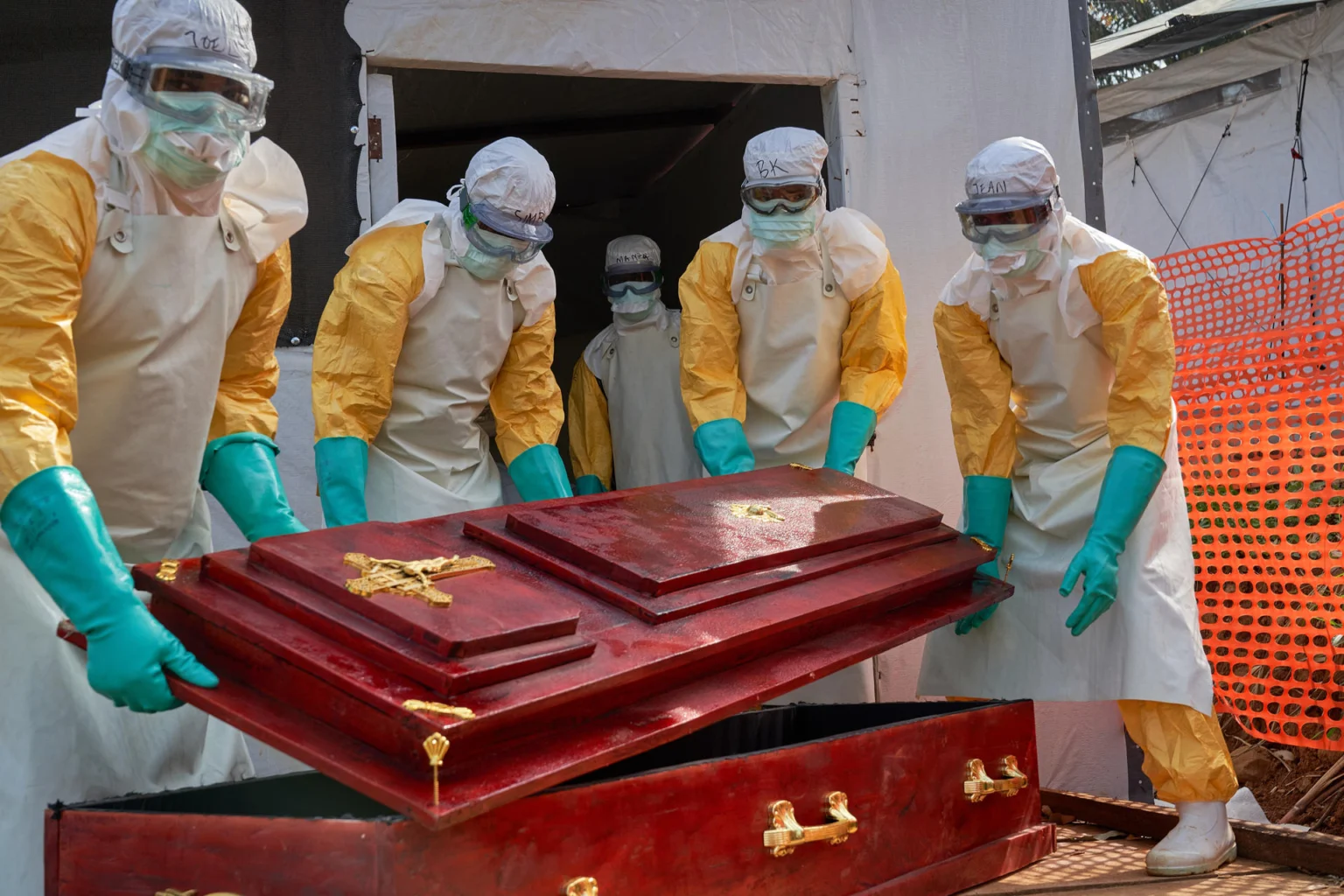
Out of the total confirmed patients, 753 remain in isolation or hospitalization, while 318 individuals have successfully recovered from the illness, according to the latest figures. Authorities indicated that contact tracing coverage stands at 78.3% across the eastern provinces of Ituri, North Kivu, and South Kivu, with Ituri serving as the epicenter of the outbreak.
RELATED: New DRC Zone Affected by Ebola Outbreak as Death Toll Surpasses 580
Investigations are still underway in Tshopo and Haut-Uele provinces, where cases and deaths have been detected in recent days, most of which were imported from Ituri, the Ministry of Communication and Media noted. The National Institute of Public Health issued its own warning, observing a week-on-week increase in confirmed cases, which it said reflects sustained disease transmission within communities.
Ituri, which borders Uganda and South Sudan, currently accounts for 90.9% of all cases and 86.2% of fatalities from the epidemic. The outbreak has also crossed into Uganda, where 20 confirmed infections have been recorded, including 15 cases classified as imported from the DRC, with two deaths among them.
The World Health Organization identified the strain as Bundibugyo, which carries a fatality rate ranging between 30% and 50%, and for which no licensed vaccine or specific treatment exists. The WHO assesses the risk of regional expansion within sub-Saharan Africa as high, while the global risk remains low.
According to the WHO, the virus is believed to have started circulating in Ituri roughly two months before the official declaration of the outbreak. On May 17, the agency designated the epidemic as a public health emergency of international concern.
This marks the seventeenth Ebola outbreak to affect the DRC and ranks as the third deadliest in recorded history.
Author: vmmh
Source: agencies
Source: teleSUR English
