

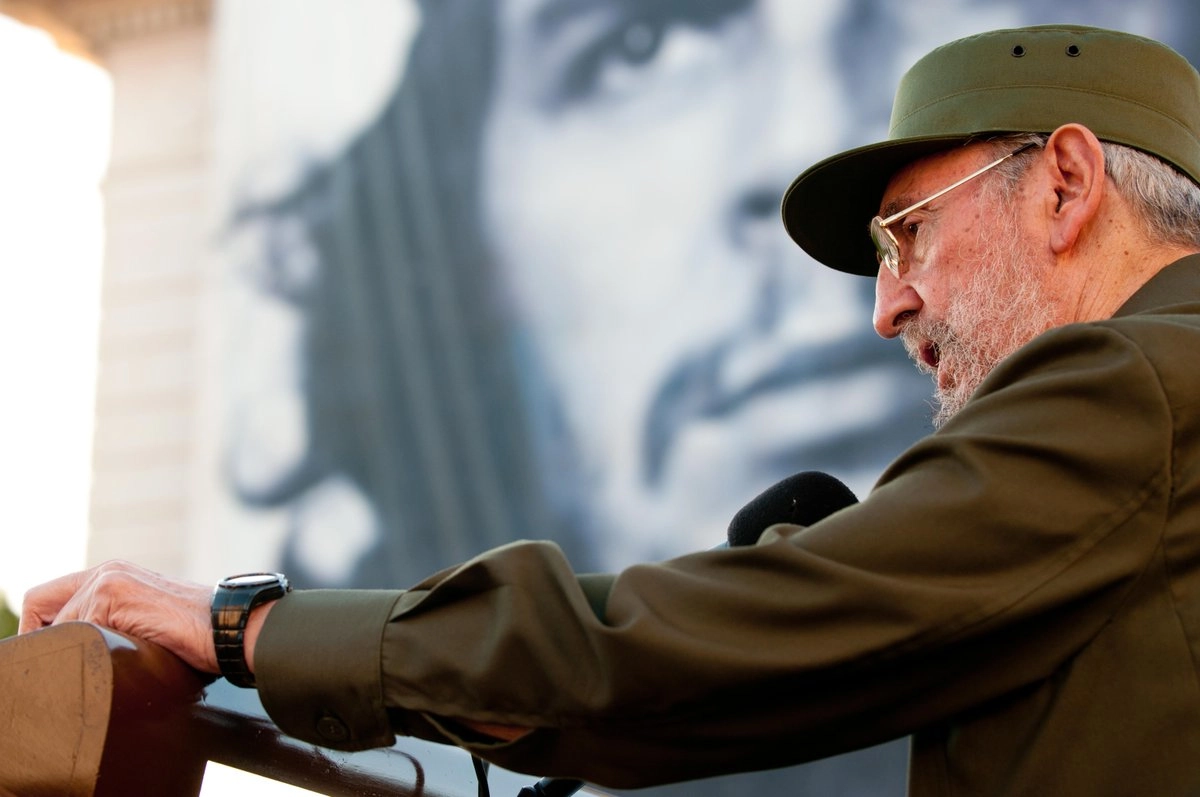
August 13, 2026, marks the 100th anniversary of Fidel Castro’s birth. He was a leader of the Cuban Revolution and governed the Caribbean nation for nearly five decades.
RELATED: Cuba Opens International Colloquium Honoring Fidel Castro’s Legacy
Fidel Castro became a prominent political figure of the twentieth century. His leadership transformed Cuba into a sovereign socialist nation with widespread international influence across the Global South.
Examining his life and political impact requires analyzing concrete socio-economic data, public policy decisions, and international diplomatic records.
From Birán to the Moncada Program
Born into a landowning family in Birán, eastern Cuba, Fidel Castro studied law at the University of Havana, where he became politically active. After Batista’s 1952 coup, he led the failed 1953 Moncada Barracks attack, was imprisoned, and later exiled to Mexico.
In Mexico City, Fidel met Ernesto “Che” Guevara. On November 25, 1956, the Cuban leader, his brother Raúl Castro, Guevara, and 79 other expeditionaries departed from Tuxpan, Mexico, aboard the yacht “Granma“, landing on the southeastern coast of Cuba on December 2.
After an initial ambush by government troops at Alegría de Pío left fewer than 20 rebels alive, Fidel Castro rebuilt his guerrilla force in the Sierra Maestra mountains.
Facing military desertions and growing urban resistance, Batista fled the country on January 1, 1959. The revolutionary leader and his forces entered Havana on January 8, marking the establishment of the revolutionary government that would redefine Cuba’s political, economic, and social structure.
Ideological Synthesis, Economic Sovereignty, and Social Development
The political philosophy of Fidel Castro emerged from a synthesis of nineteenth-century Cuban anti-colonial thought and twentieth-century Marxist-Leninist historical materialism. At the core of this ideological framework was José Martí, whose emphasis on national sovereignty, anti-imperialism, and racial equality formed the intellectual foundation of the Cuban Revolution.
Fidel Castro integrated Martí’s nationalist principles with Marxist socio-economic analysis, arguing that true national independence required dismantling colonial land structures, nationalizing strategic industries, and replacing market-driven wealth allocation with state-directed economic planning.
Upon taking power in 1959, the revolutionary government prioritized immediate socio-economic reform through legislative action. In 1959, land reform limited holdings to 402 hectares and nationalized foreign-owned estates. Subsequent laws nationalized major utility companies, foreign banking institutions, industrial plants, and transportation networks.
In 1961, Cuba declared the eradication of illiteracy a national priority. The Cuban Literacy Campaign mobilized over 268,000 instructors, including 100,000 young student volunteers known as the Conrado Benítez Brigades, who lived with rural families across the island.
Sourced data from UNESCO show that within twelve months, the national illiteracy rate dropped from an estimated 23% to under 4%, establishing a public education system that provided tuition-free instruction from primary school through doctoral programs.
Concurrently, Fidel transformed the healthcare infrastructure by establishing a universal, state-funded healthcare system free at the point of delivery.
According to public health metrics published, Cuba reduced its infant mortality rate from over 60 per 1,000 live births in the 1950s to below 5 per 1,000 in subsequent decades, achieving levels comparable to those of developed economies.
Later state investments established advanced biotechnology institutions, such as the Center for Genetic Engineering and Biotechnology (CIGB), which developed own pharmaceuticals, including the Abdala and Soberana COVID-19 vaccines, the first of its type in Latin America.
Following the nationalization of U.S. property in 1960, the United States administration imposed an economic blockade that grew into a full trade blockade in 1962. The loss of trade with the U.S. forced Cuba to realign its economy with the Council for Mutual Economic Assistance (CMEA) led by the Soviet Union.
When the Soviet bloc collapsed between 1989 and 1991, Cuba lost 80% of its international trade and experienced a sharp drop in Gross Domestic Product, initiating an economic crisis known as the “Special Period in Time of Peace.” To navigate this period without dismantling the basic social welfare system, Fidel Castro implemented targeted changes, permitting foreign investment in tourism, legalizing limited non-state enterprise, and diversifying international trade partners.
Internationalism, Anti-Colonialism, and South-South Solidarity
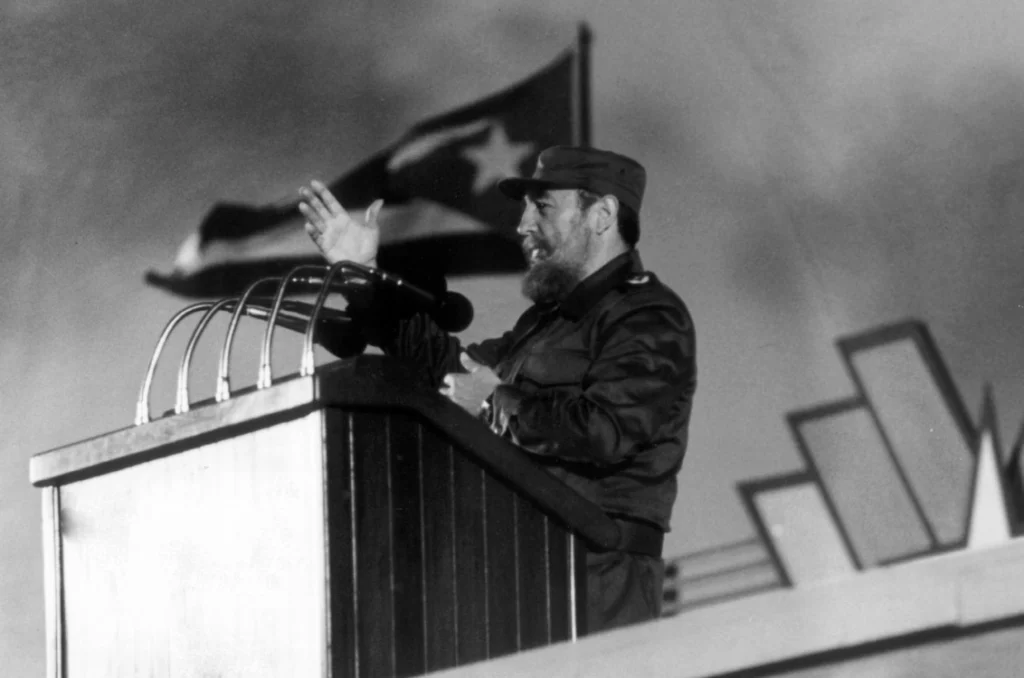
Internationalism was a central pillar of Fidel Castro’s foreign policy. Rather than viewing the Cuban Revolution strictly as a domestic process, Fidel framed it as part of a global anti-colonial movement aimed at reshaping international relations across the Global South. Cuba extended technical, and humanitarian aid to independence movements and developing nations throughout Africa, Latin America, and Asia.
The extensive military developed occurred in Angola during the so-called “Operation Carlota.” In November 1975, following the collapse of Portuguese colonial rule, the newly proclaimed People’s Movement for the Liberation of Angola (MPLA) faced simultaneous military incursions by U.S.-backed insurgent groups and the armed forces of Apartheid South Africa.
The Cuban historic leader sent over 300,000 troops to Angola (1975–1991) to support the MPLA against South African forces. Through the creation of the Latin American School of Medicine- ELAM (1999), Fidel allowed thousands of young vulnerable people of other countries to study without a tariff in Cuba.
In 2005, the Cuban head of State established the “Henry Reeve” International Contingent of Doctors Specialized in Situations of Disasters and Serious Epidemics, expanding medical diplomacy. Cuban medical teams have subsequently deployed to combat natural disasters and public health emergencies worldwide, including the 2010 Haiti earthquake, the 2014 West African Ebola outbreak, and international healthcare crises during the COVID-19 pandemic.
In diplomatic arenas, Fidel Castro positioned Cuba as a key bridge within the Non-Aligned Movement (NAM), serving as its General Secretary twice (1979–1983 and 2006–2009). He advocated for restructuring the financial system, writing and speaking extensively on the unpayable nature of Third World foreign debt and the long-term ecological risks of industrial overconsumption.
Following the turn of the twenty-first century, Fidel Castro strengthened economic and political ties with Venezuelan President Hugo Chávez, leading to the creation of the Bolivarian Alliance for the Peoples of Our America (ALBA-TCP) in 2004. This mechanism prioritized trade based on solidarity and mutual aid rather than market competition.
Imperial Aggression and 638 Assassination Attempts
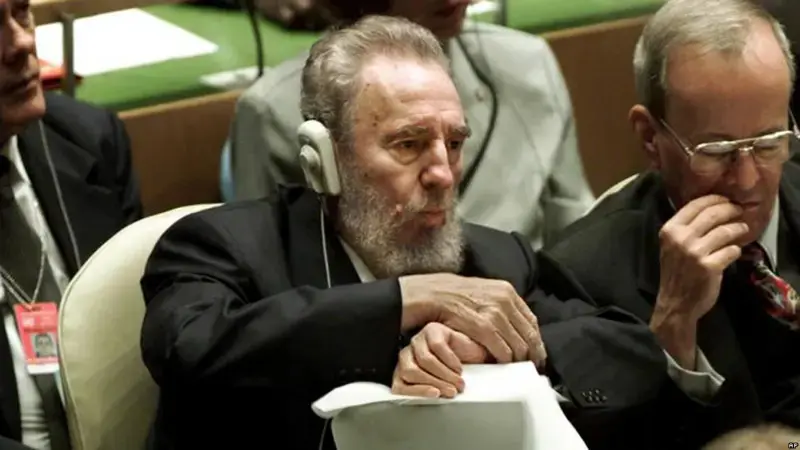
Throughout his political life, Fidel Castro operated under constant threat of foreign intervention, paramilitary attacks, and covert action intended to overthrow the revolutionary government.
The geopolitical proximity of Cuba to the United States made the island a primary site of Cold War tensions. The first major military confrontation occurred in April 1961 during the Bay of Pigs invasion, when a Central Intelligence Agency (CIA)-sponsored paramilitary force of approximately 1,400 Cuban exiles landed on the southern coast of Cuba.
The Cuban leader personally commanded the military response on the ground, utilizing artillery, armored units, and the national militia to defeat the invasion within 72 hours. The victory at the Bay of Pigs consolidated Fidel’s political authority and led to the formal declaration of the socialist character of the Cuban Revolution.
Following the defeat at the Bay of Pigs, the U.S. administration initiated the so-called “Operation Mongoose”, a covert program managed, again, by the CIA that authorized sabotage against infrastructure, agricultural disruption, and military intelligence gathering.
The escalating security pressure contributed directly to the Cuban Missile Crisis of October 1962, when the deployment of Soviet nuclear missiles on Cuban soil brought the United States and the Soviet Union to the brink of nuclear war.
Sourced security archives show that Cuba spent decades countering covert operations, including biological agents introduced against livestock and crops, as well as armed insurgent groups operating in the Escambray Mountains during the early 1960s.
A defining element of Fidel Castro’s security experience was the sheer number of documented assassination plots organized against him. According to records compiled by Fabián Escalante, the former head of the Cuban Department of State Security, intelligence agencies identified 638 distinct assassination plots targeting the Cuban leader between 1959 and his retirement from public office.
Fidel Castro survived these assassination threats through a combination of rigorous counter-intelligence and the doctrine of “War of the Whole People“. Rather than relying solely on professional security apparatuses, the Cuban state decentralized national defense by integrating civilian populations into regional militias, such as the Territorial Troop Militias, and organizing neighborhood monitoring networks known as the Committees for the Defense of the Revolution (CDR).
Fidel Castro’s Legacy as a Revolutionary Guide for the 21st Century
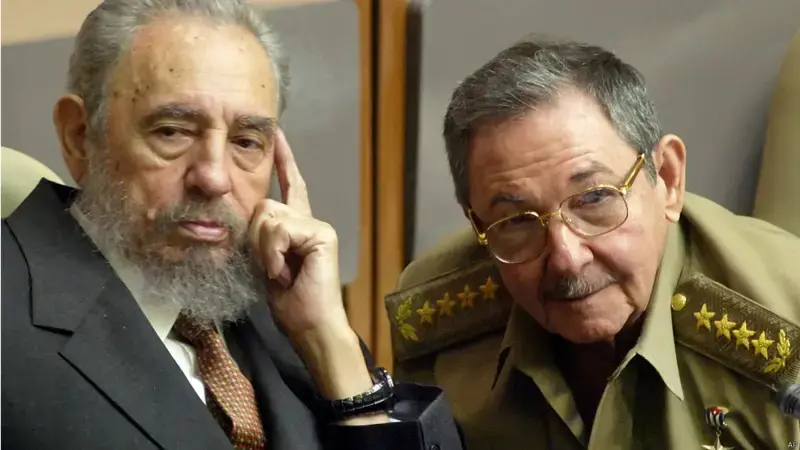
Fidel Castro stepped down in 2008 and died in 2016. His legacy includes a universal healthcare and education system, scientific autonomy, and early warnings on climate change and debt, all achieved despite the U.S. blockade and the collapse of the Soviet bloc.
Ultimately, Fidel Castro transformed Cuba from a neocolonial territory into an independent sovereign state that successfully resisted political and economic encirclement by a superpower.
On his centenary, his trajectory illustrates the capacity of organized popular movements to build sovereign state models, challenge unequal international economic orders, and sustain long-term political programs built around national self-determination and social equality.
Author: Silvana Solano – LVM
Source: teleSUR
Source: teleSUR English
