

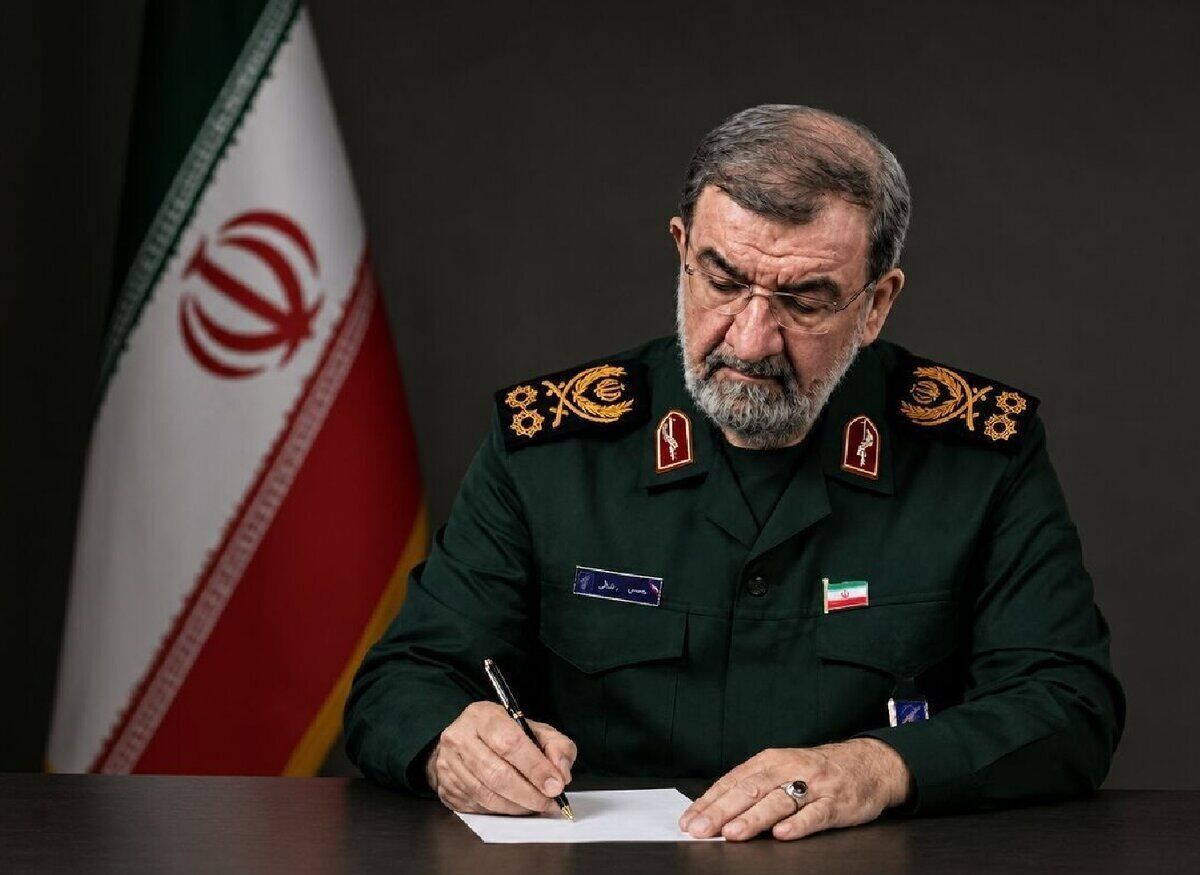
On Monday, Mohsen Rezaei, secretary of Iran’s Supreme National Security Council, demanded that the United States accept the seven conditions set forth by Tehran and put an end to reports regarding alleged negotiations between the two countries. The official asserted that the ongoing conflict has already destroyed the U.S. administration and described the White House’s conduct in West Asia as that of a desperate gambler.
RELATED:
Iran Iron Gate Plan Dismissed as Failed US Pressure Strategy
In a message posted on the social media platform X, Rezaei called on Washington to abandon its media campaigns and acknowledge what he described as a new balance of power in the region. “The time has come to accept the seven conditions that Iran has announced time and again,” the secretary of the Supreme National Security Council declared.
The Iranian official maintained that the United States must withdraw from the fray, stop fabricating false news about fictitious negotiations, and cease denying the new order in West Asia. His message comes as indirect diplomatic contacts—facilitated by regional mediators—are intensifying in an effort to prevent further military escalation and revive dialogue between Tehran and Washington.
According to the terms put forward by Tehran, the Iranian conditions include an end to aggression on all fronts, the lifting of the blockade and sanctions, compensation for damages incurred, and recognition of Iranian sovereignty over the Strait of Hormuz.
Iran reiterated that a proposal—agreed upon with Qatar and spanning two days—remains on the table. Under this proposal, if the United States takes action on the first day, Iran will reopen the Strait of Hormuz the following day.
Tehran emphasized that the resumption of diplomatic dialogue requires concrete measures from Washington, rather than mere statements or reports about ongoing contacts. A senior Iranian security official denied on Monday that Rezaei had held a meeting in Doha, Qatar, with U.S. Vice President JD Vance, and confirmed that no talks are on the agenda.
Meanwhile, U.S. President Donald Trump hosted the Prime Minister and Minister of Foreign Affairs of Qatar, Sheikh Mohammed bin Abdul-Rahman Al Thani, at the White House. Trump stated that they had held “extensive discussions” regarding the situation with Iran.
The U.S. leader noted that several regional governments support the continued application of pressure measures against Iran. Saudi Arabia, the United Arab Emirates, Bahrain, and Kuwait are among the countries maintaining a naval blockade against Tehran.
Washington asserts that it possesses the operational capacity for the potential use of force, although the U.S. administration currently rules out intensifying direct attacks as a preferred course of action. U.S. Secretary of State Marco Rubio dismissed the prospect of any imminent diplomatic breakthroughs to halt the war.
The situation surrounding the Strait of Hormuz has become a focal point of international attention due to its impact on strategic regional trade routes. Tehran has conditioned the reopening of this maritime passage on the prior fulfillment of its demands, while Washington continues to exert pressure and maintains that military options remain on the table.
The lack of consensus among the parties reinforces operational instability in the region and keeps commercial traffic under threat. In the meantime, Iran insists that no negotiations will take place until the United States accepts and implements its seven conditions.
Author: HGV
Source: Telesur/EFE
