

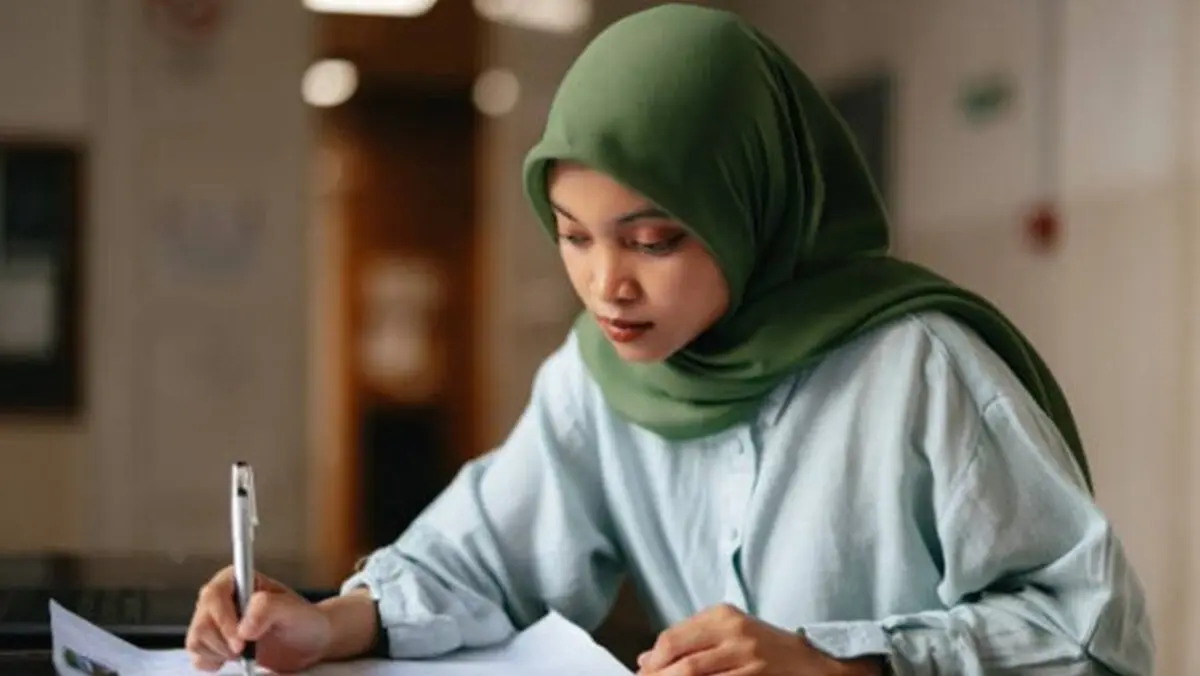
On Thursday, far-right Italian Prime Minister Giorgia Meloni decided to regulate the presence of foreign students in classrooms, limiting to 30% the number of students per classroom who do not speak Italian and banning the use of the Islamic ‘burka’ or ‘niqab’ inside schools.
RELATED:
Giorgia Meloni Set to Become Italy’s Longest-Serving Government Leader
“We do not want to drive foreign students away. We are committed to doing something: giving them the possibility of truly integrating,” Meloni said at a public event after the regulation was approved.
Education Minister Giuseppe Valditara explained that the number of students who do not have a command of Italian may not exceed 30% in primary and secondary school classrooms.
To ensure compliance, parents of the minor must indicate four schools they are interested in at the time of enrollment, and the student will be accepted at a school where the limit is not exceeded.
The decree also requires schools to notify Social Services when a foreign student “shows serious problems with school integration and a serious language deficit.”
In that case, schools will offer these families free language courses, both for the student and the parents. If they refuse to take the student, they will face fines ranging from 200 to 1,000 euros.
The new legislation includes a “ban on face covering” in educational institutions, imposing fines on those who enter them wearing the ‘burka’ or ‘niqab,’ Islamic veils that cover women’s faces, as well as for wearing a “mask if one is not sick or headphones.”
“One will not be allowed to attend the educational course if one wants to enter the classroom wearing the ‘niqab,’ for example,” the Education Minister stressed, recalling that a 2023 decree imposed a penalty of up to two years in prison on parents who fail to send their children to school.
“We do not accept that someone can say they are not sending their daughter to school because she is not allowed to enter without a ‘niqab.’ If this happens, two years in prison await them,” he warned.
Accusations of Propaganda
Before its approval, the announcement of these measures had already sparked a major political debate in the country, with the left-wing opposition calling them “propaganda” aimed solely at containing Meloni’s new rival on the far right, Roberto Vannacci and his ‘Futuro Nazionale.’
The measures have also caused concern at the Office of the President of the Republic, given doubts about their constitutionality. So much so that President Sergio Mattarella recalled this week that Article 34 of the Constitution states that “school is open to everyone.”
Meloni responded to the president with an unusual criticism, saying that during his years as education minister (1989-1990), he issued circulars that limited foreign students in classrooms.
Meanwhile, the National Association of School Principals (ANP) believes that, although “the objective is well-founded and commendable,” putting it into practice will be “very complex.”
Sandra Zampa, the Social Affairs official for the opposition Democratic Party, has accused the government of using “overbearing” tactics against the most vulnerable.
The prime minister, for her part, has described opposition to the regulations as “incomprehensible and frightening,” arguing that they seek to prevent the “imposition” of such practices on girls and women.
In Italy, according to data from the Knowledge Federation of the CGIL union, there are 40,000 students who have been in the country’s school system for less than two years and have little knowledge of Italian.
The minister said that, specifically, the number of classes with a proportion of foreign students exceeding 30% amounts to 34,000.
teleSUR/ JF
Source: EFE
