

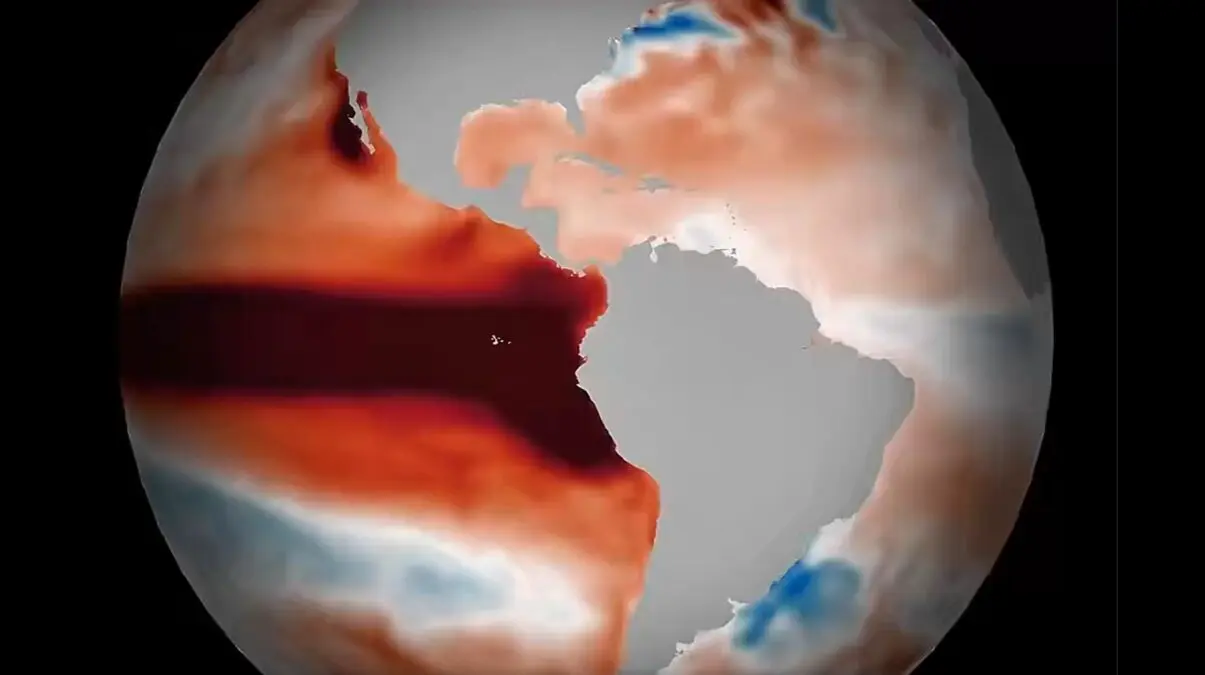
On Thursday, the Peruvian government declared a 60-day state of emergency in 607 districts across 16 Andean and Amazonian regions due to the potential drought that El Niño-Southern Oscillation (ENSO) could cause.
RELATED:
WFP Warns El Niño Will Push 49 Million Into Acute Hunger
The state of emergency will apply to districts in the regions of Apurimac, Arequipa, Ayacucho, Cusco, Huancavelica, Huanuco, Junin, La Libertad, Loreto, Madre de Dios, Moquegua, Pasco, Puno, San Martin, Tacna and Ucayali.
During the next two months, local authorities will receive facilities to implement immediate and necessary exceptional measures to reduce the existing very high risk, as well as carry out the corresponding response and rehabilitation efforts.
Actions to reduce the risk of drought will be carried out by regional and local governments in coordination with ministries and the National Institute of Civil Defense (INDECI).
The interventions must be directly related to the water deficit and may be modified according to the needs and safety considerations that arise during their implementation.
Such potential modifications, however, must be supported by technical studies and financed through the institutional budgets of the entities involved, without requiring additional resources from the Treasury.
El Niño and Its Impact in Latin America
El Niño is a recurring climate phenomenon associated with unusually warm sea-surface temperatures in the central and eastern tropical Pacific Ocean. It is part of the El Niño-Southern Oscillation (ENSO), a natural climate pattern that alters atmospheric circulation and rainfall patterns well beyond the Pacific.
El Niño generally occurs every two to seven years and typically lasts nine to 12 months, although its effects vary in intensity and from one region to another. In Latin America, El Niño can produce sharply contrasting weather conditions.
It commonly brings heavier-than-normal rainfall and flooding to parts of Peru, Ecuador, southern Brazil, Argentina, Uruguay and northern Mexico, while contributing to drought in areas including the Andean regions of Ecuador, Peru and Bolivia and northeastern Brazil.
Along the Pacific coast of South America, warmer ocean temperatures can also reduce the upwelling of nutrient-rich waters, affecting marine ecosystems and fisheries, particularly off Peru.
The resulting effects extend beyond weather and can disrupt agriculture, water supplies, energy production, transportation, and rural livelihoods. Floods can damage crops, homes, and infrastructure, while drought can reduce agricultural production, strain water resources and increase pressure on energy systems that depend on hydropower.
Because farmers, fishers and other small-scale producers are particularly exposed to these shocks, El Niño can also affect food security and local economies. The severity and geographic distribution of these impacts depend on the strength and timing of each event.
teleSUR/ JF
Sources: EFE – FAO – PMEL- WB
Source: teleSUR English
