

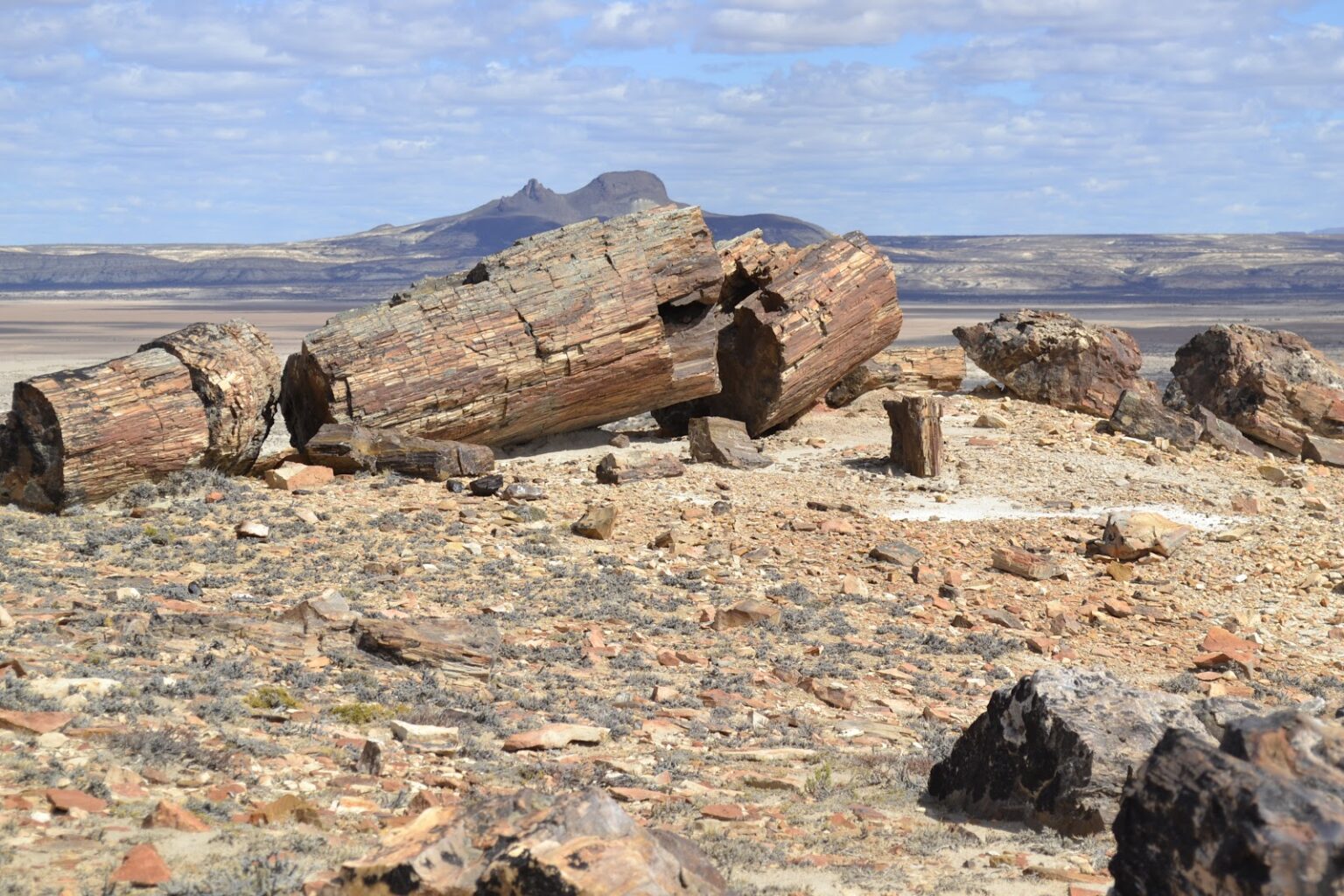
On Sunday have been discovered in Argentine Patagonia three sites containing the remains of petrified forests, dating back approximately 50 million years, . Río Negro authorities are working to preserve the site, located near the town of Pilcaniyeu.
RELATED:
Fire Consumes 200 Hectares of Native Forest in Northwest Argentina
The discovery occurred when the owner of a rural property noticed the presence of possible fossil remains and reported the situation to provincial authorities. Following the report, the Heritage and Museums Río Negro Directorate authorized an inspection of the site to verify the find and determine its scientific and heritage significance.
During the inspection, three distinct paleontological sites were identified, containing thirteen petrified tree specimens belonging to conifer and angiosperm species, dating back to the Eocene period.
“This discovery represents an important opportunity to expand our knowledge of the natural history of Río Negro and highlights the enormous wealth of heritage that our territory holds,” emphasized Pablo Chafrat, Provincial Director of Heritage and Museums.
As part of the procedure, samples were collected for scientific analysis, applying the protocols for the conservation and transfer of fossil remains. The material was sent to the Paleontological Museum of Bariloche, where it will remain under safekeeping for study and evaluation.
Argentina already boasts two large areas of petrified forests within its rich paleontological heritage. One is the Jaramillo Petrified Forest National Park in Santa Cruz, and the other is the Sarmiento Petrified Forest Protected Natural Area in Chubut.
The Patagonia petrified forests originated millions of years ago due to drastic changes in environmental conditions resulting from volcanic eruptions, which buried forested areas under layers of ash and other sediments, fossilizing various plant species.
Author: HGV/JF
Source: teleSUR English
