

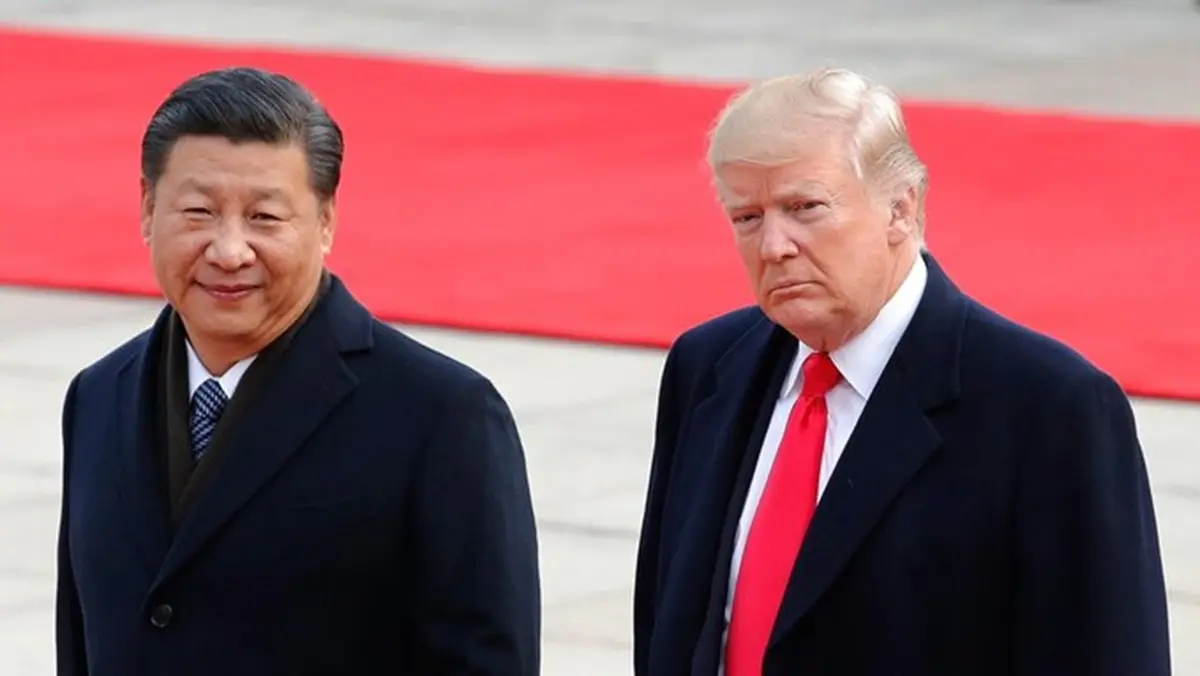
On Thursday, U.S. President Donald Trump and Chinese President Xi Jinping will meet at the White House in their second encounter of the year, with the aim of easing growing tensions over trade, the U.S. war on Iran, the future of Taiwan, and the race for artificial intelligence (AI).
RELATED:
Xi’s U.S. Visit Could Mark Milestone In Ties, China’s U.S. Ambassador Says
The Chinese president is scheduled to land on Wednesday after 6 p.m. local time at Andrews Air Force Base, outside Washington, where he will be received by Trump, a gesture the U.S. president has not extended to any other head of state.
Previously, the Chinese Foreign Ministry expressed that its nation is prepared to work with the United States to strengthen dialogue, properly manage their differences and enrich the content of the bilateral relationship in favor of global peace and stability.
It also pointed to the importance of respecting certain red lines, including the status of Taiwan, China’s political system and the right to development of the Chinese nation.
The central event of the visit will be Thursday’s bilateral meeting at the presidential residence, where Trump will also host Xi for a state dinner. It will be Xi’s first visit to the White House in more than a decade, since his 2015 visit at the invitation of then-President Barack Obama.
It will also be the third meeting between the two since Trump’s return to power, following meetings in Busan, South Korea, in October 2025 and in Beijing in May.
Trump’s Tariff War and AI Race
Trade accounts for a large part of the agenda between the world’s two largest economies, which managed to halt the escalation that followed the tariff war launched by Trump last year against numerous trading partners and answered by Beijing with equally high tariffs.
The trade truce, which expires in November, will be one of the central issues of the conversation, along with access to critical minerals and rare earths, which are essential to the U.S. techn and defense industries. China dominates a large part of that market, a position Washington is watching with growing concern.
Another source of friction is the rapid development of artificial intelligence. Trump is resisting restrictions that could slow the United States down against China, despite warnings from some leaders in the AI industry about the risks of moving forward without sufficient controls.
“Whoever wins in the field of AI wins,” Trump said last week, rejecting regulations that, according to him, could slow the development of this technology.
From the U.S. War on Iran to Taiwan’s Future
Trump arrives at the meeting with Xi in a weaker position than in May because of the risk that the U.S. war on Iran could hurt Republicans ahead of the November midterm elections.
The U.S. president is seeking to increase the economic isolation of the Islamic Republic, but China defends its right to trade with Tehran, of which it is the main oil buyer.
Last week, Trump ratified a law that allows new tariffs to be imposed on countries that buy gas and oil from Russia and Iran, but so far he has avoided announcing penalties against China in order not to jeopardize the summit with Xi.
Regarding Taiwan, whose sovereignty Beijing claims, Xi is expected to insist that Trump limit the U.S. supply of weapons to the island.
Trump maintains an ambiguous position on Taiwan and, since his last meeting with Xi, has frozen an arms package for the island, which he considers a “bargaining chip” for negotiating other matters with Beijing.
Nevertheless, the Republican administration maintains that it has not altered the historic U.S. policy toward Taiwan structured around the “One China” principle.
The U.S. government does not recognize the island’s formal independence, although it remains committed to providing it with the means to defend itself.
teleSUR/ JF
Source: EFE
Source: teleSUR
