

Demining operations in Hormuz could take up to six months, the Pentagon estimates.
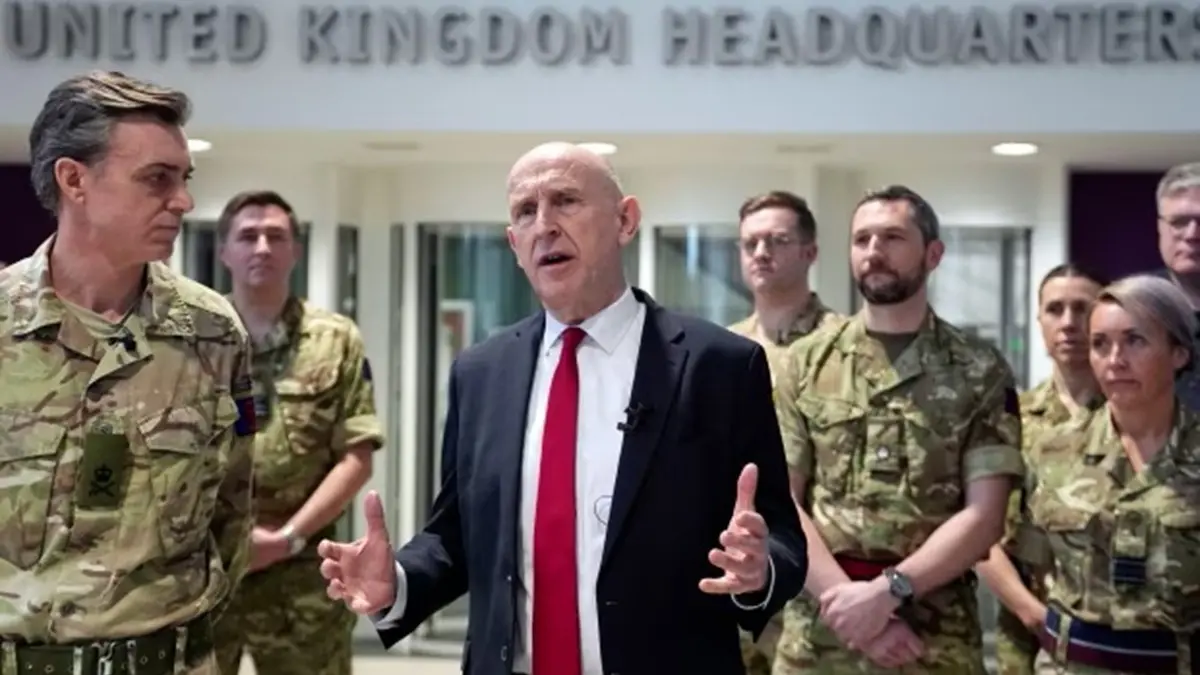
On Wednesday, Britain and France co-hosted a two-day multinational military planning conference in London to advance plans for restoring navigation through the Strait of Hormuz.
RELATED:
Iran Seizes Two Vessels in The Strait of Hormuz
The event includes military planners from more than 30 countries attending, according to a statement from the British Ministry of Defense.
The meeting, held at Britain’s Permanent Joint Headquarters in Northwood, north London, aims to turn previously reached diplomatic consensus into a joint military plan so as to help reopen the Strait of Hormuz when conditions allow and a ceasefire can be sustained.
“Today’s multinational planning conference matters. The task, today and tomorrow, is to translate the diplomatic consensus into a joint plan to safeguard freedom of navigation in the Strait and support a lasting ceasefire,” British Defense Secretary John Healey said, noting that international trade and energy security depend on freedom of navigation.
Britain and France are working to involve as many partners as possible in the planning process, with discussions focusing on military capabilities, command and coordination, as well as regional deployments, according to the statement.
France and Britain convened 51 countries for an international summit on the Strait of Hormuz in Paris on April 17. British Prime Minister Keir Starmer, German Chancellor Friedrich Merz and Italian Prime Minister Giorgia Meloni attended the meeting, while officials from across Europe, Asia, Latin America and the Middle East joined by video conference.
Meanwhile, the Pentagon estimated that demining operations in the Strait of Hormuz will not begin until the war on Iran is over and could take up to six months.
According to three anonymous sources cited by The Washington Post, a senior Defense Department official shared this estimate in a briefing held Tuesday with members of the House Armed Services Committee.
These calculations imply that the economic effects of the conflict could last until almost the end of the year and would still be felt when the U.S. holds its midterm elections in November, which are vital for President Donald Trump and the Republicans to maintain control of both houses of Congress.
[ SOURCE: teleSUR ]
