

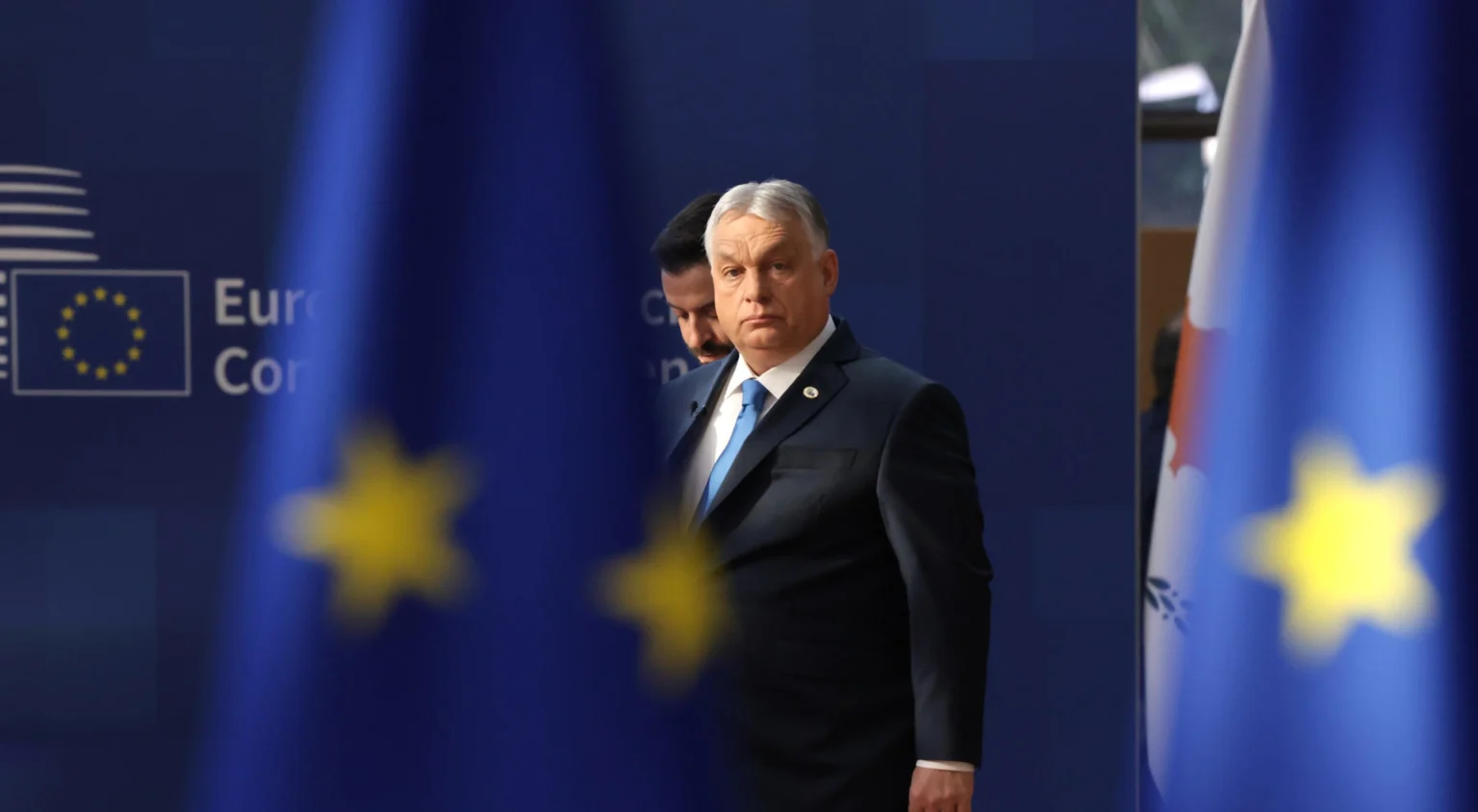
The newly signed amendment, which was previously approved by the Hungarian Parliament, officially integrates into the country’s Fundamental Law.
This legislative shift represents a structural transformation within the national legal framework, altering the sixteenth constitutional amendment to establish strict executive limits.
RELATED: Magyar Sworn in as Hungary’s New Prime Minister
Significantly, the constitutional reform carries a retroactive clause. This legal mechanism prevents future political returns by former PM Viktor Orban, making him ineligible for any eventual candidacy to the country’s highest executive office.
Under the constitutional framework of the Hungarian State, the Presidency’s Office holds a specific procedural mandate. In this regard, the Sandor Palace emphasized that the head of State does not possess the legal authority to evaluate or veto the ideological or political content of parliamentary amendments, but must restrict his review exclusively to procedural compliance.
The approval of this measure takes place in a highly polarized environment, characterized by a growing national debate concerning the centralization of administrative power in Hungary. This discussion has intensified due to the political trajectory of the former administration, given that Viktor Orban occupied the Executive Office continuously since 2010 with the backing of overwhelming parliamentary majorities.
This legislative development coincides with a major transition in the national Executive Power, as Peter Magyar recently assumed office as the new Prime Minister of Hungary. This political transition effectively concluded the long-standing governing era dominated by Viktor Orban, paving the way for immediate constitutional restructuring.
Political Implications
In this context, various political analysts and international observers suggest that the ratification of the term limits responds directly to a combination of intense domestic social demands and sustained international criticisms. These international bodies have repeatedly raised concerns regarding the institutional health and democratic functioning of the Hungarian nation.
The legal text has been officially published in the Hungarian Gazette and has entered into immediate effect. Despite its active status, several constitutional law experts warn that the retroactive nature of the law could face future legal challenges in national courts.
Currently, the national Government has not released an official statement regarding the immediate practical consequences of this constitutional reform. Meanwhile, opposition parties in the Parliament characterized the legislative change as a purely symbolic action, arguing that it does not deeply modify the existing balance of power within the Nation.
Author: Laura V. Mor
Source: teleSUR English
