

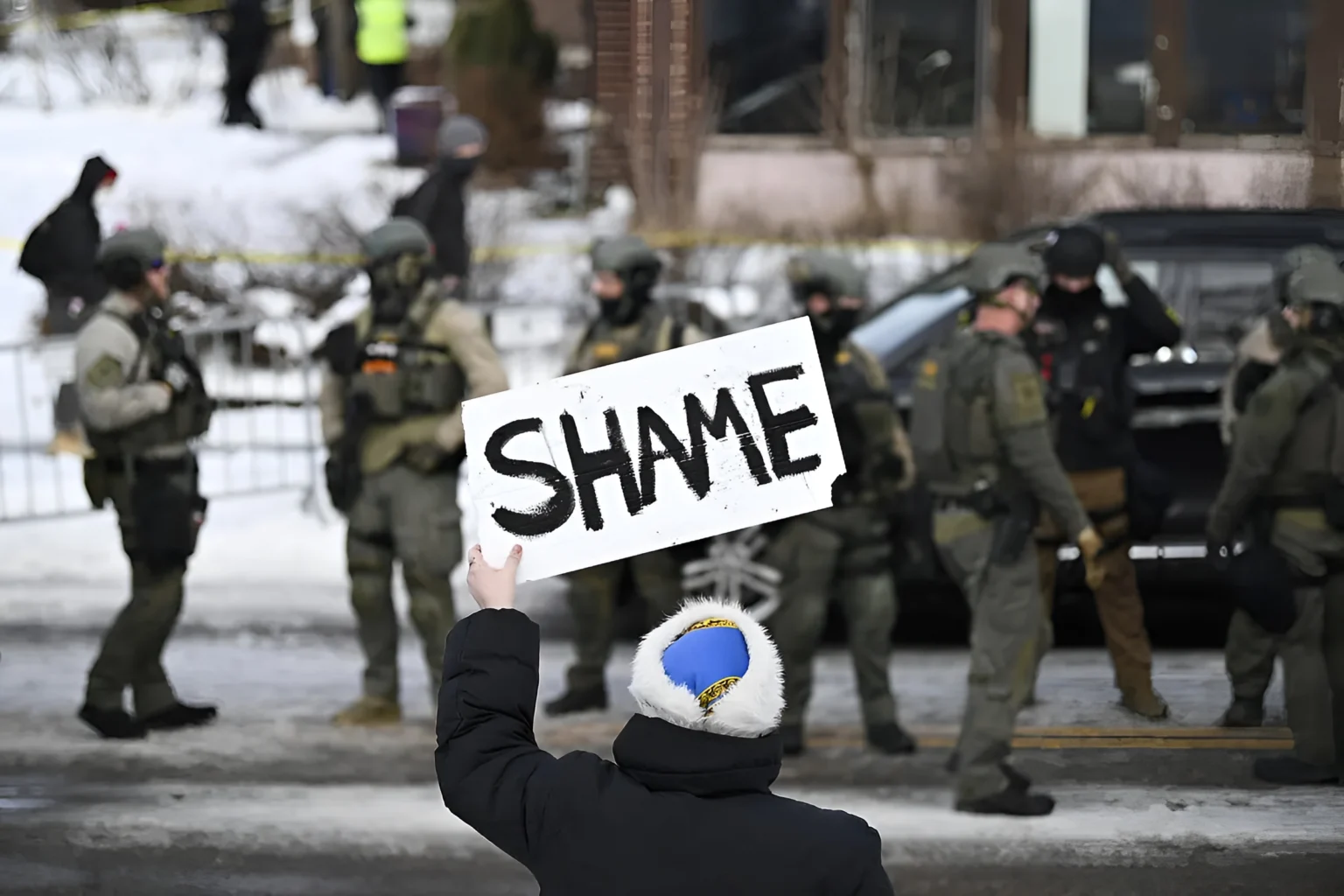
The implementation of immigration laws in the United States has reached a lethal point. While the government discusses in terms of national security and legislative debate, the human cost of enforcement has risen sharply.
RELATED:
Third Migrant Death Linked to ICE in Under 10 Days
Human rights organizations and legal researchers have documented a severe escalation in fatalities involving individuals under the custody or direct supervision of Immigration and Customs Enforcement (ICE).
Rather than treating these events as isolated failures, the data show a clear pattern of operational risk, systemic medical neglect, and uncontrolled tactical escalations.
It seems to be obvious that maximizing detention volume directly compromises safety protocols, creating situations where preventable deaths become an ongoing reality.
The Sudden Surge in Immigration Fatalities
The scale of the crisis has become undeniable; at least 9 migrant deaths by ICE have been reported within the last month alone, marking an alarming spike in enforcement-related mortality rates.
This increase coincides with an aggressive operational push from federal agencies prioritizing rapid U.S. enforcement and expanded mass deportation actions. This points directly to changes in operational mandates on the ground, where speed and high-volume apprehensions are prioritized.
Statistical shows that in 500 days of Trump’s administration, 52 deaths are registered under ICE custody in shelters. Just in 2025, ICE reports 33 deaths, the highest data in 20 years. And this is just among refugees; public operations have caused direct deaths. In July 2026, the Mexican government has denounced that 17 Mexicans citizens have died: 14 inside shelters, and 3 at public raids.
Investigative reports by human rights organizations like Human Rights Watch indicate that this trend is driven by two main factors. First, a high volume of rapid-fire street operations and tactical vehicle stops increases the risk of immediate physical violence.
Second, the extreme over-saturation of existing detention facilities creates a backlog where medical screening, continuous monitoring, and emergency response capabilities are severely diminished.
Specific Case Profiles and Circumstances of Recent Custody Deaths
Documented cases from the recent surge in enforcement fatalities by ICE provide clear insight into the exact circumstances surrounding these deaths.
For instance, 26-year-old Colombian national Johan Durán Guerrero was shot and killed by an ICE agent during an enforcement operation in Biddeford, Maine. Official reports stated that agents were conducting surveillance on a separate individual when they attempted to stop the vehicle Durán Guerrero was driving.
ICE authorities asserted that the vehicle attempted to flee, prompting the officer to discharge his weapon. However, family members have publicly challenged this sequence of events, questioning the legal justification for using lethal force during a routine vehicle monitoring operation.
A similar operation occurred in Houston, Texas, involving 52-year-old Lorenzo Salgado Araújo, a Mexican national who had lived and worked as a homebuilder in the United States for over three decades.
Salgado Araújo was driving his construction crew to a job site when federal agents intercepted his vehicle. The Department of Homeland Security stated that an agent fired in self-defense after the vehicle allegedly rammed into an enforcement car.
Eyewitness footage recorded shortly after the incident showed Salgado Araújo handcuffed and bleeding on the ground while other crew members were detained.
The incident sparked immediate community protests and led the Mexican government to formally request a thorough, independent criminal investigation into the tactical necessity of the shooting.
Severe physical altercations and medical crises inside facilities have also resulted in fatalities. Geraldo Lunas Campos, a 55-year-old Cuban national, died at the Camp East Montana facility in Texas following an altercation with detention center guards.
While initial agency statements characterized the event as a response to an attempted suicide, a subsequent autopsy conducted by the El Paso County Medical Examiner officially ruled the death a homicide caused by physical asphyxia from neck and torso compression.
Eyewitness accounts from other detainees supported the medical examiner’s findings, stating that multiple guards pinned Lunas Campos to the ground and placed him in a chokehold while he repeatedly verbalized that he could not breathe.
Other recent custody fatalities involve severe medical neglect and a failure to provide timely emergency interventions. Parady La, a 46-year-old Cambodian American father residing in the Philadelphia area, died after being found unresponsive in his cell at a federal detention center.
ICE noted that he was undergoing monitoring for substance withdrawal, but legal advocacy groups and family members have stated that critical medical symptoms were ignored by facility staff in the days leading up to his death.
Similarly, 45-year-old Venezuelan national Jesus Arenas-Silva suffered a fatal cardiac arrest during a rapid logistical transfer between immigration facilities in Georgia.
The Operational Mechanics of Accountability Avoidance
The continuous occurrence of these fatalities is closely linked to a lack of recording equipment during field operations. In both the fatal shootings of Johan Durán Guerrero and Lorenzo Salgado Araújo, the involved federal personnel were not wearing operational body cameras or body-worn cameras.
In the U.S only a few states have regulations for these personnel cameras in police officer uniforms, because the laws are fragmented, and there are around 17,000 agencies independent of the federal government.
In 2022, Biden’s administration signed an executive order to require federal agencies to enforce body-worn cameras. In 2025, Trump eliminated the executive order to deregulate the operational limits of federal agencies.
On the other hand, the structural reliance on private contractors to manage detention facilities also complicates the tracking of operational accountability.
A significant portion of the ICE detention network is operated by for-profit corporations that maintain separate medical staff and internal security teams. Corporations like GEO Group and CoreCivic, which manage key ICE detention facilities
These private entities frequently operate with minimal public oversight, leading to documented instances where critical medical requests are delayed to reduce facility operating costs. When an injury or death occurs under private management, the division of responsibility between federal oversight agencies and private corporations slows down the investigation process.
Furthermore, the bureaucratic reporting methods utilized by immigration enforcement agencies often minimize the severity of custody incidents.
Official press releases of these corporations and federal institutions frequently rely on passive language, describing homicides or physical altercations as “spontaneous uses of force” or framing severe medical emergencies as unavoidable outcomes of pre-existing conditions.
Community and Legal Responses to Enforcement Fatalities
The rise in ICE raid fatalities has led to legal interventions across multiple states. Grassroots community coalitions, civil rights organizations, and family members of the victims have organized continuous public demonstrations.
For example, following the shooting of Lorenzo Salgado Araújo in Houston, Community protests and demands for independent investigations have followed these deaths in cities like Houston, El Paso, and Miami.
The American Immigration Council and the National Immigration Project have issued public statements characterizing these fatalities as a direct consequence of systemic enforcement practices rather than isolated errors.
In Pennsylvania, the American Civil Liberties Union (ACLU) filed an official Freedom of Information Act (FOIA) request to compel the release of medical logs and surveillance footage in cases like that of Parady La, in Philadelphia.
The public pressure generated by these events has caused temporary operational adjustments within the immigration enforcement network. Following the fatal shooting of Johan Durán Guerrero in Maine, Immigration and Customs Enforcement announced a temporary suspension of routine or non-targeted vehicle stops by its Enforcement and Removal Operations division in the region.
The Structural Impact of Current Border Enforcement
The data and individual profiles recorded by communities, families, and human rights organizations over the recent months demonstrate that the rapid acceleration of interior operations and ICE mass detention strategies directly correlates with an increased loss of life.
Whether through tactical escalations during street encounters or the systemic failure to provide basic healthcare inside facilities, the current federal operational focus on high-volume enforcement poses an ongoing danger to immigrant populations.
The evidence suggests that the physical safety of individuals within the immigration system cannot be guaranteed under a framework that treats human beings primarily through the lens of criminalization and detention targets.
Legal organizations argue that true accountability and safety can only be achieved by systematically reversing mass deportation mandates, defunding the private, for-profit detention center network, and replacing the existing ICE framework with a transparent, human-rights-centered immigration process.
Author: Silvana Solano
Source: teleSUR
Source: teleSUR English
