

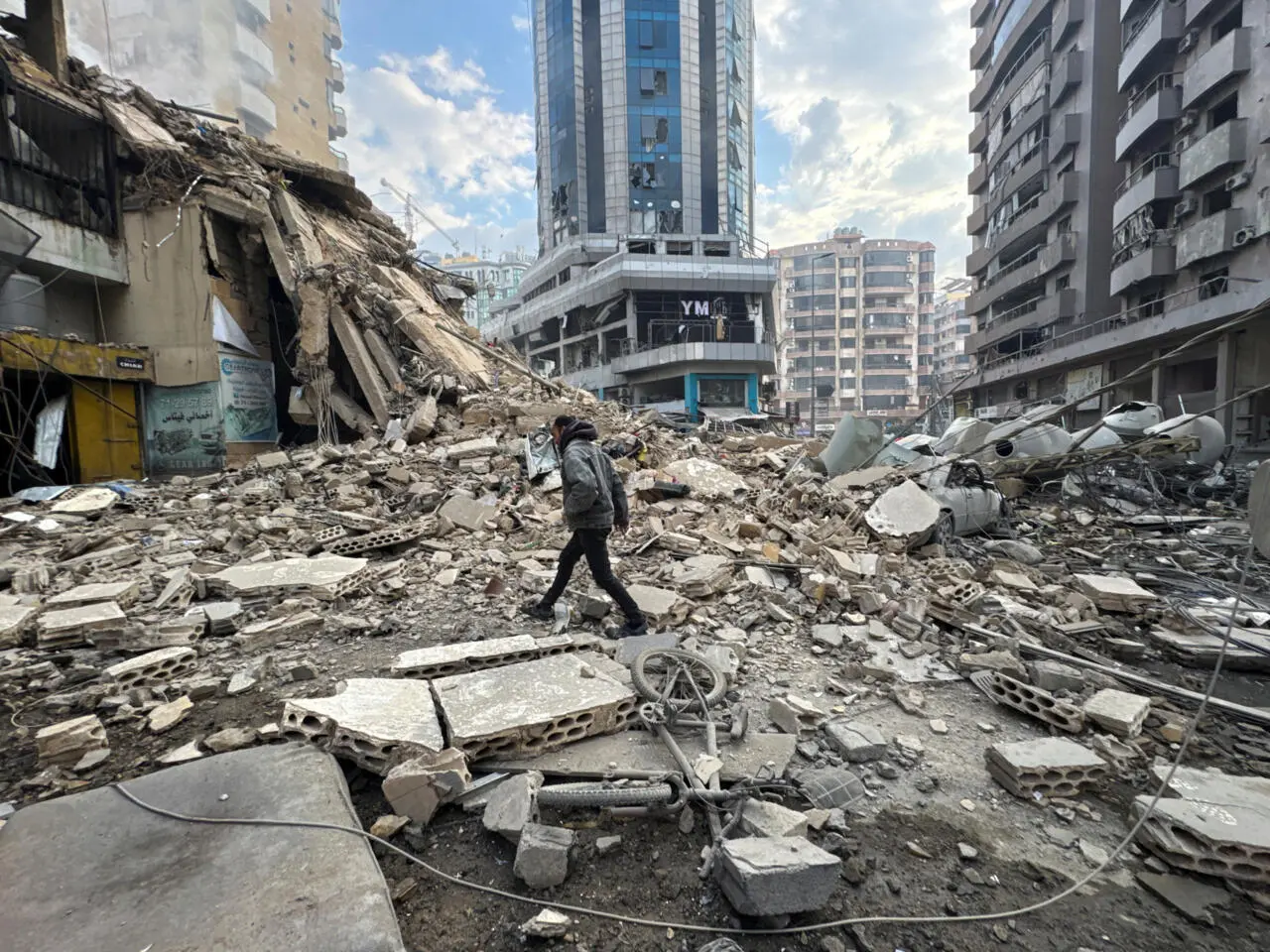
The Israel–Lebanon border has become the primary fault line in a broader Middle East confrontation. The history of conflict between the two countries is now involved in the confrontation of the United States, Israel, and Iran.
RELATED:
Israel Extends Its Shadow Over Lebanon Once Again
This war is reshaping regional alliances, testing international diplomacy, and disrupting global energy security. To make sense of the crisis, we must trace the deep roots of military intervention, the breakdown of previous security frameworks, and how state and non-state actors have changed their strategies.
The Invasions History (1978–2006)
The military conflict between Israel and Lebanon follows a long pattern of cross-border incursions, buffer zones, and asymmetric warfare. The first major escalation occurred in March 1978 with Israel’s Operation Litani.
Israel stated its actions were a response to a lethal bus hijacking near Tel Aviv that had been perpetrated by the Palestine Liberation Organization (PLO), which was operating from southern Lebanon.
Israeli forces advanced up to the Litani River. The operation destroyed numerous Lebanese villages, resulting in the death of approximately 2,000 people and the displacement of over 200,000 civilians.
The United Nations passed Resolution 425 and established the UN Interim Force in Lebanon (UNIFIL), yet Israel maintained control of a border strip through proxy, with the South Lebanon Army (SLA) as the intermediary.
In June 1982, Israel launched Operation Peace for Galilee, which subsequently became known as the First Lebanon War. The stated trigger was the assassination attempt on Shlomo Argov, Israel’s ambassador to the United Kingdom, by the Abu Nidal Organization.
Under the leadership of Defense Minister Ariel Sharon, the Israeli forces advanced beyond southern Lebanon and proceeded to besiege the capital, Beirut. The operation’s objective evolved from border security to political engineering: the expulsion of the PLO and the establishment of a pro-Israeli, Christian-led government in Lebanon.
A decisive and regrettable incident occurred in the aftermath of the assassination of Lebanese President-elect Bachir Gemayel. Israeli forces surrounded the Sabra and Shatila refugee camps in West Beirut and permitted Lebanese Phalangist militias to enter.
Over a period of three days, the militia is estimated to have massacred between 2,000 and 3,500 unarmed civilians. The Kahan Commission, which was established in Israel, held Defense Minister Sharon personally responsible for his failure to prevent the massacre.
The political landscape of Lebanon has not stabilized the border; instead, the presence of foreign forces has helped create Hezbollah (the Party of God), a Shiite political and military movement that is backed by Iran.
Hezbollah ran a continuous guerrilla campaign against Israeli forces and the SLA. In the 1990s, Israel launched repeated air and artillery campaigns, Operation Accountability (1993) and Operation Grapes of Wrath (1996), to halt Hezbollah rocket fire.
These operations frequently impact civilian infrastructure, resulting in tragic outcomes such as the 1996 Qana massacre, where an Israeli artillery shell killed 106 civilians sheltering in a UN compound. In light of escalating costs, Israel made the unilateral decision to withdraw from southern Lebanon in May 2000, bringing an 18-year occupation to a close without the formalization of a peace treaty.
The Interwar Period and The Catalyst of The 2026 War
Following the adoption of Resolution 1701 by the UN Security Council in 2006, efforts were made to resolve the border dispute. It was imperative that southern Lebanon, specifically the area between the Blue Line and the Litani River, be free of armed personnel, assets, and weapons, except those belonging to the Lebanese Armed Forces and UNIFIL.
Despite this, stability never took hold. From 2006 through late 2024, there were repeated violations of the rules on both sides. Independent monitors and regional media documented thousands of Israeli incursions into Lebanese airspace by military aircraft and drones.
Meanwhile, Hezbollah has evolved from a guerrilla militia into a significant political and military force, equipped with long-range missiles, precision munitions, and low-cost First-Person View (FPV) drones supplied by Iran.
The sequence of events that led to the present state of hostilities commenced on 8 October 2023, when Hezbollah initiated low-intensity rocket attacks into northern Israel, in a gesture of solidarity with Palestinians in Gaza.
For almost a year, artillery exchanges emptied towns on both sides. The situation escalated in early 2026. On 28 February 2026, the United States and Israel initiated Operation Epic Fury, a coordinated campaign involving airstrikes within Iranian territory and the targeted removal of high-ranking Iranian officials.
In response to the strikes, Hezbollah resumed its large-scale rocket and drone attacks on northern Israel on 2 March 2026. Israel used these attacks as a pretext for a broader, pre-planned campaign to disarm the group.
On 16 March 2026, the Israeli Defense Forces (IDF) initiated a significant incursion into southern Lebanon, deploying five divisions, including the 98th, 36th, and 91st. Air and ground operations resulted in a significant humanitarian crisis, with over 3,700 casualties in Lebanon and over 1.2 million internally displaced persons, accounting for approximately 20% of the country’s population.
Linking Lebanon to The U.S.–Israel vs. Iran Confrontation
The 2026 war has changed the logic of proxy conflict in the region, turning the border fight into a direct three-way confrontation among Israel, the United States, and Iran.
Historically, Tehran has worked with regional allies, such as Hezbollah in Lebanon and the Houthis in Yemen, to act as forward defense assets to deter attacks on Iranian territory.
The joint U.S.–Israeli strikes inside Iran in February 2026 led to a significant shift in this restraint, compelling Tehran to adopt an aggressive direct-intervention doctrine.
In light of this new doctrine, Iran has declared Lebanon to be a clear “red line.” Iranian leaders were clear in their assessment that the defense of Beirut was of national survival importance and that any major Israeli action in Lebanon would trigger a direct Iranian response.
This dynamic became evident in June 2026. Following the Israeli strike on a Hezbollah command center in Dahieh, southern Beirut, Iran launched ballistic missiles at Ramat David Airbase in northern Israel.
New military technologies from the Israeli Air Force had a significant impact on Lebanon’s civil and communications infrastructure.
However, the adoption of low-cost FPV kamikaze drones by Hezbollah has democratized airspace. These drones have repeatedly targeted advanced Israeli armor such as Merkava tanks and troops within the IDF’s 8–10 km buffer zone. This technological parity has led to a costly and destructive stalemate in southern Lebanon.
The Fractured Peace: The U.S.–Iran Accord and Israel’s Refusal
A diplomatic development occurred on June 14, 2026, when U.S. President Donald Trump announced that the U.S. and Iran had concluded a framework agreement to end their four-month-long military engagement.
The Memorandum of Understanding (MoU) signing was set in Switzerland on June 19, 2026, and will be mediated by Pakistan, Qatar, and Saudi Arabia. In the face of mounting global economic pressures, the White House adopted a policy of de-escalation.
The framework text demonstrated that competing demands and significant concessions. The U.S. insisted on comprehensive containment of Iran’s nuclear programme, including the surrender of enriched stockpiles and intrusive, snap IAEA inspections.
Washington has tied the unfreezing of up to $24 billion in Iranian assets to verified compliance. Iran negotiated from a position of relative strength, which is a positive aspect to consider when evaluating the situation.
Led by Deputy Foreign Minister Kazem Gharibabadi, the Iranian team is lifting the naval blockade and reopening the Strait of Hormuz, dependent on an immediate, permanent ceasefire across all fronts, including Lebanon and Palestine.
Despite the near-signing, Israel emerged as an opponent of the diplomatic track. A unilateral strike on Dahieh was ordered by Prime Minister Benjamin Netanyahu just hours before the deal was announced.
In an interview, President Trump publicly criticized Netanyahu, stating that he lacked “judgment” and was attempting to undermine the treaty. Israel opposes the agreement of a permanent regional ceasefire for conflicts with its domestic and strategic goals.
For Netanyahu’s coalition, an active state of war helps preserve the government and delay domestic corruption trials. The Israeli defense establishment is still pursuing a military victory: the expulsion of Hezbollah beyond the Litani River and the establishment of a permanent buffer in southern Lebanon.
The Regional Brink and Global Fallout
The ongoing war between Israel and Lebanon, coupled with the precarious state of international relations, poses risks to the stability of the Middle East and the global landscape.
If Israel continues its campaign in defiance of the U.S.–Iran framework, there is a risk of institutional collapse in Lebanon. The displacement of more than 20% of the population has already had a significant impact on Lebanon’s fragile economy and public services.
Globally, the greatest risk is the collapse of the June 19 accord and a direct hostility between Washington, Tel Aviv, and Tehran. Iran has issued a formal warning that it will not accept the unilateral enforcement of a buffer zone in Lebanon by Israel.
Should the treaty be unsuccessful, Iran could reinstate a maritime blockade in the Persian Gulf, which would pose a significant threat to around 20% of the world’s petroleum transit. Such a decision would result in a surge in global inflation and significant disruption to international trade.
The crisis highlights a contradiction in Western policy: the United States attempts to act as a stabilizing diplomat while its ongoing supply of weapons to Israel enables military defiance, which poses a risk of total war.
[ SOURCE: teleSUR ]
