

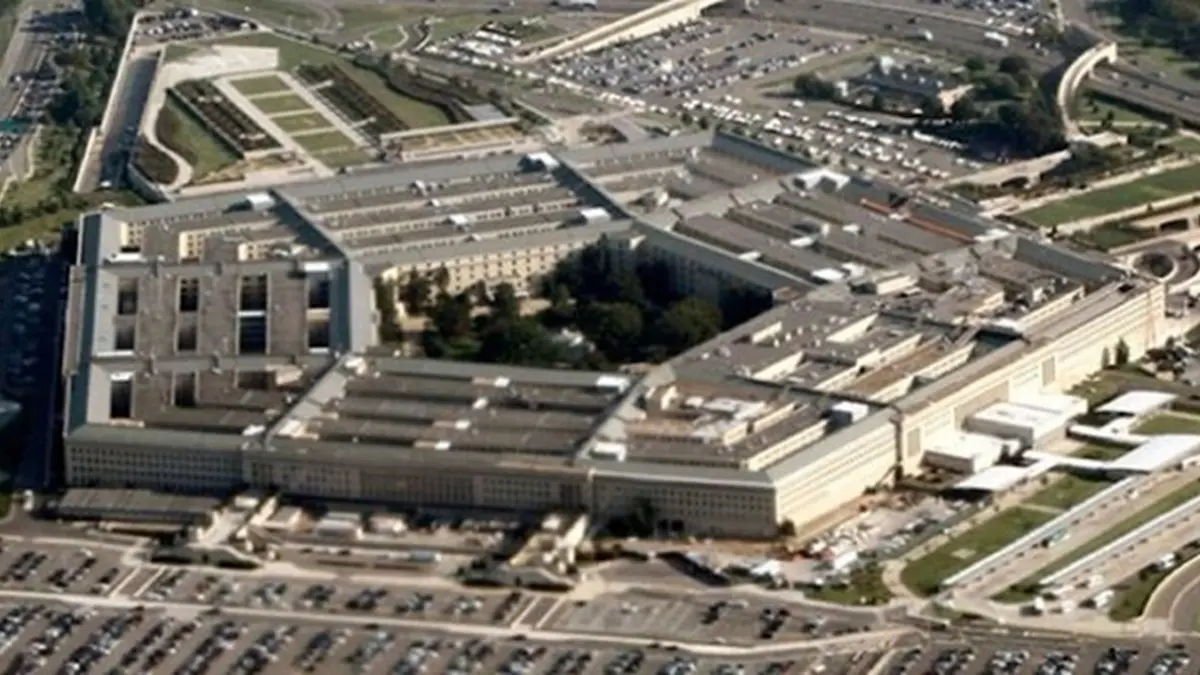
This week, Sam Biddle, a tech reporter focusing on issues of surveillance and corporate power, published an article in The Intercept titled “The Pentagon Is Running an AI Propaganda Mill Targeting Latin America.”
RELATED:
Pentagon Not To Send U.S. Troops To Poland
His thorough journalistic investigation reveals that the U.S. military is secretly operating a new AI-powered propaganda network targeting Latin American internet users.
The La Tilde platform presents itself as an independent media brand for Spanish- and English-speaking audiences in the region, complete with a promotional video bearing telltale signs of AI generation. Its tagline, “news with an accent,” belies its true purpose: to feed Pentagon-approved messaging to millions of unsuspecting readers.
Despite its folksy branding, La Tilde’s coverage reads less like journalism and more like a Pentagon press release. Articles praise U.S. military operations in hyperbolic, Trumpian prose. For example, stories extol the benefits of joint U.S.-Panamanian jungle warfare training while positioning the United States as a bulwark against China’s “predatory practices” in the region.
The site’s true nature is buried in an easily missed disclosure on its About page, which states that La Tilde is “a product of an international media organization publicly funded from the budget of the U.S. government.”
This identical language has appeared on two other Pentagon-sponsored propaganda sites previously exposed by The Intercept. The disclosure allows Washington to technically claim transparency while the site otherwise operates without bylines, a masthead, or any mention of actual editorial staff.
According to a defense official familiar with U.S. information operations, La Tilde is run as a military messaging platform for U.S. Special Operations Command South (SOCSOUTH), which executes special forces missions across South and Central America and the Caribbean.
SOCSOUTH declined to comment beyond citing the site’s disclosure, while U.S. Southern Command (SOUTHCOM)—which coordinates military assets in the target countries—denied any “official association” with La Tilde.
Much of the site’s content appears to be generated by large language models. An AI-text detection service flagged multiple articles as partially or entirely machine-written.
Emerson Brooking, a former Pentagon cyber-policy adviser, described the operation as “AI all the way down,” noting the low-quality output, sloppy AI-generated images, including a White House portico missing several columns. Despite the shoddiness, Brooking warned that AI allows the Pentagon to spin up propaganda efforts faster than ever before.
An analysis of La Tilde’s web infrastructure shows plans to launch bespoke versions for readers in Ecuador, El Salvador, Guyana, Honduras, Jamaica, Panama, and Peru. The site’s articles downplay controversies over national sovereignty, including protests against the PANAMAX joint military exercises.
Notably, La Tilde promotes training provided by the Western Hemisphere Institute for Security Cooperation—formerly known as the School of the Americas—whose graduates include thousands of Latin American death squad members.
While the Pentagon has a long history of online propaganda, including fake newsrooms and “deepfake” research, La Tilde appears to be a lower-tech operation. Its design was subcontracted to Antpack, a Colombian digital marketing firm, and internal developer comments on a non-public version of the site were traced back to Antpack employees.
The site shares a common Google Ads identifier with a network of similar propaganda websites run by military contractor General Dynamics Information Technology, which did not respond to requests for comment.
The Intercept’s investigation also found that La Tilde echoes U.S. government claims—such as alleging Ecuador is a nexus of the international cocaine trade—that have been used to justify SOUTHCOM airstrikes killing more than 200 civilians.
One article argues that military cooperation with the United States “strengthens” rather than weakens sovereignty. Ultimately, experts see La Tilde as a hastily built, AI-driven influence operation that prioritizes speed over sophistication.
“The intent is probably to fill these sites with generic material, build an audience base, and then slip in more pieces of explicit propaganda. But the content is lazy, the AI is bad, and the required disclosures make the whole thing a farce,” Brooking said.
The Intercept’s investigation raises urgent questions about how the United States is covertly shaping public opinion across Latin America under the guise of digital news.
[ SOURCE: teleSUR ]
