

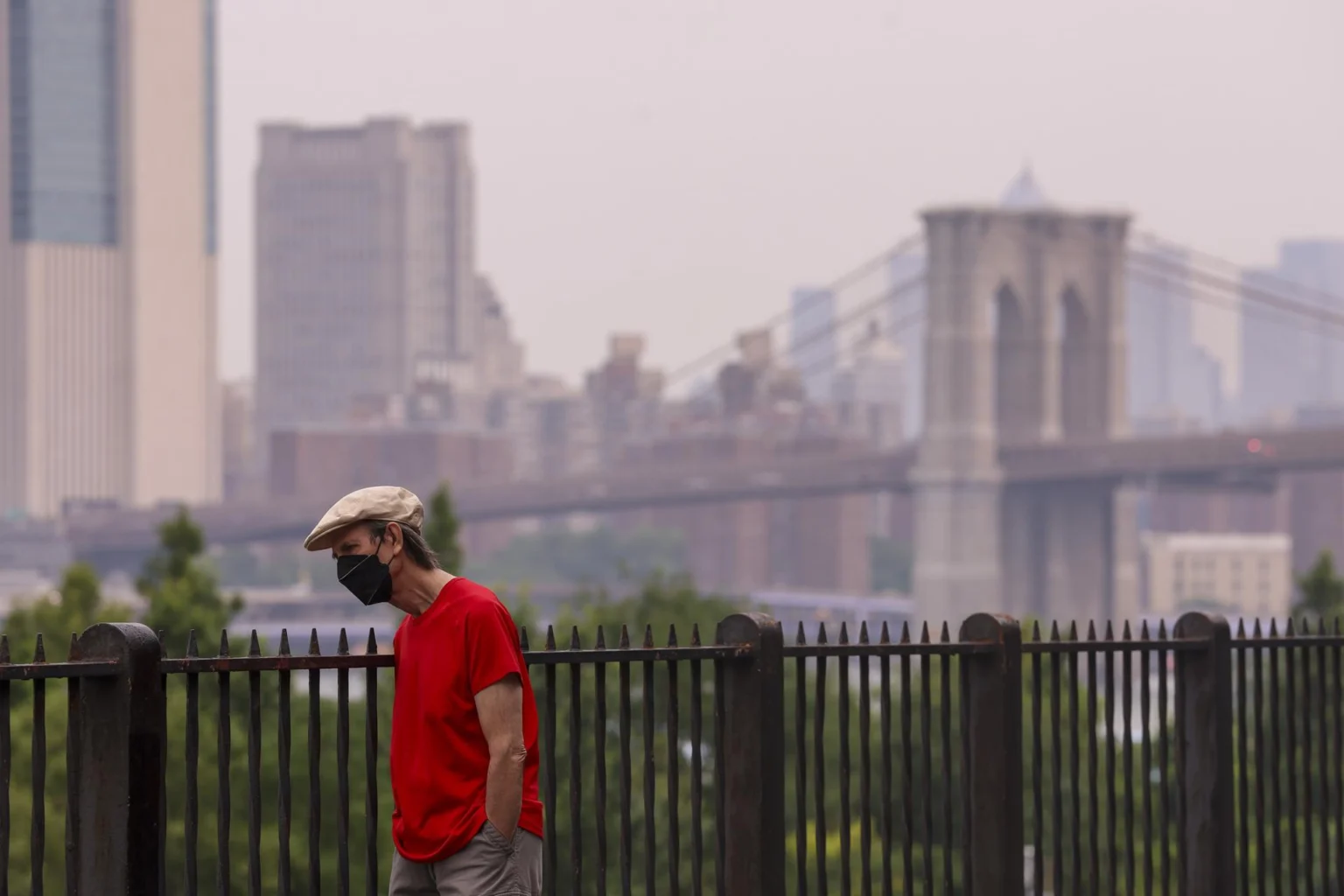
Air quality readings in the region have plummeted to unhealthy thresholds in recent hours, coinciding with an intense heat wave that compounds the physical stress on athletes and fans alike.
Authorities confirmed that PM2.5 fine particulate matter -capable of penetrating deep into lung tissue and entering the bloodstream- reached concentrations that exceed international safety standards by a wide margin.
RELATED: Argentina Defies FIFA Ban with Malvinas Claim After World Cup Semifinal Win
The crisis forced Toronto earlier this week to cancel its Fan Festival after the city temporarily registered the worst air quality index globally, a precedent that now places New York organizers on high alert.
New York Governor Kathy Hochul issued a public warning describing the smoke as creating “unhealthy atmospheric conditions” and urged residents and visitors to limit outdoor exposure.
Medical specialists stressed that the combination of extreme heat and toxic inhalation creates a compounded threat: elevated heart rates from high temperatures increase both the absorption rate of pollutants and the strain on the cardiovascular system, making the situation particularly dangerous during strenuous physical activity such as a professional soccer match.
The MetLife Stadium, an open-air venue with no roof coverage, offers no filtration against the contaminated air, leaving the tens of thousands of attendees fully exposed to the drifting smoke from the Canadian wildfires burning across multiple provinces. Forecast models indicate that wind patterns may shift again over the weekend, potentially dragging additional smoke plumes directly over the stadium area during the scheduled match hours.
Decisive Scrutiny
The unfolding environmental crisis places FIFA and local organizers in a complex position where commercial commitments and sporting prestige collided with the fundamental obligation to protect human life. Current contingency measures include mandatory hydration breaks and medical stations positioned throughout the venue, but health experts warn that these stopgap solutions may prove insufficient if air quality deteriorates further.
Beyond the stadium walls, approximately 50,000 people are expected to gather in open spaces such as Central Park and other public viewing areas across New York City to watch the final match on giant screens. These unofficial congregation zones have no infrastructure for air purification or medical surge capacity, raising concerns about a potential mass health incident if conditions worsen during the broadcast.
The situation reflects a broader pattern of environmental disruption affecting major global sporting events. The World Cup 2026, hosted across the United States, Canada and Mexico, was already navigating the logistical complexities of a tri-national tournament when the climate dimension emerged as an unforeseen variable. Toronto’s Fan Festival cancellation earlier this week served as a warning that extreme weather events and their secondary effects -such as wildfire smoke- can no longer be treated as hypothetical risks but rather as immediate operational challenges.
FIFA officials have not publicly commented on possible schedule changes or relocation scenarios, but sources close to the organizing committee confirmed that multiple scenarios are being evaluated behind closed doors. A last-minute postponement would trigger unprecedented logistical and broadcasting complications, given that the final match represents the culmination of a month-long tournament with billions of dollars in television rights, sponsorship agreements and tourism revenue at stake.
Medical experts consulted for this report emphasized that soccer players running at high intensity for 90 minutes inhale up to 10 to 20 times more air than a person at rest, dramatically increasing their exposure to PM2.5 particles. Studies on athletic performance in polluted environments have documented measurable declines in lung function, increased fatigue and elevated risk of cardiac events during and after competition.
The concentration of fine particulate matter recorded in the New York metropolitan area this week aligns with levels that health authorities classify as “very unhealthy” on the Air Quality Index, a designation that typically triggers recommendations for all individuals -regardless of age or physical condition- to avoid prolonged or heavy outdoor exertion.
Local hospitals have been placed on standby, and emergency medical services have increased their readiness posture in anticipation of potential mass casualties linked to respiratory distress. Community organizations have begun distributing N95 masks in public transit hubs and near stadium access points, though the effectiveness of such measures during high-intensity physical activity remains a subject of scientific debate.
As the countdown to Sunday’s final continues, the intersection of climate crisis and global sports spectacle has never been more visible or more urgent. The decision facing organizers is not merely logistical but deeply ethical: whether to proceed with a showcase event that could expose hundreds of thousands of people to preventable health damage, or to intervene with the kind of decisive action that the moment demands.
Author: Laura V. Mor
Source: Agencies / Weather Monitor
Source: teleSUR English
