

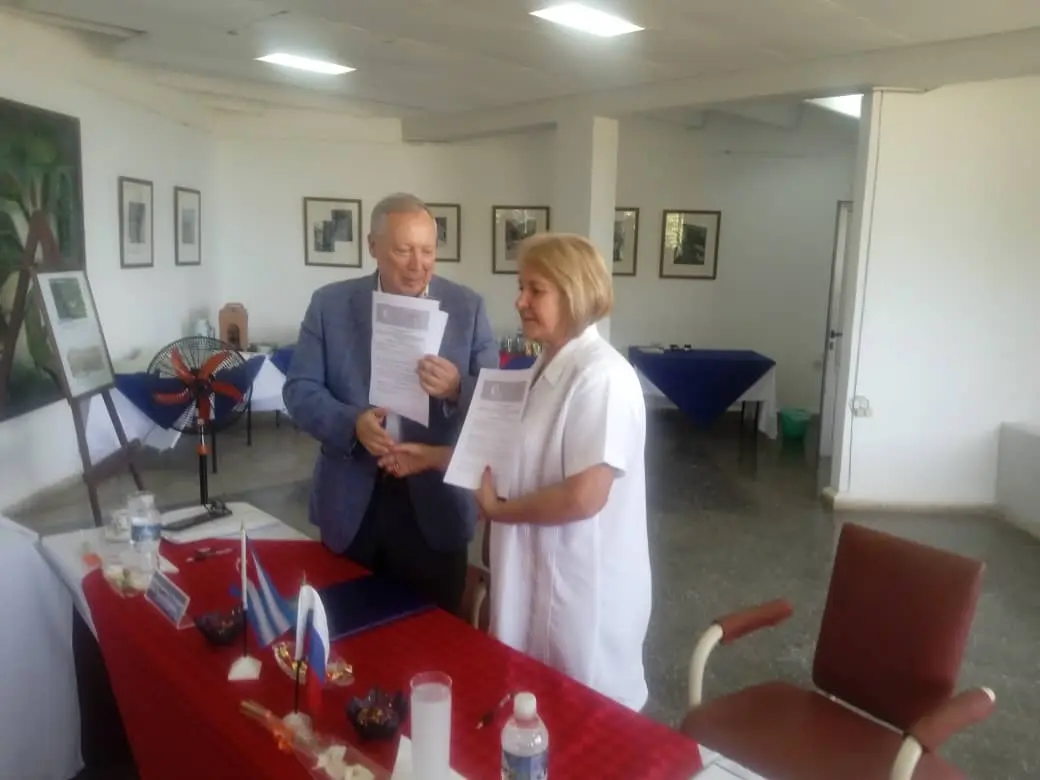
José Martí University in Sancti Spíritus, a central Cuban province, is currently forging important collaborative ties with its Russian counterpart, the Southern Federal University, to address specific learning and developmental disorders from a multidisciplinary perspective.
Currently, both academic institutions are working to develop a joint proposal based on a comparative study of their intervention models, using an interdisciplinary approach to the diagnosis and treatment of children with autism spectrum disorder.
RELATED:
Cuba’s Socialist Revolution Reaches 65 Years Amid U.S. Threats
Dr. Ariadna Veloso Rodríguez, First Vice-Rector of the university, commented that the initiative took into account the fact that, in recent years, diagnoses of this condition have increased in Sancti Spíritus and throughout Cuba.
The first international conference between the two universities was recently held here to exchange research findings on the subject, which in Cuba focuses not only on special education but also on the inclusion of these students in regular primary education.
At that event, the project coordinator explained, approximately 45 student projects and a dozen presentations by professors and researchers from both universities were showcased, with the aim of conducting future comparative studies between the two contexts.
“These collaborative efforts, which we are just beginning, are a path to building upon in a highly sensitive area because this neurodevelopmental disorder not only impacts the children who suffer from it, but also their families, schools, and communities,” commented Veloso Rodríguez.
The text reads, “Professors and students of the Special Education program at the @UnissJMarti continue to focus on one of the priorities for this stage of the @CubaMES: preparing for graduation.”
The essential purpose of these collaborative efforts is to propose, based on the results achieved in both countries, scientifically validated intervention protocols that contribute to improving the quality of life for these children and their families.
In Sancti Spíritus, there are unique experiences in treating this condition using equine therapy, as well as intervention strategies from physiotherapy, speech therapy, educational psychology, and psychology.
However, to date, there are no reported precedents here of any scientific research that has resulted in a comprehensive proposal for children with this diagnosis, and work is now underway to develop a protocol that includes the development of skills in multidisciplinary teams.
One of the most interesting aspects of the project is the proposed approach to teaching, aimed at preparing students to conduct case discussions involving multiple disciplines.
“The professionals we are training in Speech Therapy, Special Education, Educational Psychology, Primary Education, and Psychology will do something they have never achieved in their training: come together to make joint decisions regarding the diagnosis and intervention for treating this condition,” the expert concluded.
Currently, the University of Sancti Spíritus also maintains collaborative ties with another Russian institution of higher learning, Kazan University, primarily to facilitate academic exchanges for its faculty.
